Ecuador #6: Andes to the Amazon. February 2026.
Amazon’s Future: Tipping Points
“Good news, there is no climate crisis”. Heartland Institute conference, April 8-9, 2026
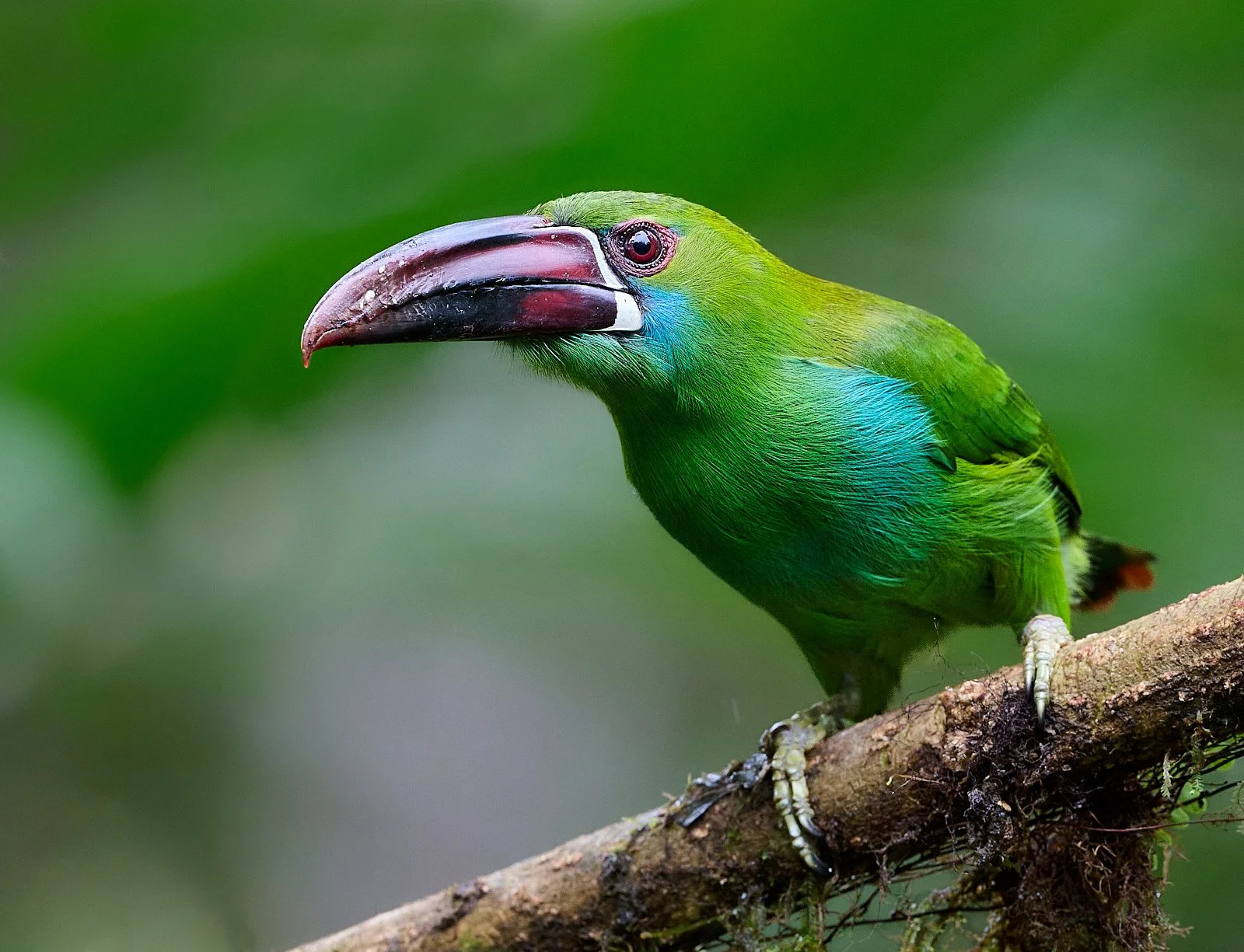
Crimson-rumped Toucanet

Cattle Egret
Trip Reflections
The tour:
Organized tours carry the risk of inter-personal challenges. It was an absolute pleasure to travel with the other six members of our group. Of course, some are friends from long back. Others are friends now. A big thank you to everyone on the team!
Ecuador
The country may be small, but it is abundantly blessed with natural resources. What’s more, it’s in the tropics. Who can fault that? Ecuadorian people were universally pleasant and considerate to us. We can wholeheartedly recommend visiting the country.
Natural Abundance
Personally, the take-home message is the exuberance and complexity of Nature. It is humbling, rejuvenating, and profound. The Earth is our only home.

Our local guide’s handcrafted paddle
Ecuador
In our short visit to Ecuador, we observed some of the factors influencing environmental management policies.
The country has a very high rate of deforestation.
In the cloud forests, we saw how the flourishing bird-watching industry was enhancing local economies.
Many Napo River barges were transporting oil tankers to and from the Amazon oil fields. Oil is the backbone of Ecuador's economy and a major source of government revenue, historically accounting for roughly one-third of the country's GDP and up to 40% of its total export value.
Some Ecuadorian communities in the Amazon Basin were opting to preserve the rainforest and not allow oil drilling on their land. They were adopting ecotourism as a way of providing local employment and obtaining funds for the community. They are relying on a healthy Amazon Basin ecosystem.
We heard about projects to build resilience against climate change.
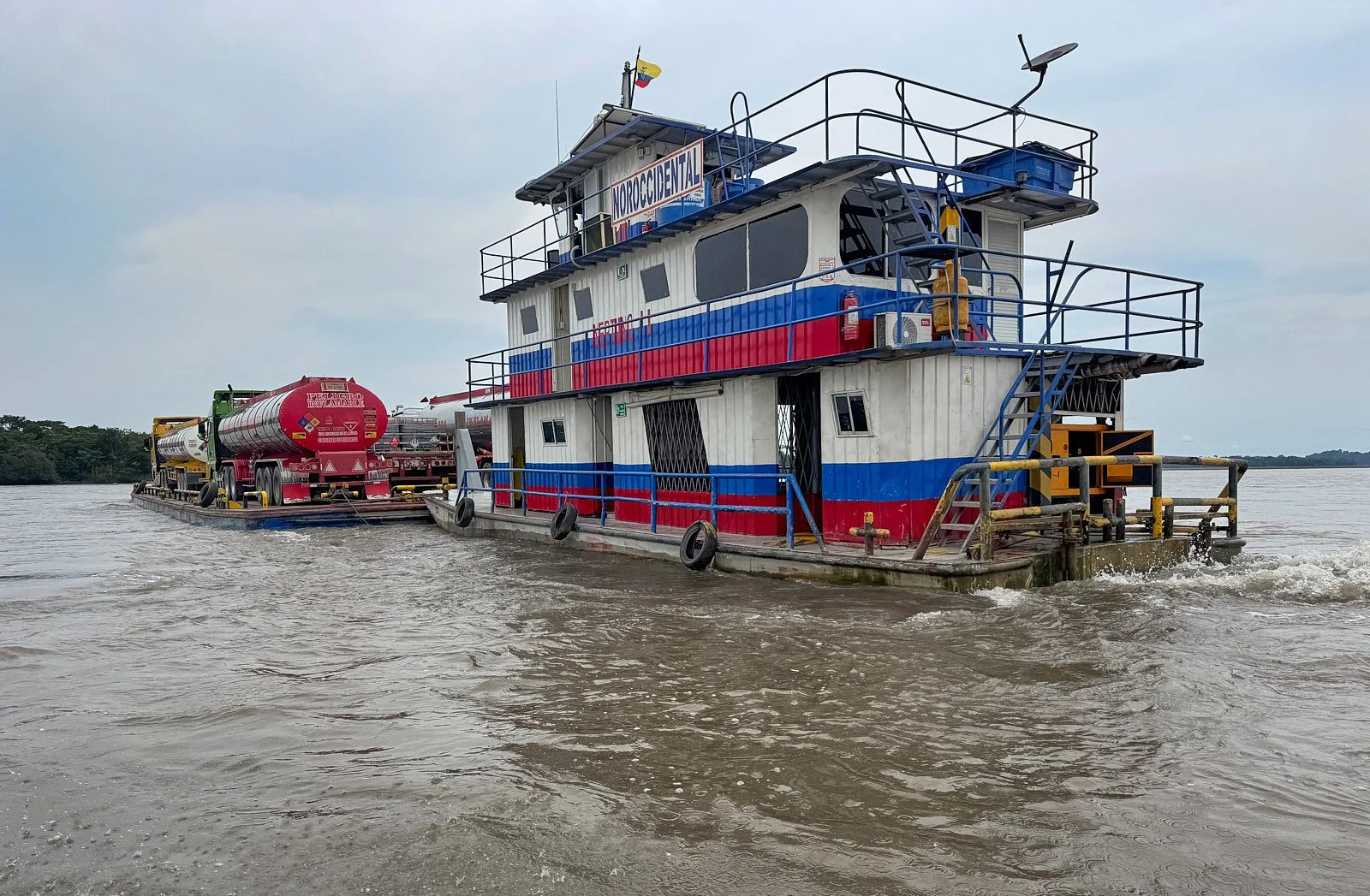
Oil tankers being barged to Coco
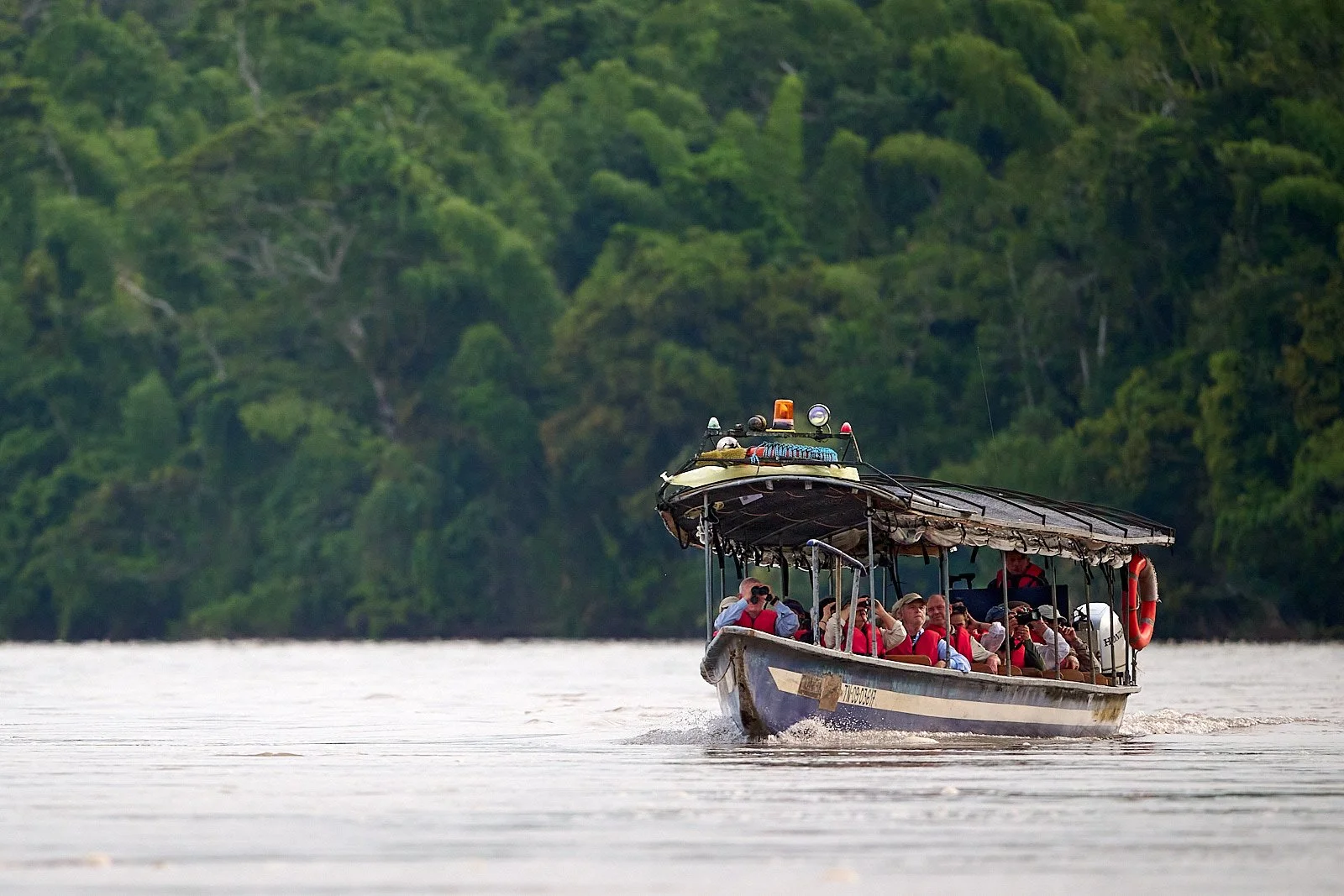
Birders

Eco-lodges
Tipping point
The vast Amazon Basin makes its own weather. The transpiration of water by plants and its subsequent condensation into rainfall sustains the forest’s productivity.
Logging, land clearance, and fires are degrading the forest. This is amplified by the effects of climate change (more severe droughts). The combination may create a positive-feedback loop from which the forest cannot recover. At this tipping point, the forest will convert irreversibly to savanna-type ecosystems.
Science…… (not political expediency)
A recent Nature paper (May, 2026) used climate modeling to assess the Amazon Basin’s likelihood of reaching a tipping point. The article is entitled “Deforestation-induced drying lowers Amazon climate threshold.” (Nature (2026). https://doi.org/10.1038/s41586-026-10456-0). It is a good read, not too technical for non-scientists like myself.
The paper’s introduction explains the rationale for the study.
“Globally, native biomes have been unprecedentedly threatened by anthropogenic activities and are already showing signs of decreasing resilience. Among those endangered biomes is the Amazon forest, where increasing droughts, the loss of biodiversity, degradation and deforestation outpace natural variability. Furthermore, the forest is transitioning from one of the largest terrestrial carbon sinks to a carbon source. Importantly, direct and indirect stressors, such as deforestation and increases in extreme drought events, may be self-amplified by the forest system itself. Thus, it is considered a tipping element of the Earth system whereby critical transitions may occur if local thresholds are crossed, which could trigger self-amplified changes as stabilizing feedbacks shift to destabilizing ones.
In fact, the Amazon forest system could experience critical transitions at lower global warming levels than previously predicted through a range of adverse compounding drivers (for example, through heating, degradation, droughts and deforestation) occurring simultaneously rather than due to global warming alone. An important reason for an increased risk of critical transitions is that both droughts and deforestation undermine the biome’s self-stabilizing mechanism of atmospheric moisture recycling and could therefore lead to earlier critical transitions.”
Below are excerpts of the article’s Abstract:
Humanity is putting unprecedented pressures on the Amazon forest system through global warming and land use changes. As the Amazon forest may undergo self-reinforcing transitions, these pressures could lead to system-wide changes across major parts of Amazonian ecosystems. Here we apply a dynamical systems model to assess the local and far-reaching cascading transition risks towards degraded ecosystems in the Amazon biome.
Without accounting for deforestation, we find a critical global warming threshold of 3.7–4.0 °C, beyond which up to a third of the Amazon forest risks losing stability.
However, when considering deforestation, we find a near system-wide transition of the Amazon forest (62−77% of the area) under the combination of a lower threshold range of global warming of 1.5–1.9 °C and deforestation of 22–28%.
Overall, our results reinforce the need to keep global warming levels below 1.5 °C and halt deforestation, as well as ecologically restore degraded forests to avoid high transition risks across the Amazon forest system.
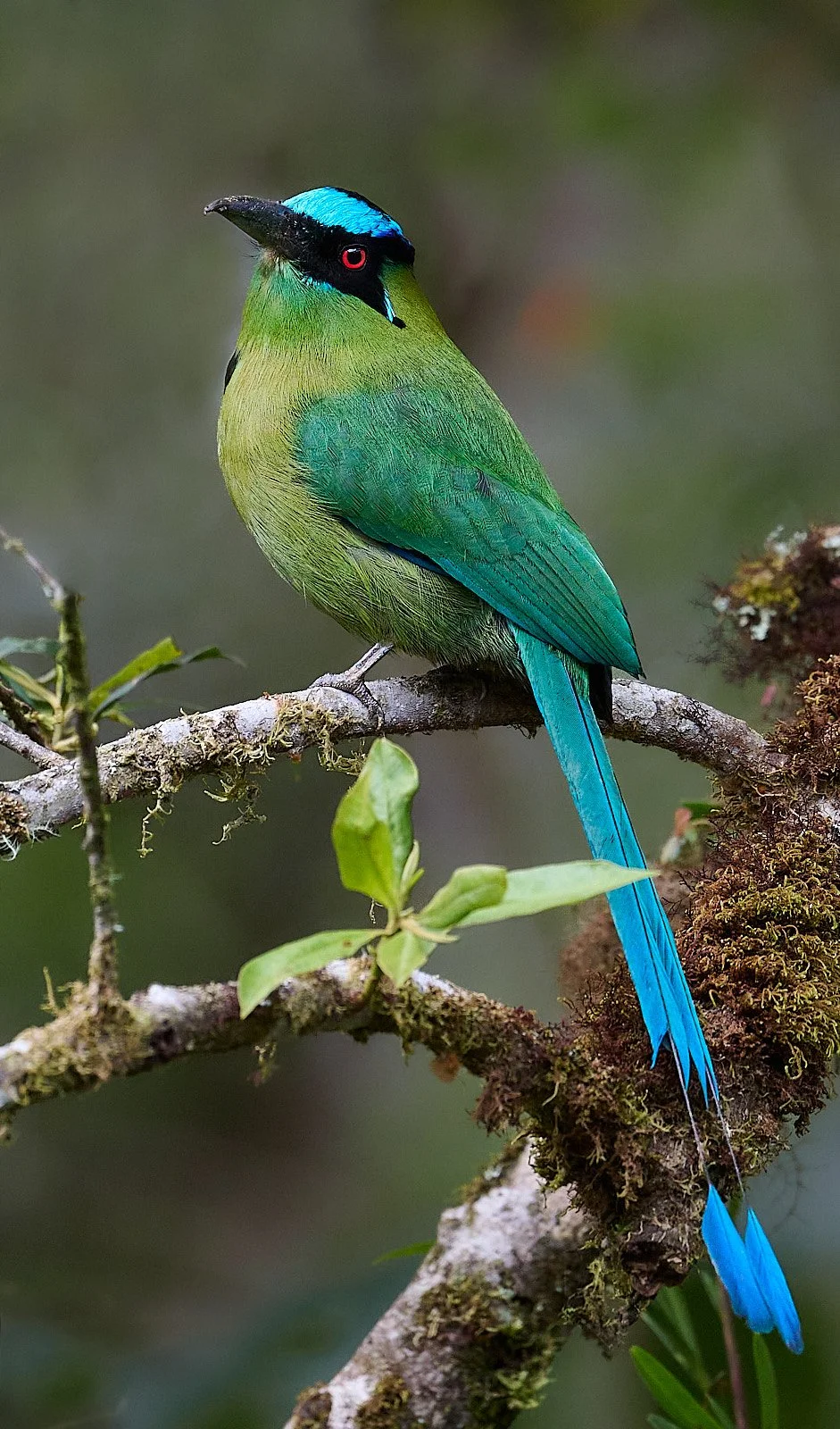
Andean Motmot
Sources of information
Birds of Ecuador: Juan Freile and Robin Restall. Helm, 2018.
Birds of the World, The Cornell Lab of Ornithology. https://birdsoftheworld.org/bow/home.
Handbook of Bird Biology, The Cornell Lab of Ornithology: Eds. Irby Lovette and John Fitzpatrick. Wiley, 2016.
Hummingbirds, a Celebration of Nature’s Jewels. Glenn Bartley and Andy Swash. Princeton University Press, 2022.
Nature of the Rainforest, Costa Rica and beyond: Adrian Forsyth. Cornell University Press, 2008.
The New Neotropical Companion: John Kricher. Princeton University Press, 2017.
Wikipedia
Wildlife of Ecuador: Andres Vasquez Noboa. Princeton University Press, 2017.