Ecuador #5: Andes to the Amazon. February 2026.
Wildlife Encounters
“New carnivores of any sort are always few and far between…” Oldfield Thomas 1858-1929
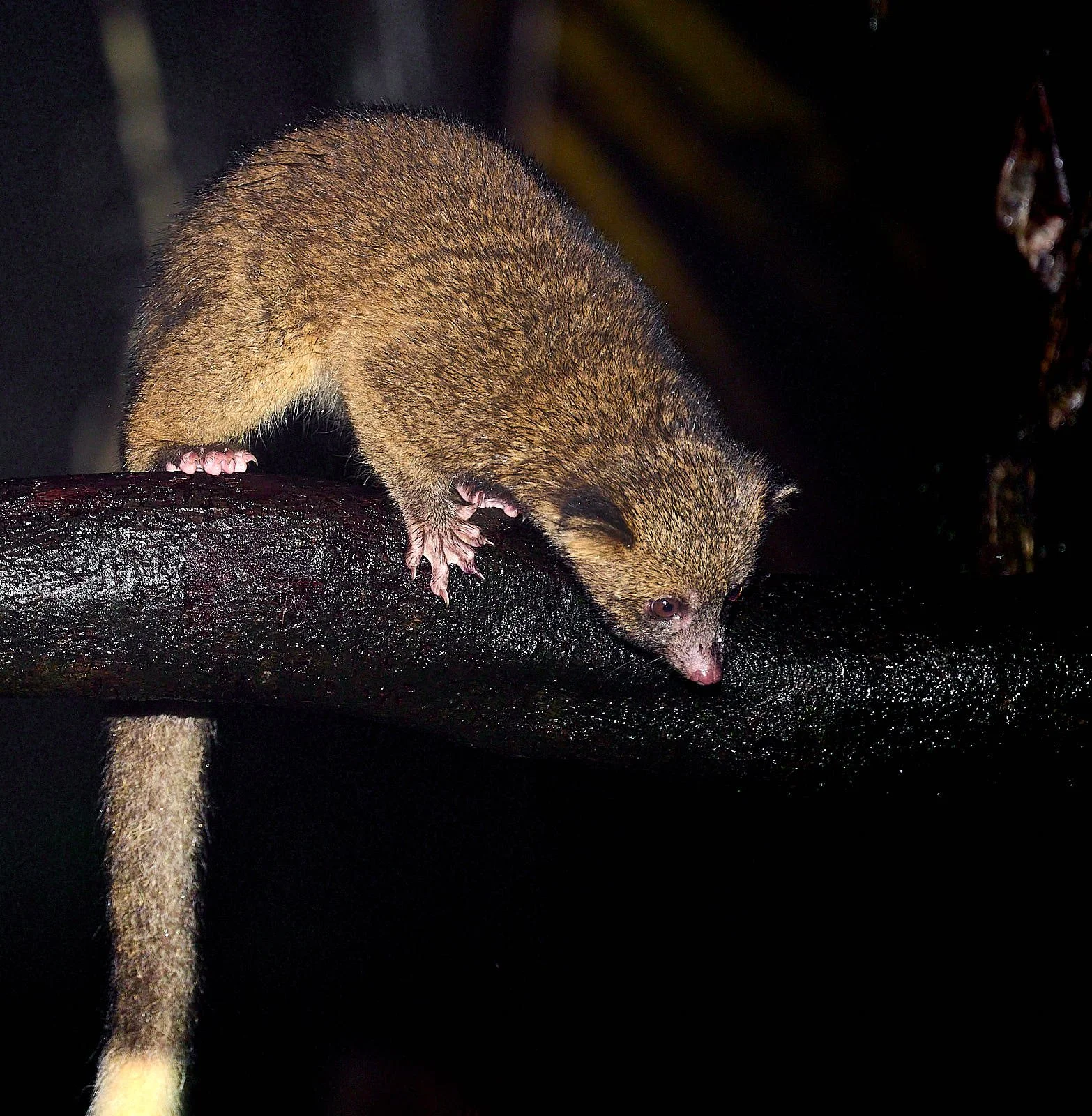
Olinguito
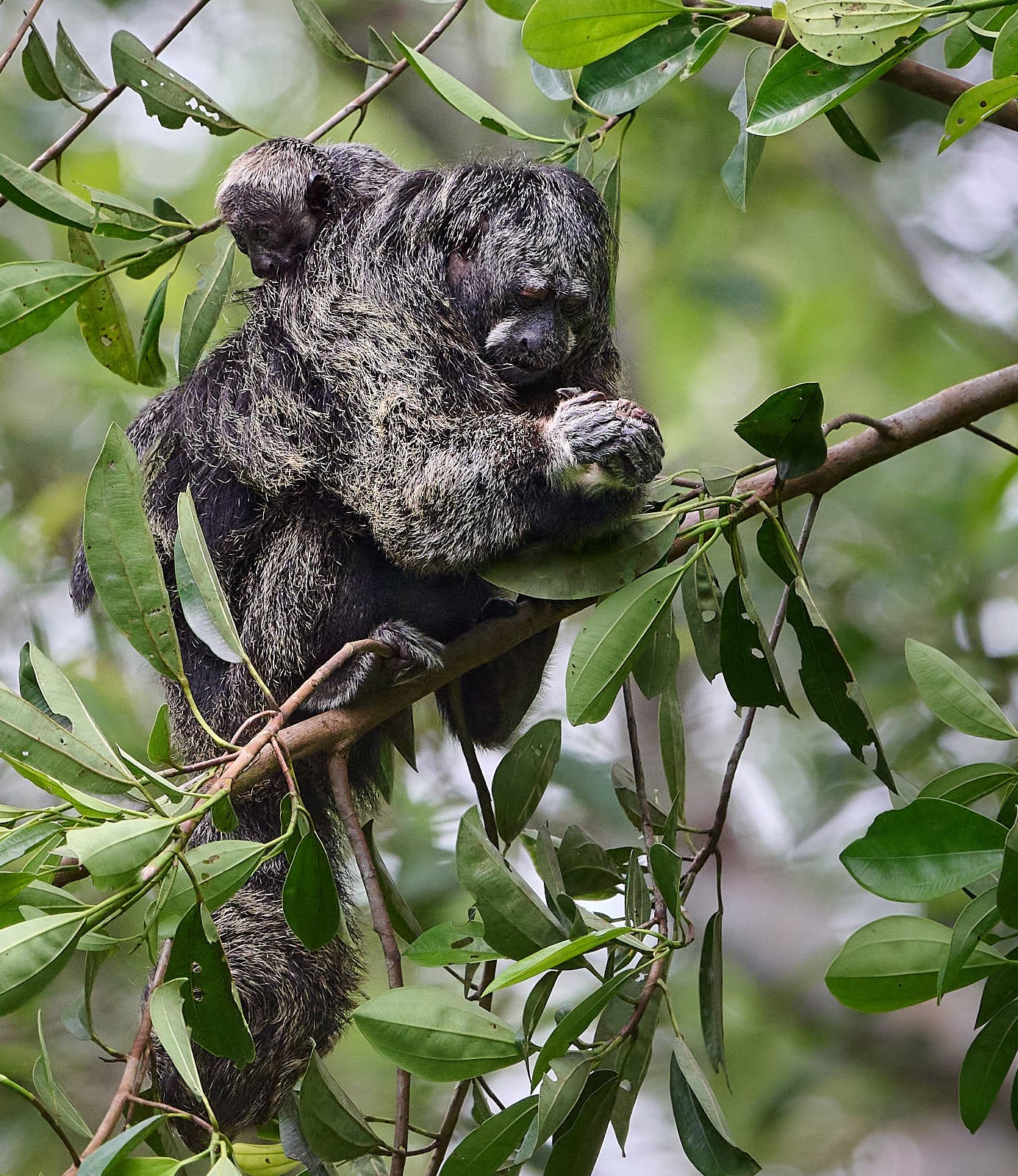
Napo Saki mother with baby
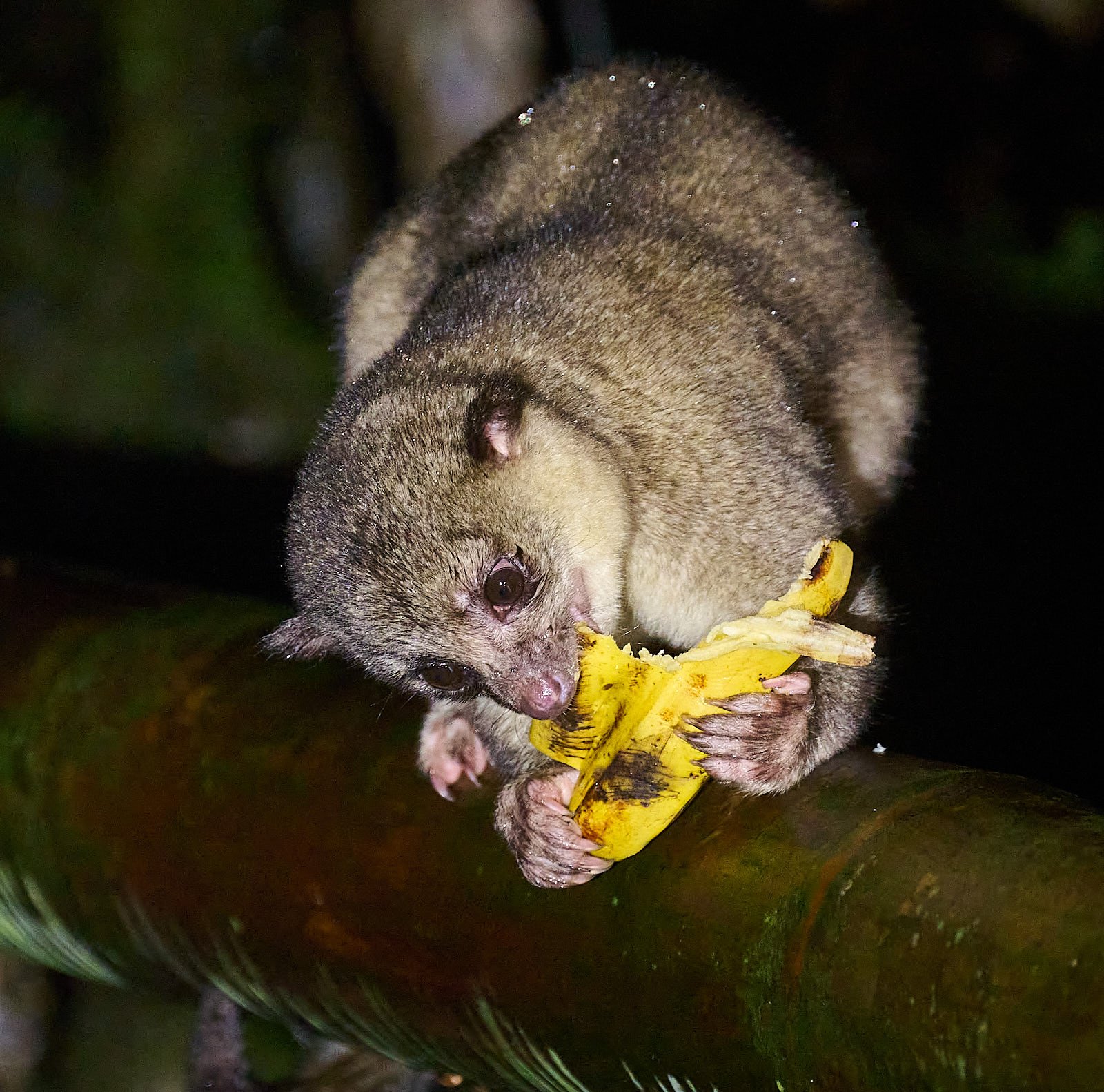
Kinkajou
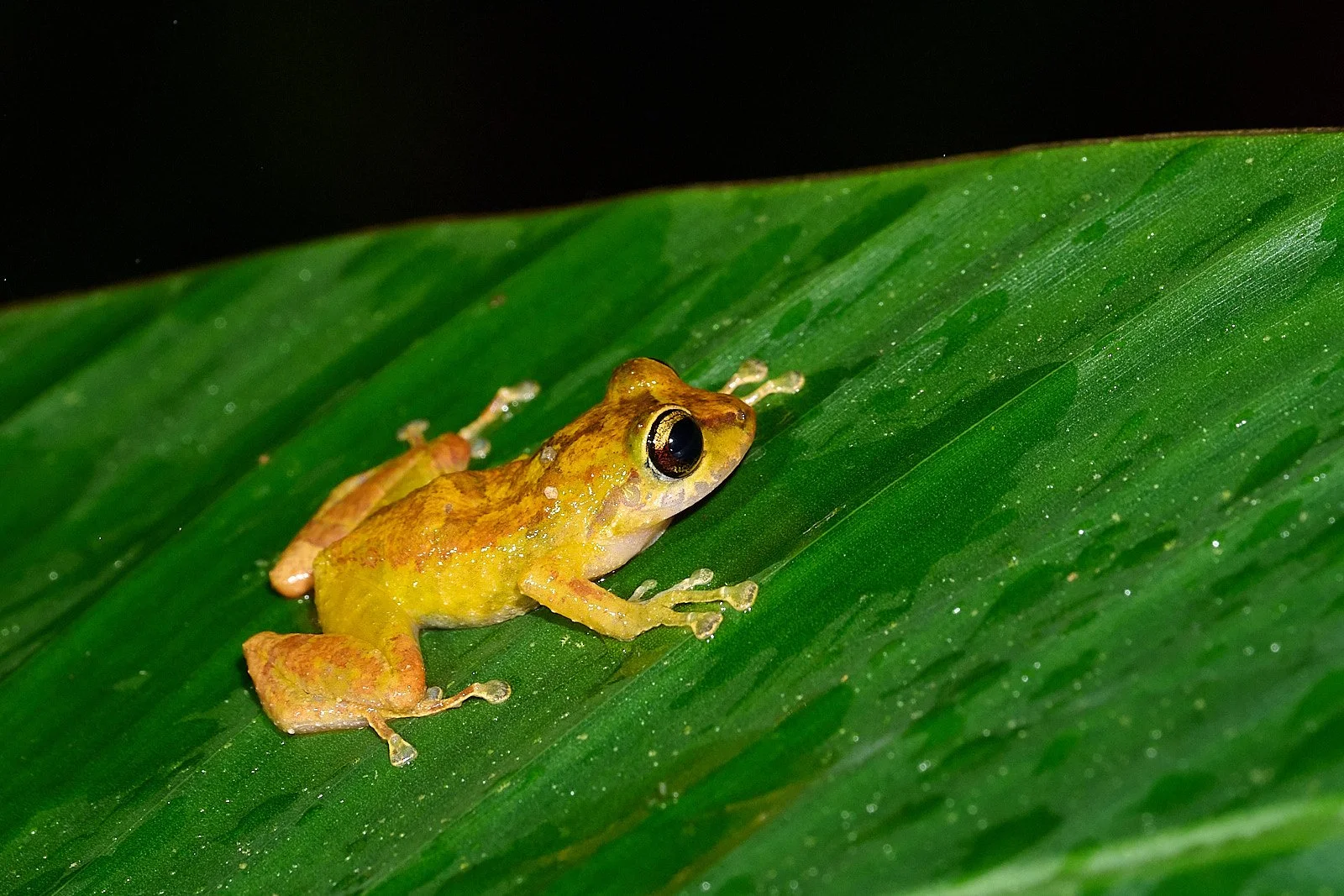
Mindo Rainfrog (we think)
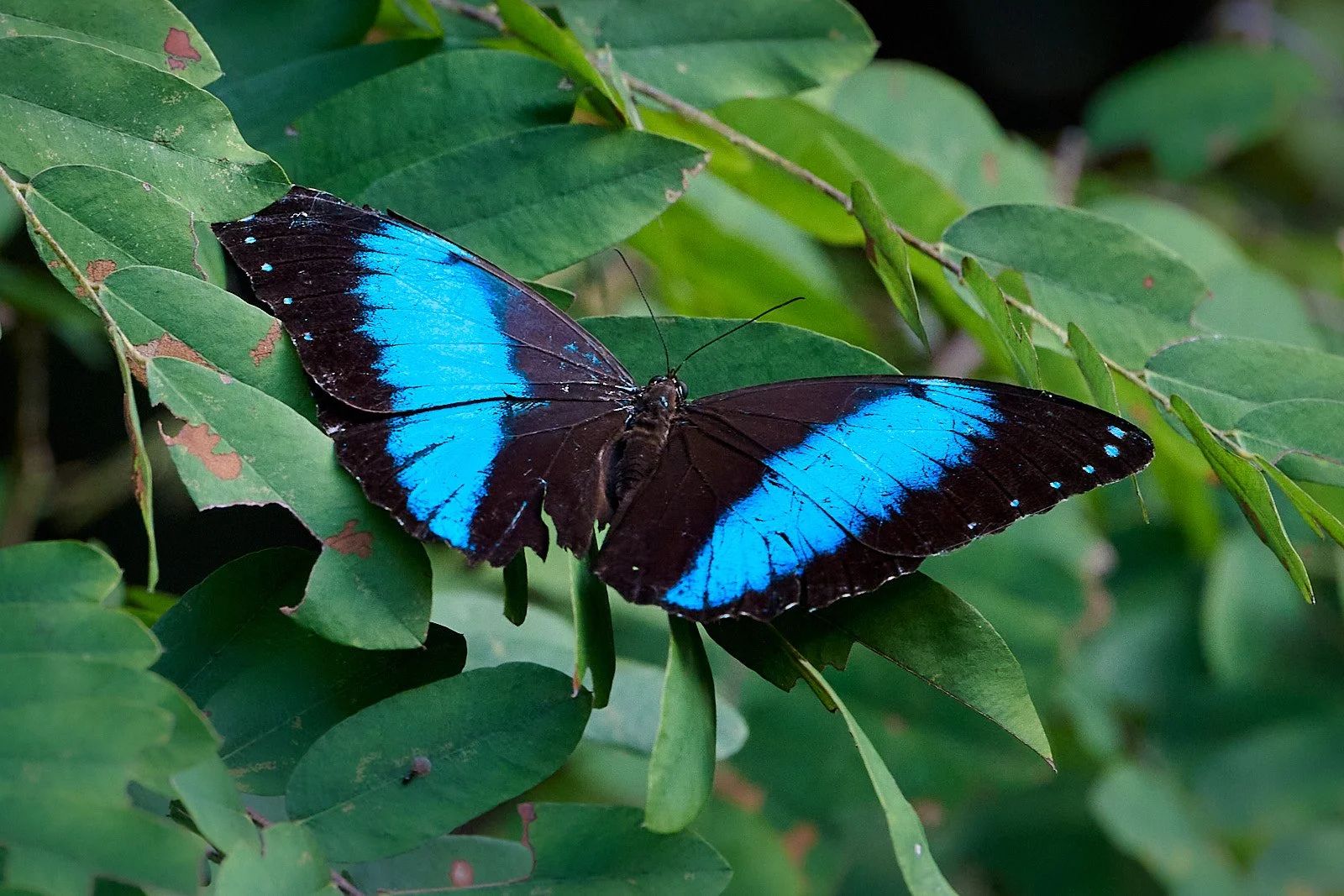
Morpho
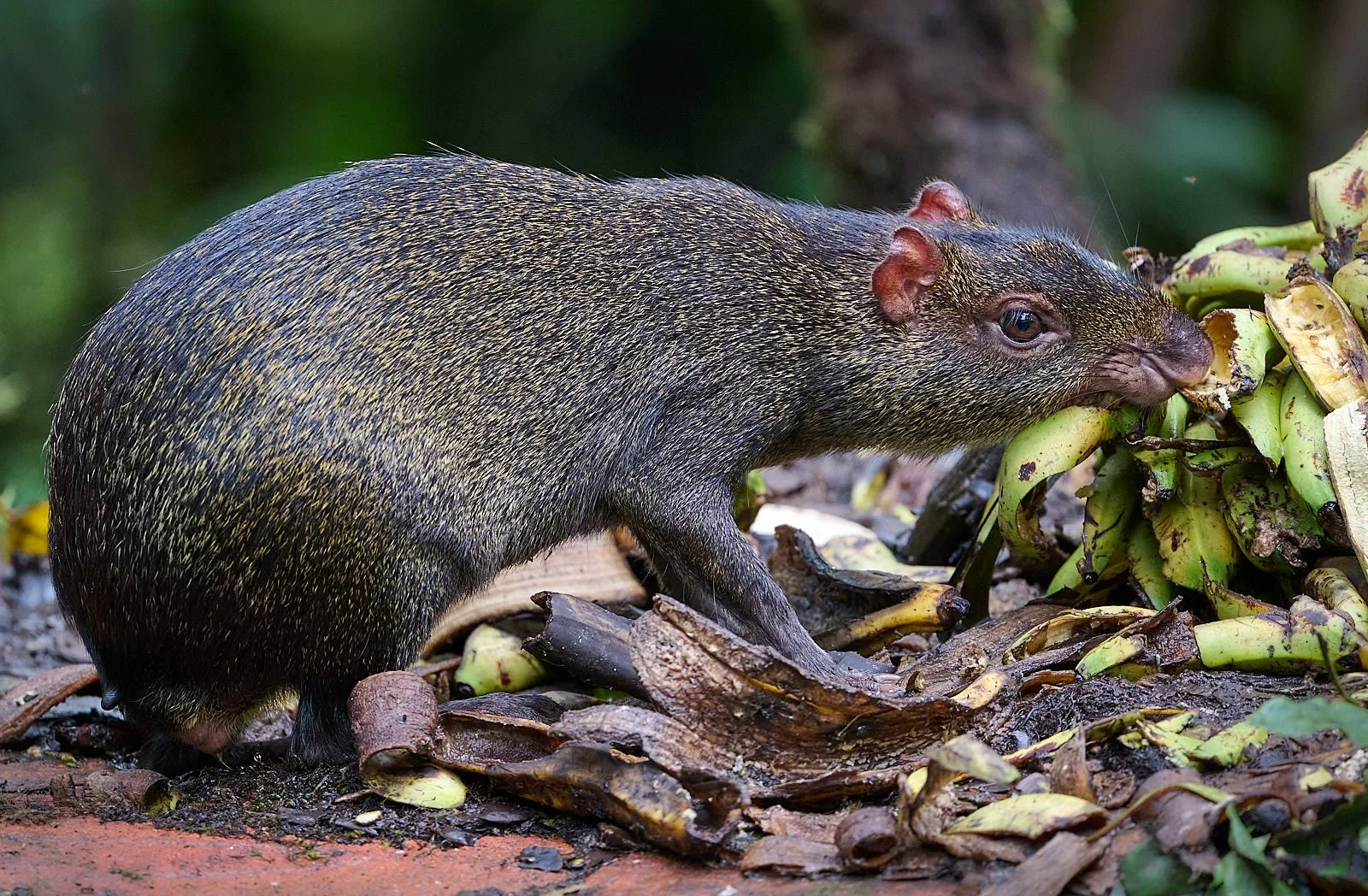
Black Agouti
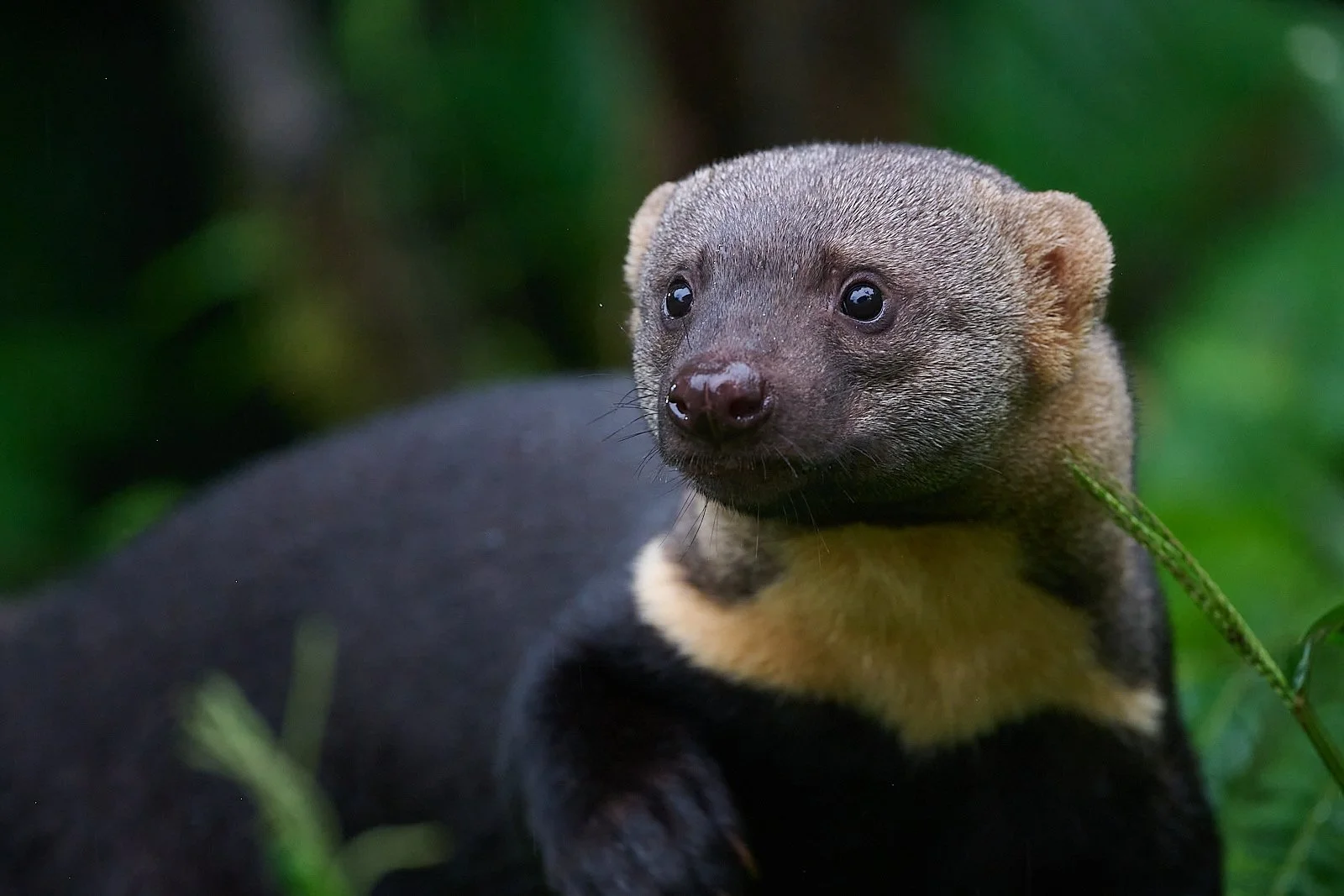
Tayra

Giant otter
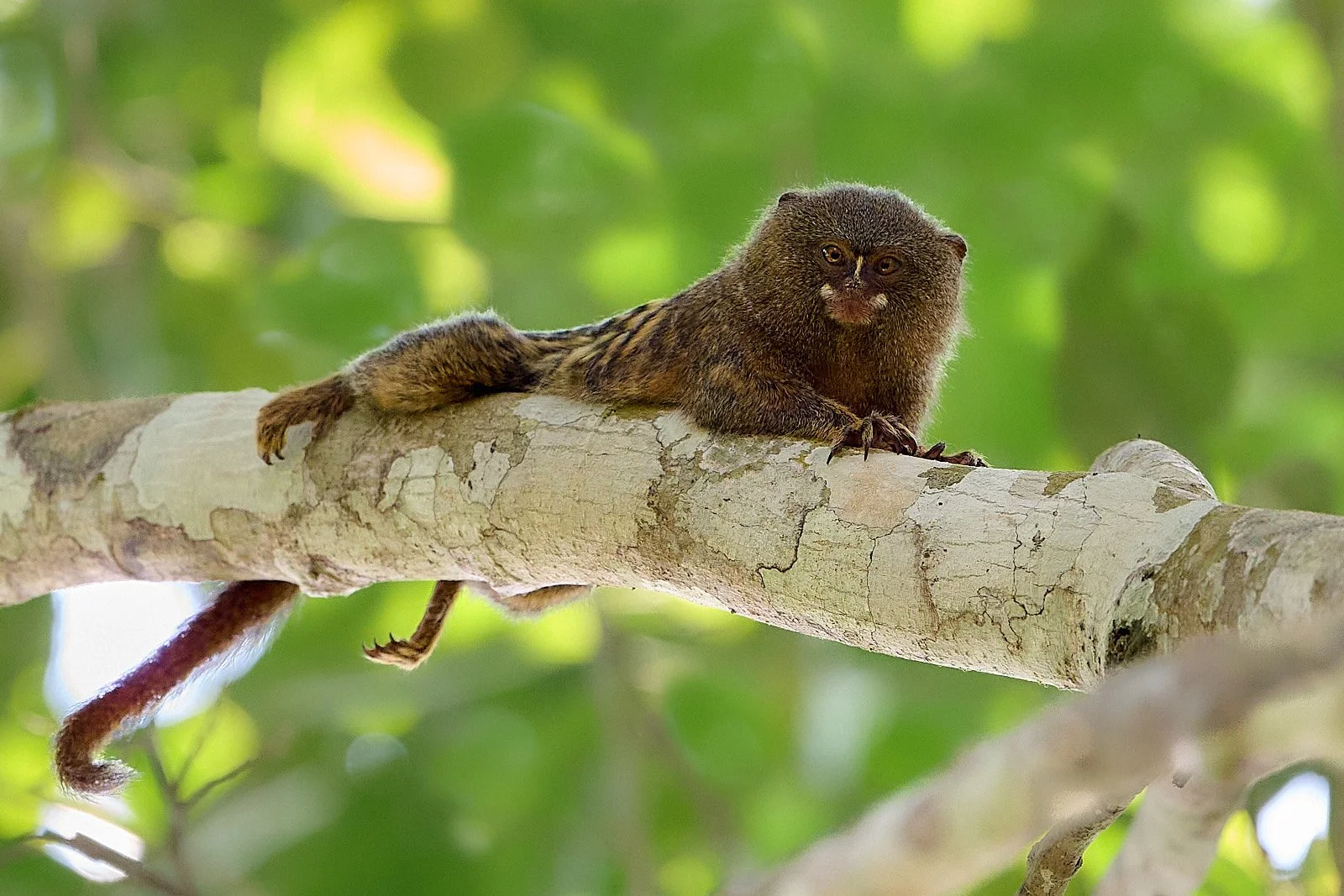
Western Pygmy Marmoset
Olinguito
The olinguito (Bassaricyon neblina) is a mammal of the raccoon family Procyonidae that lives in montane forests in the Andes of western Colombia and Ecuador at altitude 5,000-9,200 feet. The specific name neblina is Spanish for fog or mist, referring to the cloud forest habitat of the olinguito.
The olinguito is distinct from the other species within the genus, popularly known as "olingos", and also from the kinkajou (kinkajous resemble olingos, but are not closely related). Its average weight is 900 grams (2 lb), making it the smallest procyonid. The animal is an omnivorous frugivore that eats mainly fruits (such as figs), but also takes insects and nectar. The olinguito is thought to be solitary, nocturnal, and may come to feeders. It is strictly arboreal. Oliguito probably produce a single offspring at a time.
It was classified as a new species in 2013 - Taxonomic revision of the olingos (Bassaricyon), with description of a new species, the Olinguito. Helgen, K.; Pinto, M.; Kays, R.; et al. Zookeys 2013 Aug 15;(324): 1083.
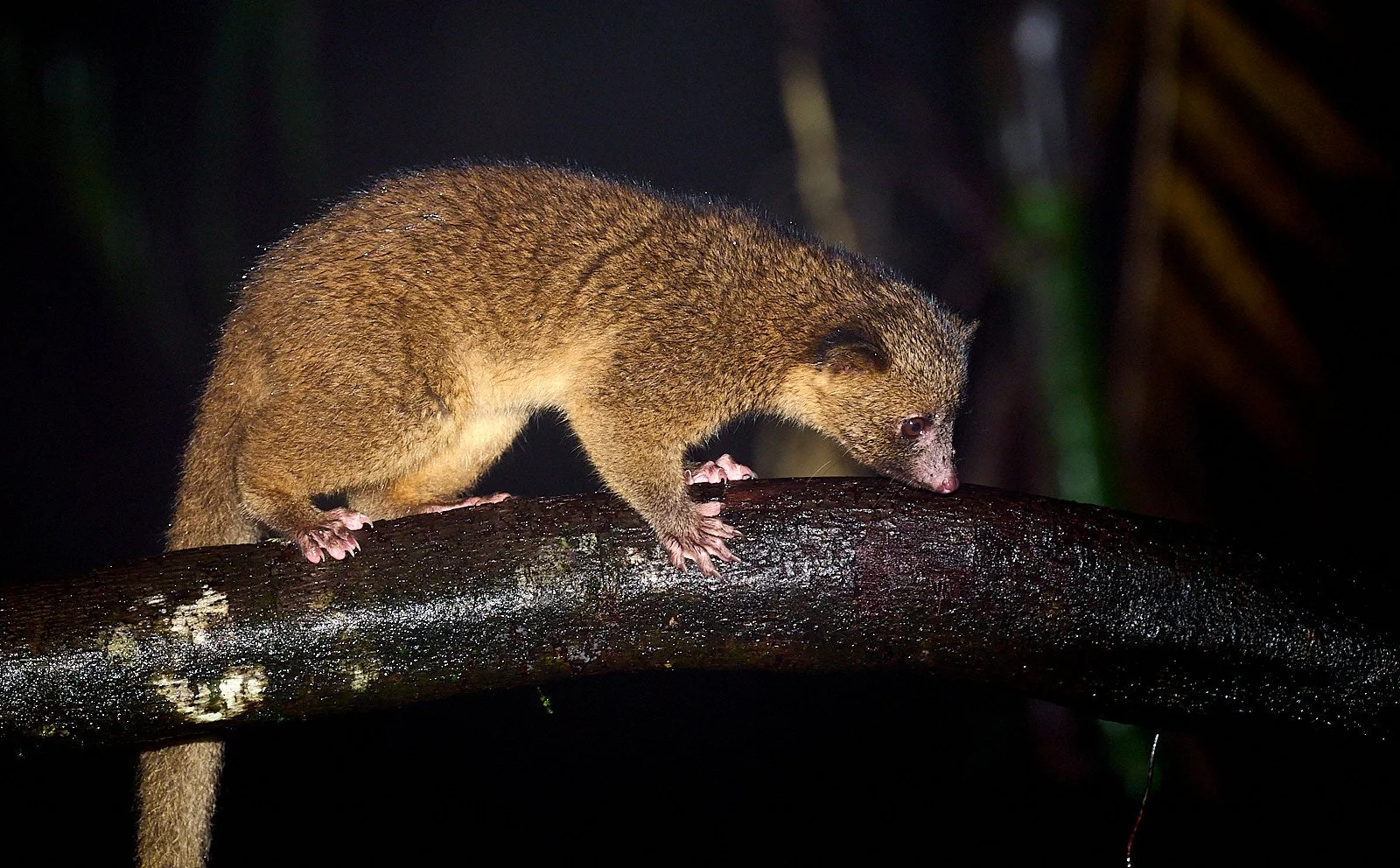
Olinguito
Kinkajou
Weighing 3.2 kg (7 lb), the Kinkajou (Potos flavus) is bigger than olingos, and has a short snout, big eyes and big ears. It belongs to the family Procyonidae, has a prehensile tail (unlike olingos) and is arboreal and nocturnal. Kinkajous are usually solitary but will sometimes forage in large groups or with olingos. About 90% of their diet is fruit and they are seed dispersers. Occasionally they eat insects, bird eggs, and small vertebrates. Kinkajous are found on both sides of the Andes, up to 6,500 feet elevation and down to sea level.
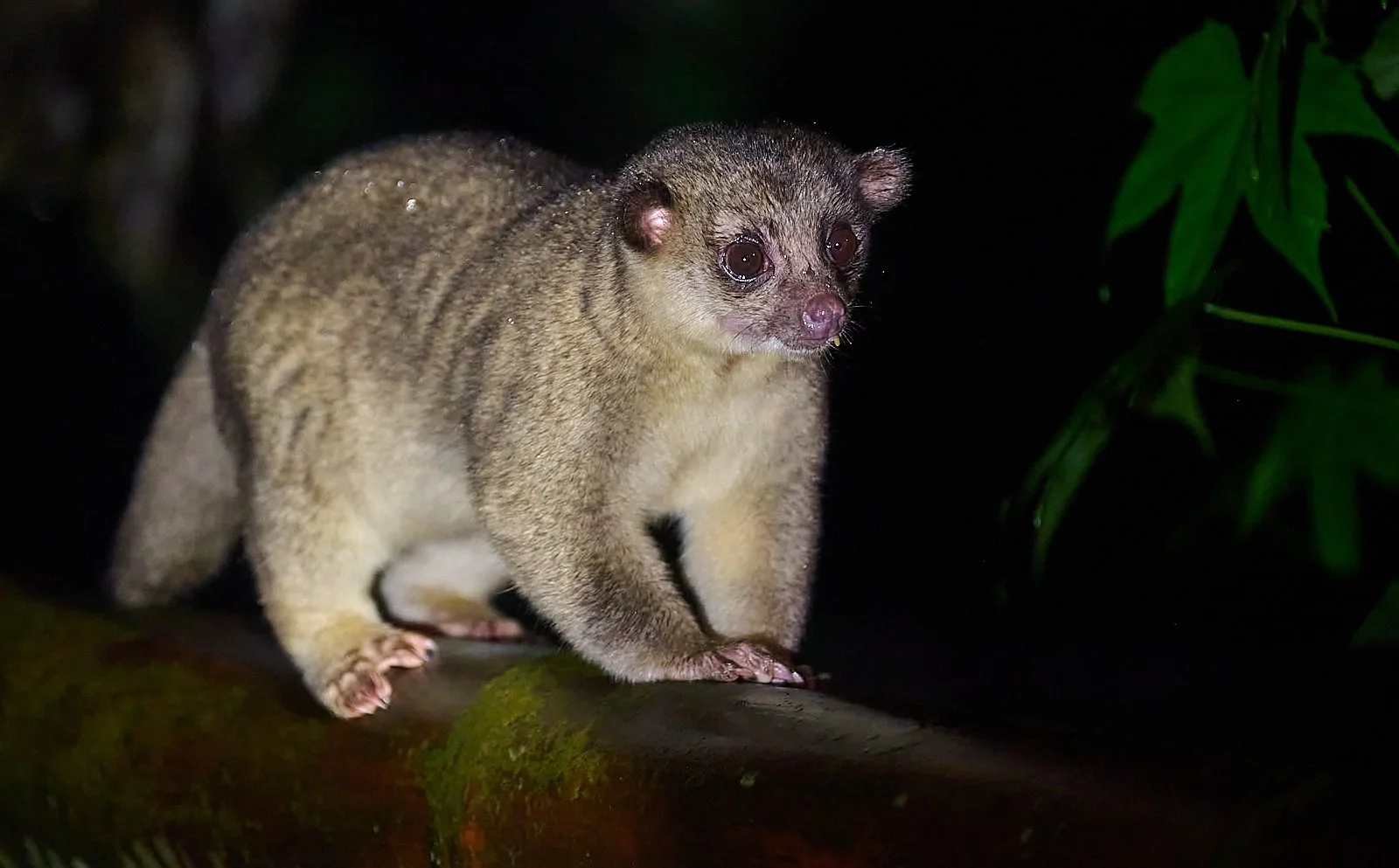
Kinkajou
New World Monkeys
Neotropical monkeys all belong to a group named the platyrrhines, a word that refers to the position of the nostrils. New World monkeys’ nostrils open at the sides, whereas in Old World monkeys, the catarrhines, nostrils are more closely spaced and point downward (as do human nostrils).
Platyrrhines have extensively speciated and adaptively radiated to occupy many ecological niches in various kinds of Neotropical forest. There are large apelike monkeys (spider, woolly, and howler monkeys), medium-sized “typical” monkeys (capuchins and squirrel monkeys), monkeys with long, shaggy fur (sakis), nocturnal monkeys (night monkeys), and squirrel-like monkeys (tamarins). All are arboreal forest animals.
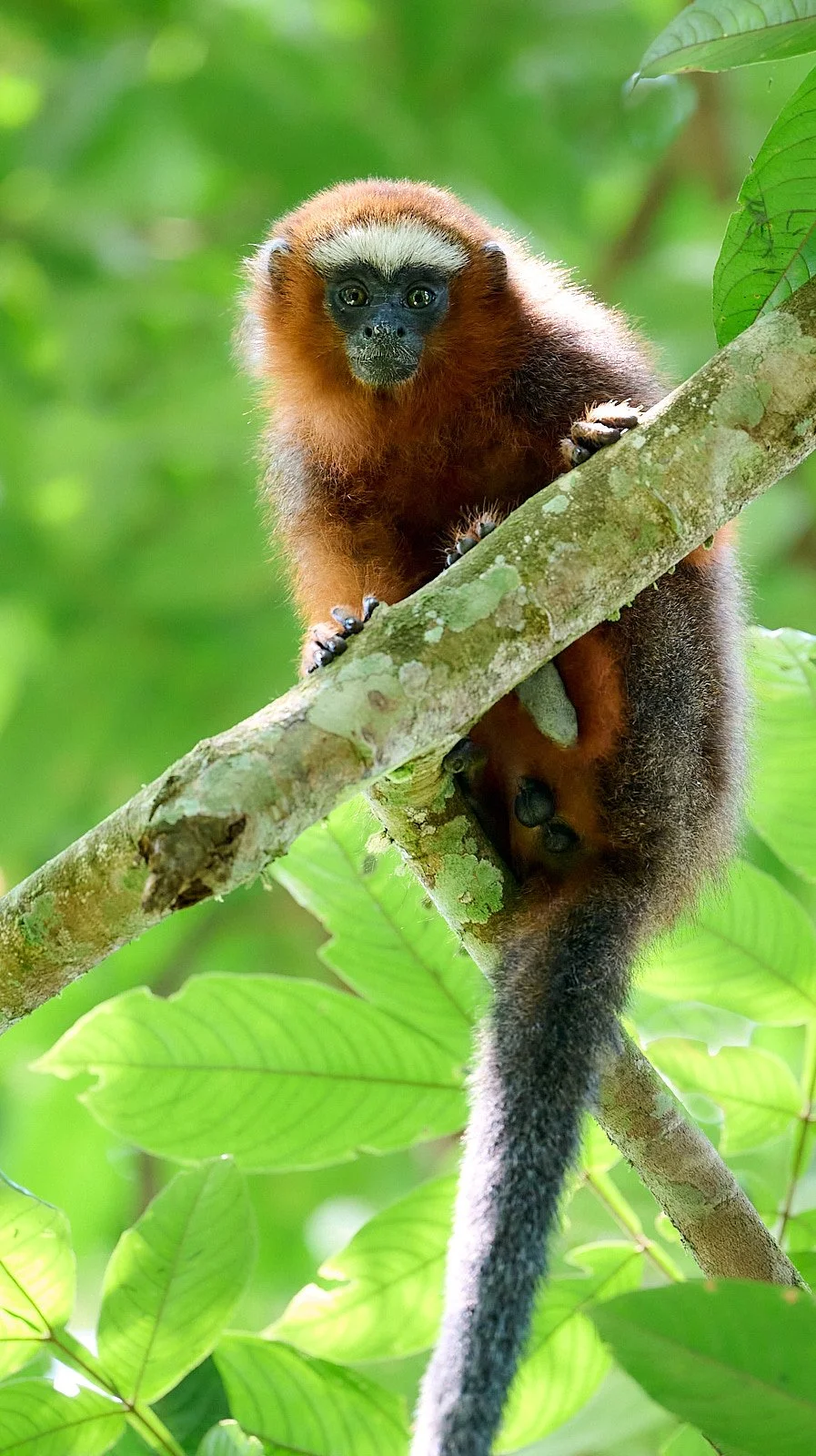
White-tailed Titi
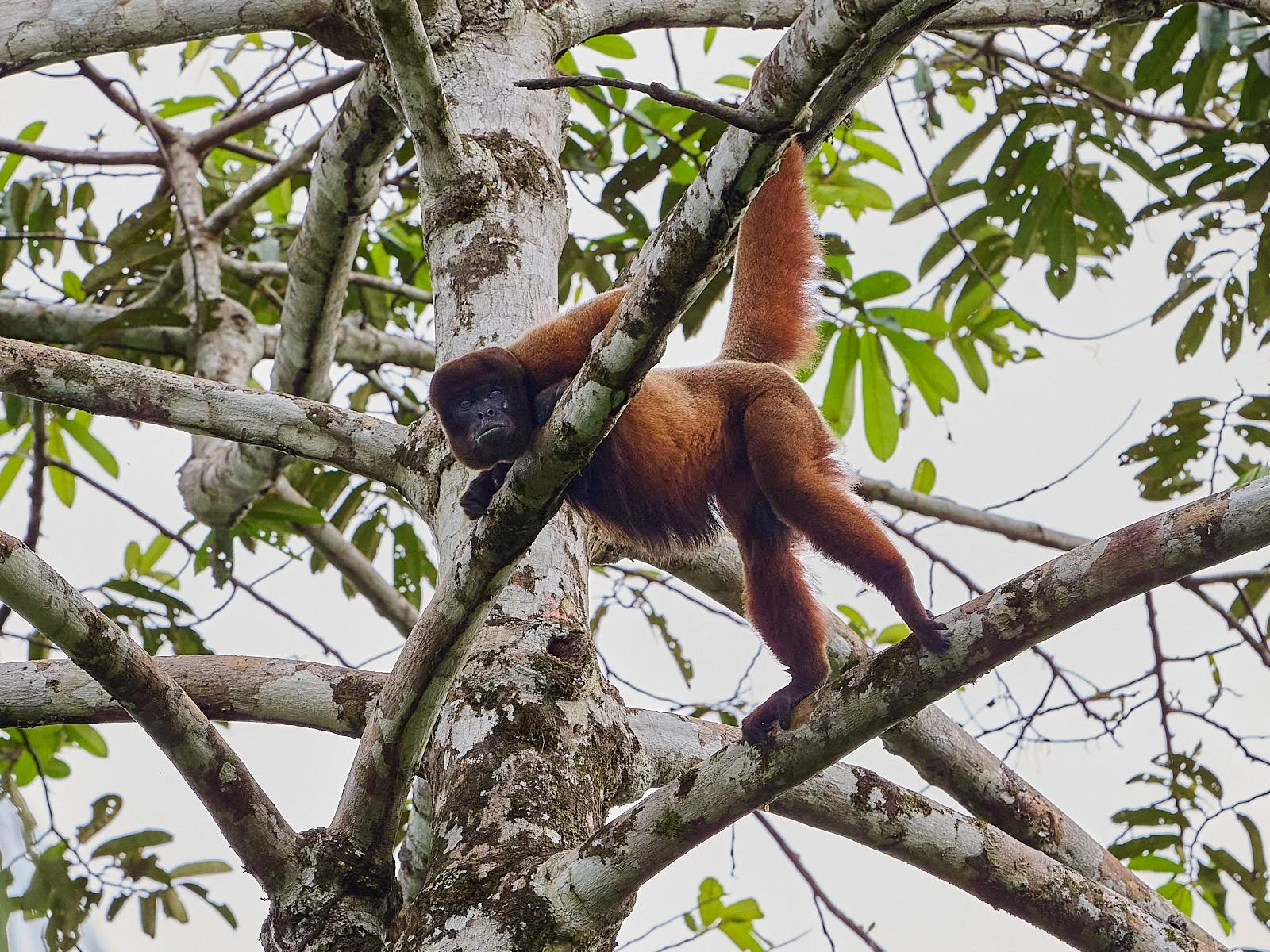
Columbian red howler monkey
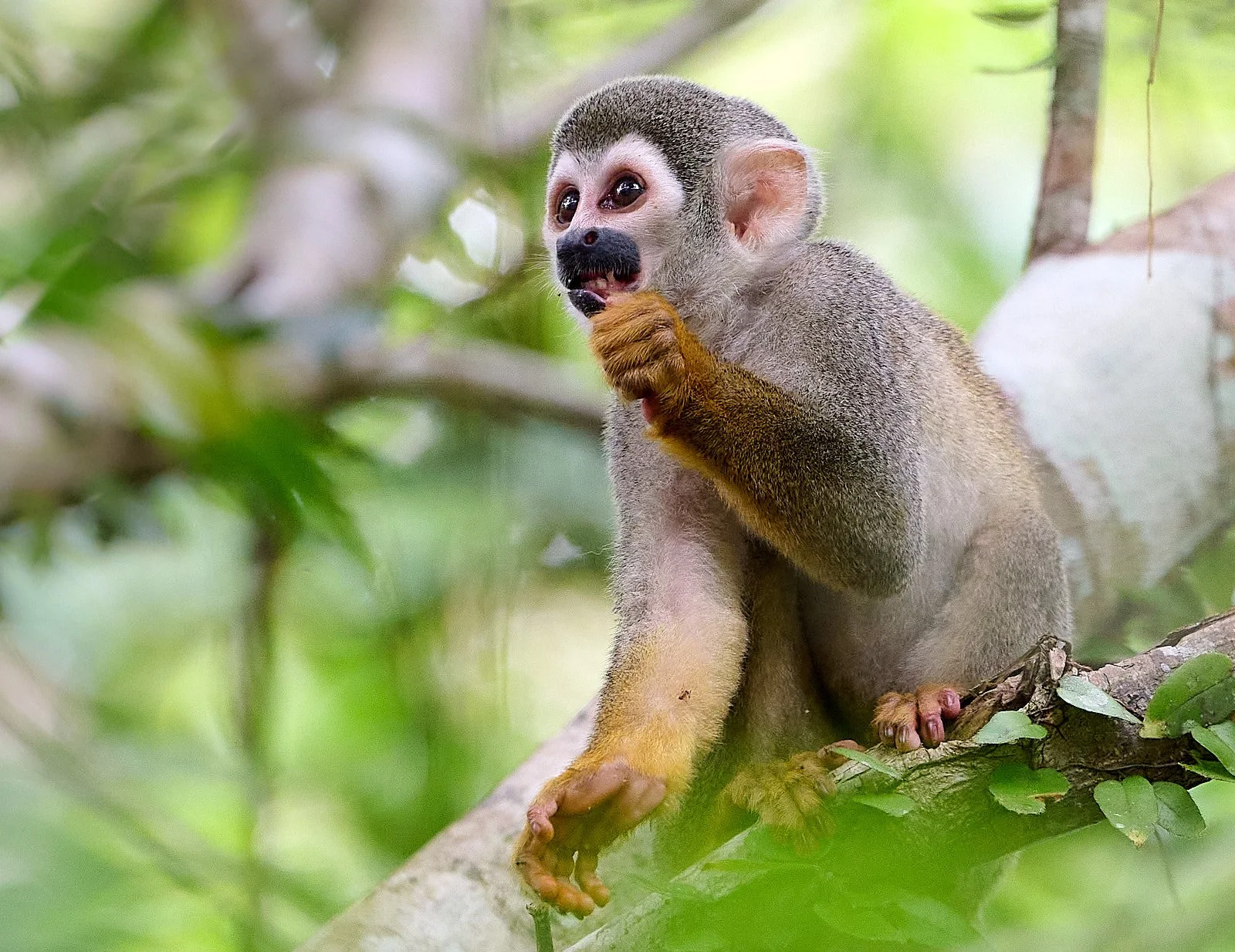
Ecuadorian squirrel monkey
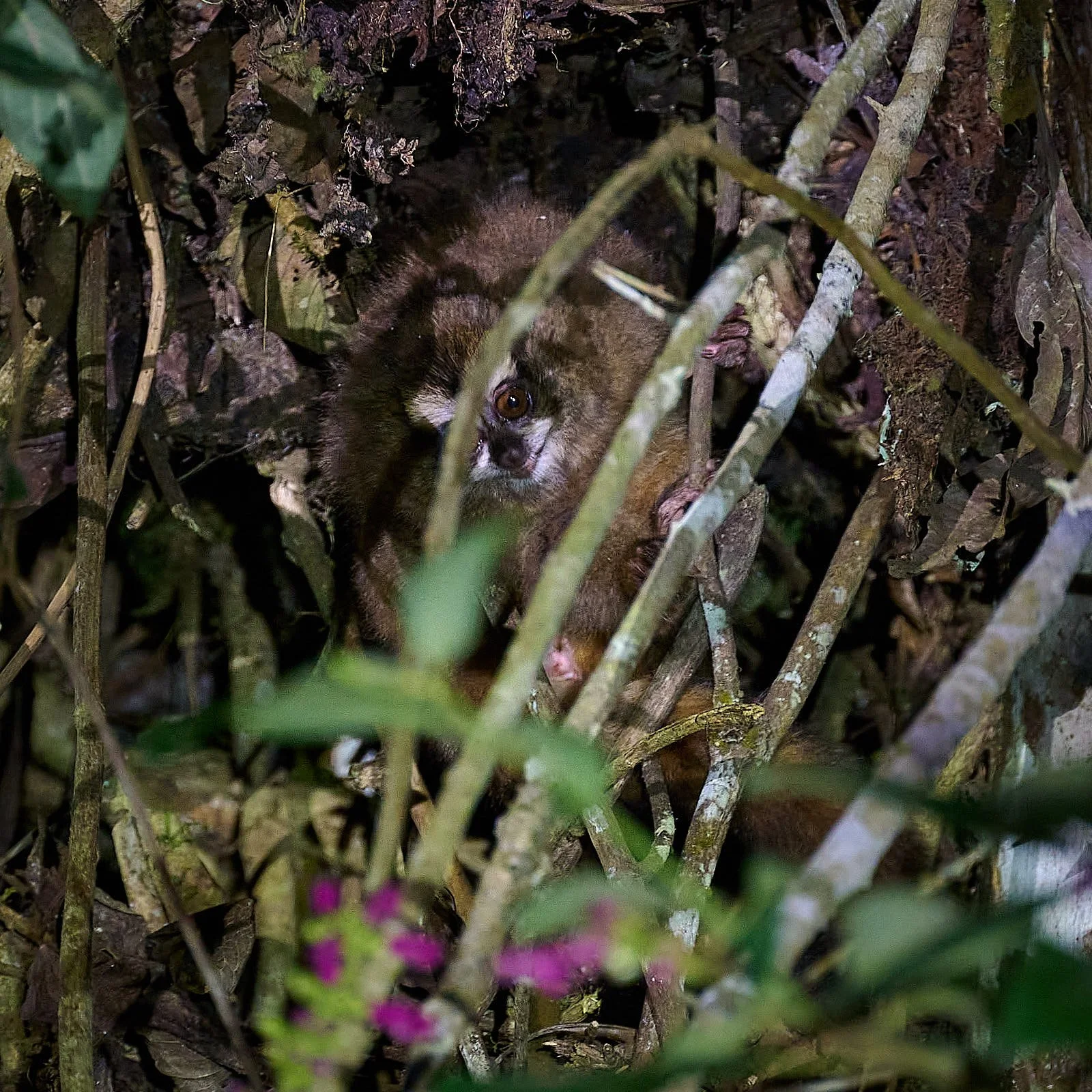
Columbian night monkey
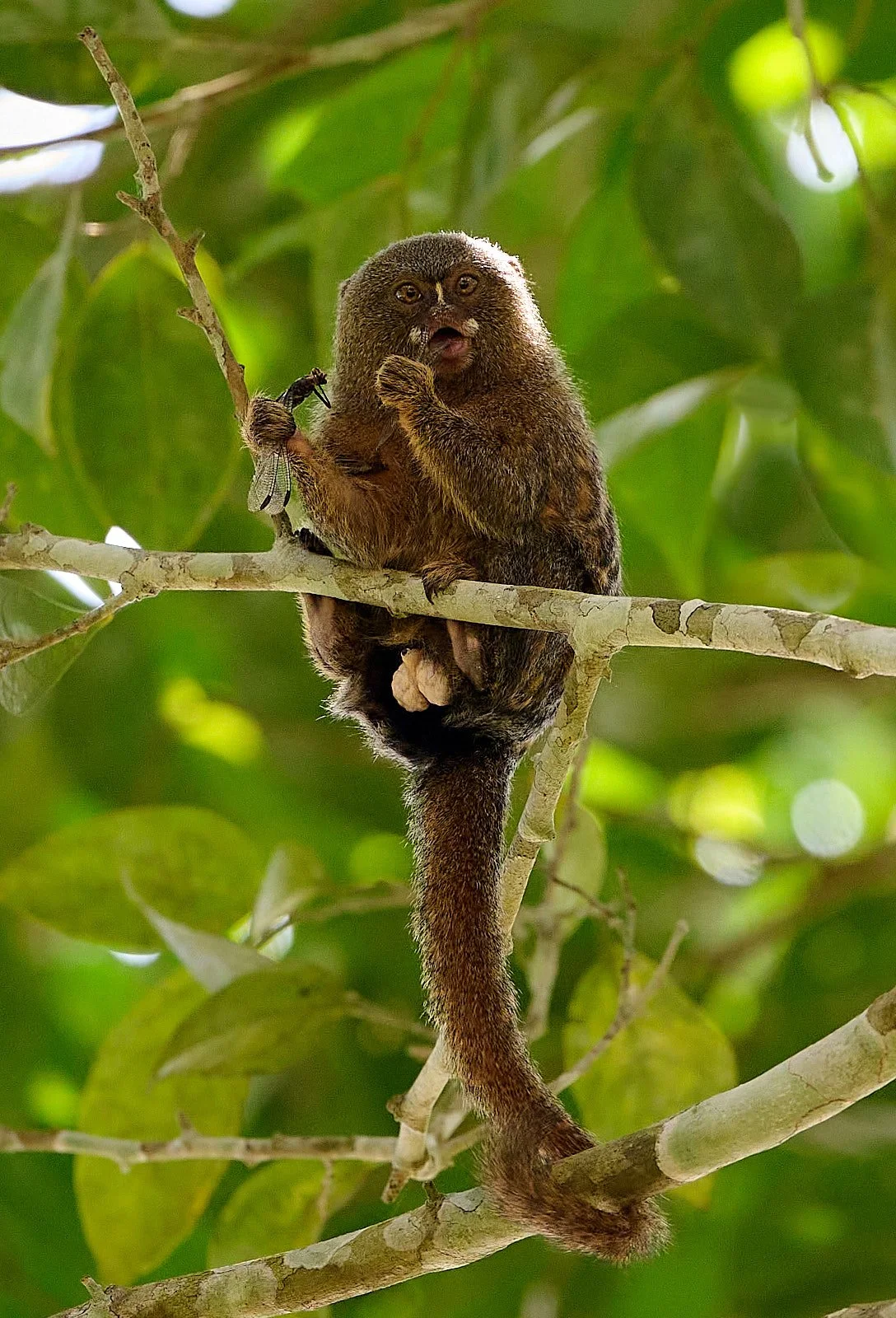
Western Pygmy Marmoset
Tales about tails
A prehensile tail is, by definition, one that is able to grasp and to support the full weight of its owner. Spider, woolly and howler monkeys have prehensile tails, so do the kinkajou, Brazilian porcupine, tamanduas, silky anteaters, and opossums. It is postulated that arboreal animals that venture out on thin limbs have the greatest need for a prehensile tail. Anatomical studies show that prehensility is much more than simply increased muscle mass. It is a major rewiring of the nervous and locomotory systems that must have required a long, slow process of evolutionary mutation and selection.
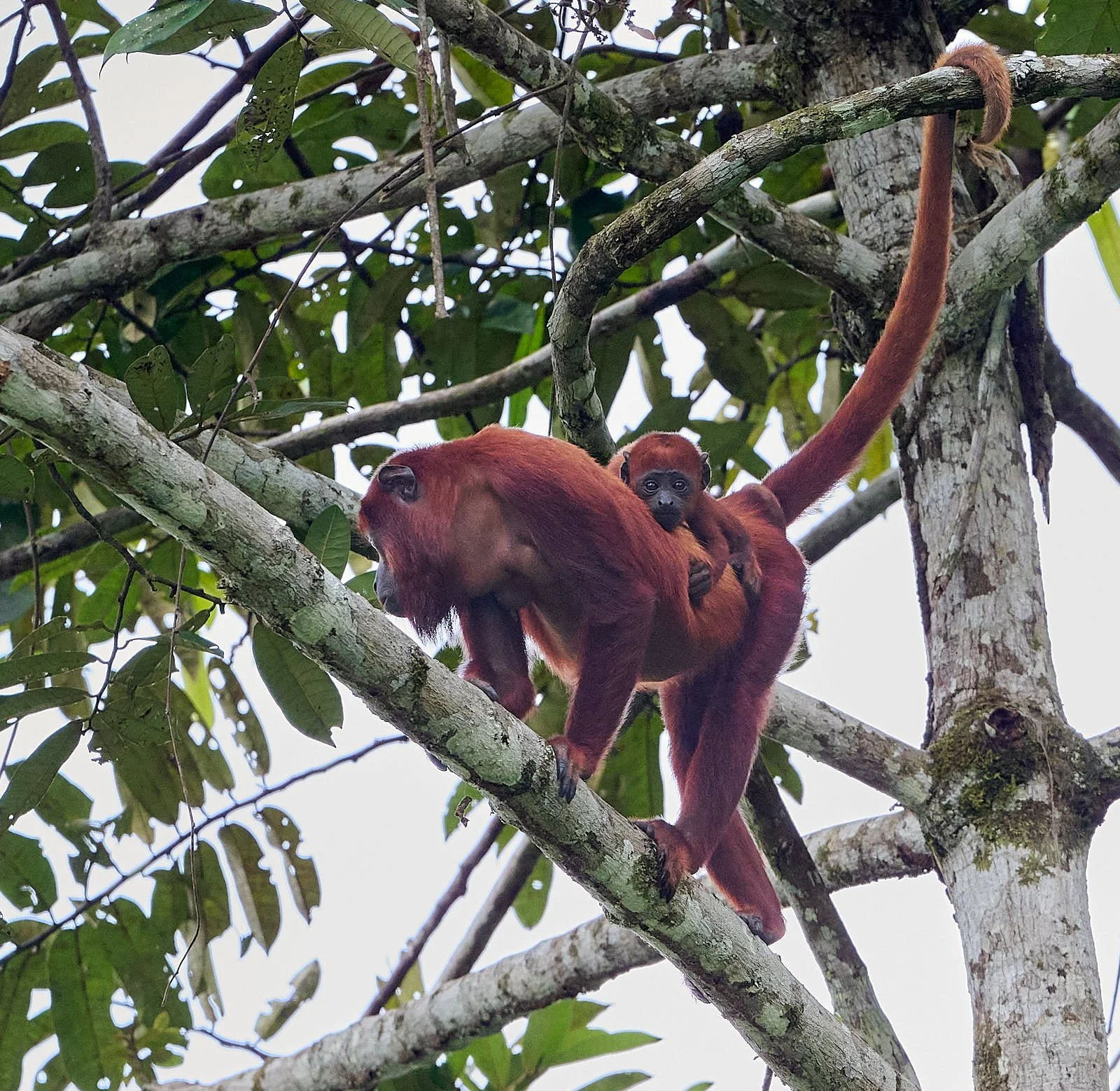
Columbian red howler monkey with baby
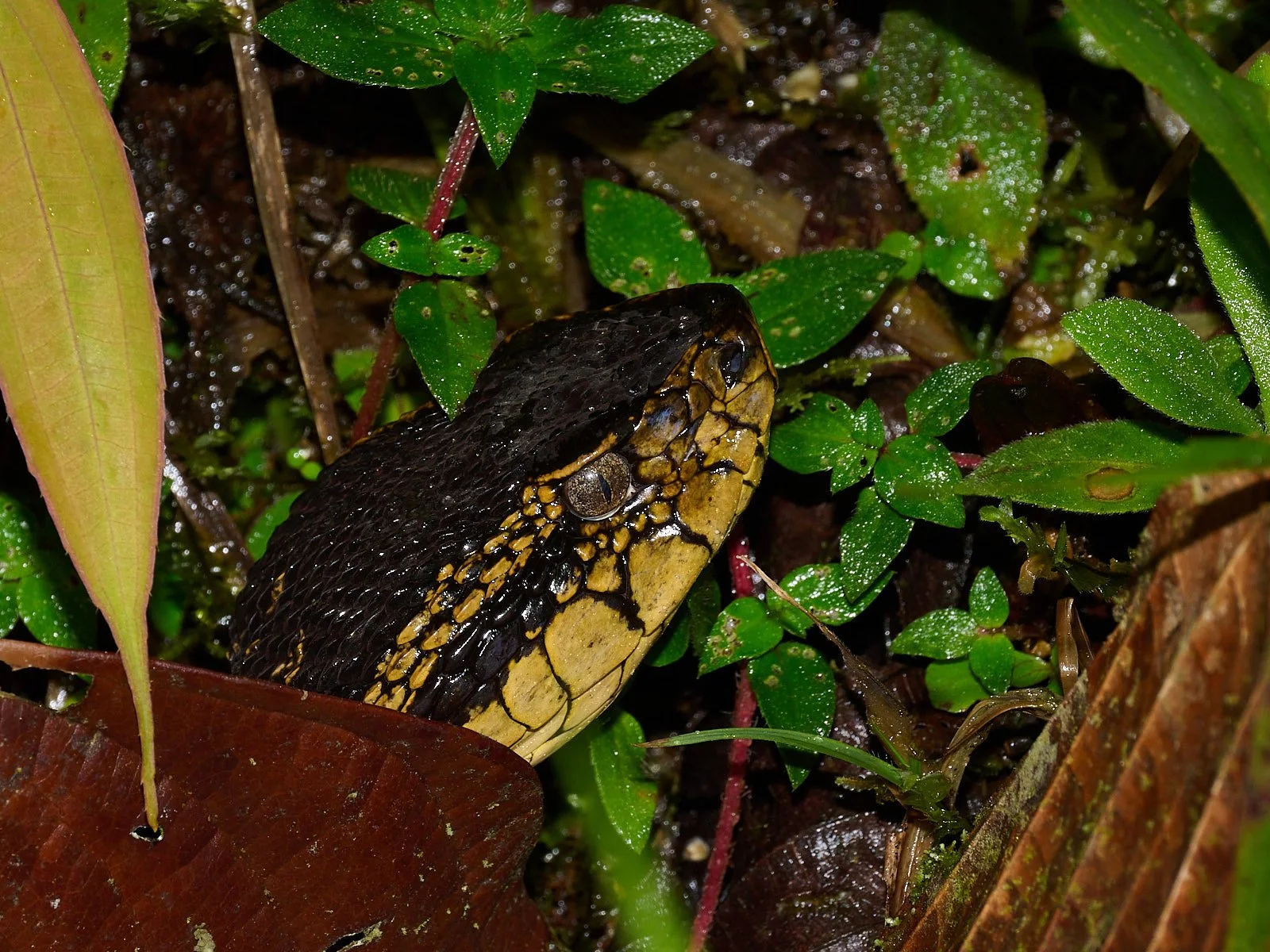
Fer-de-Lance, an extremely poisonous viper
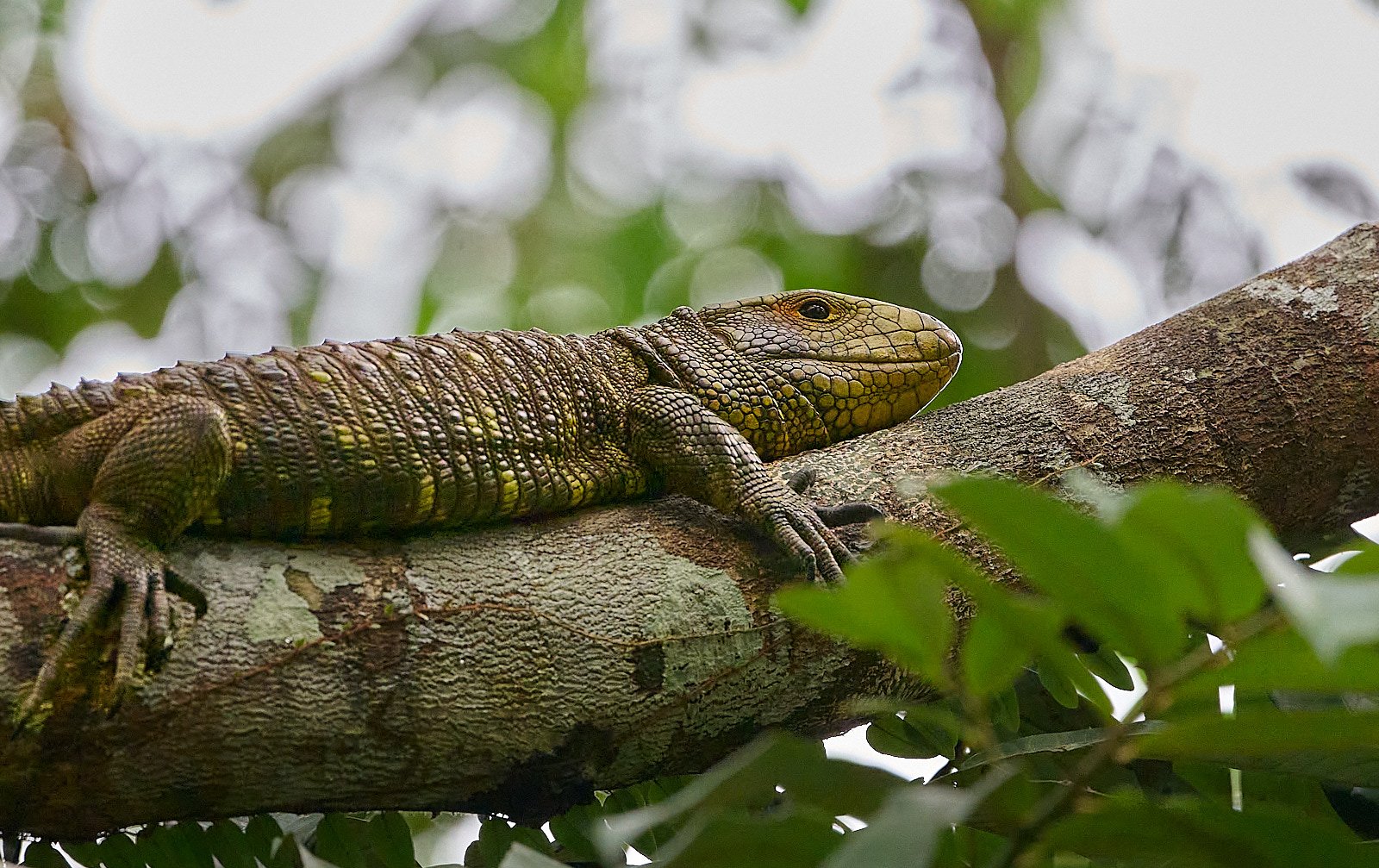
Northern caiman lizard
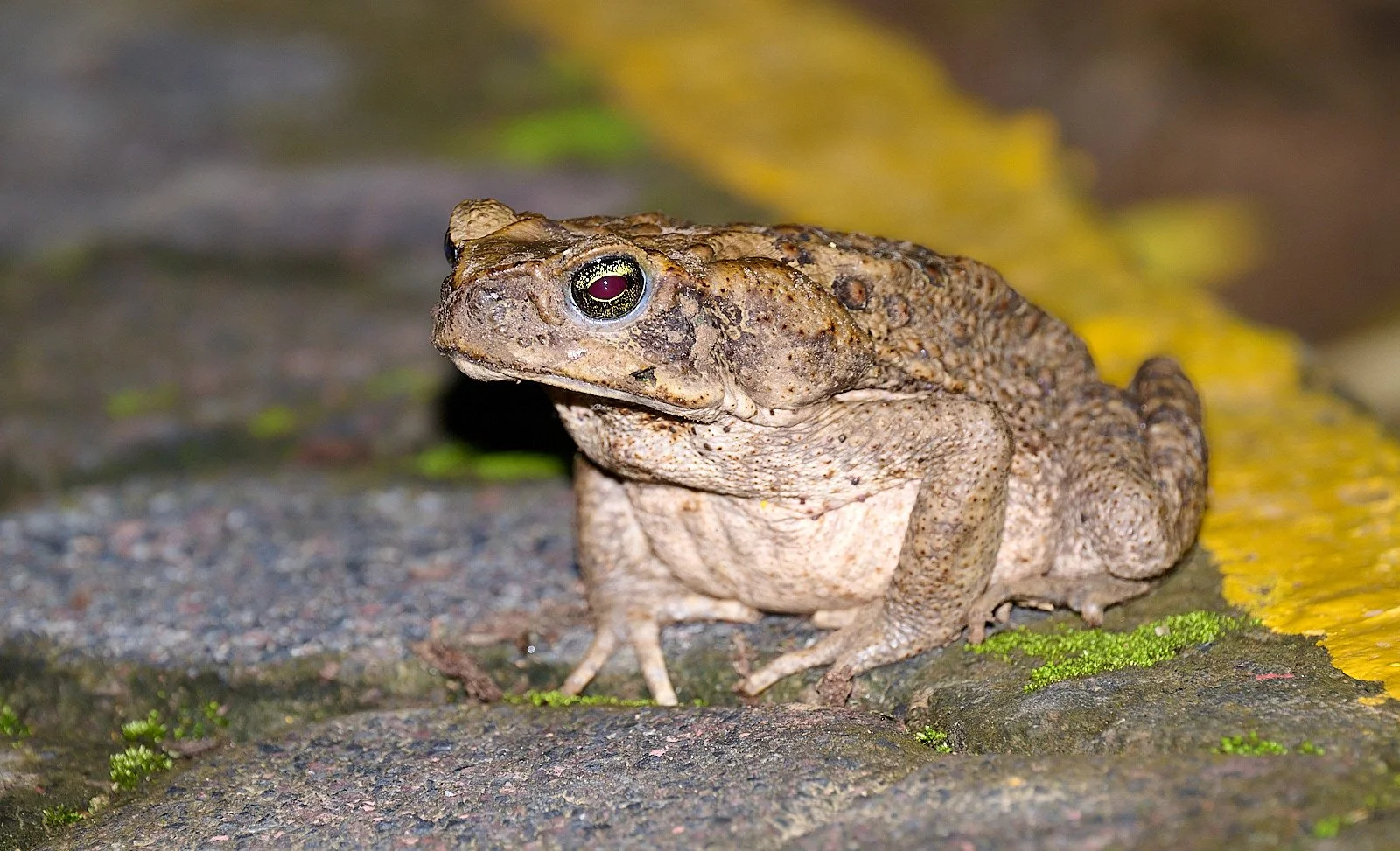
Cane frog
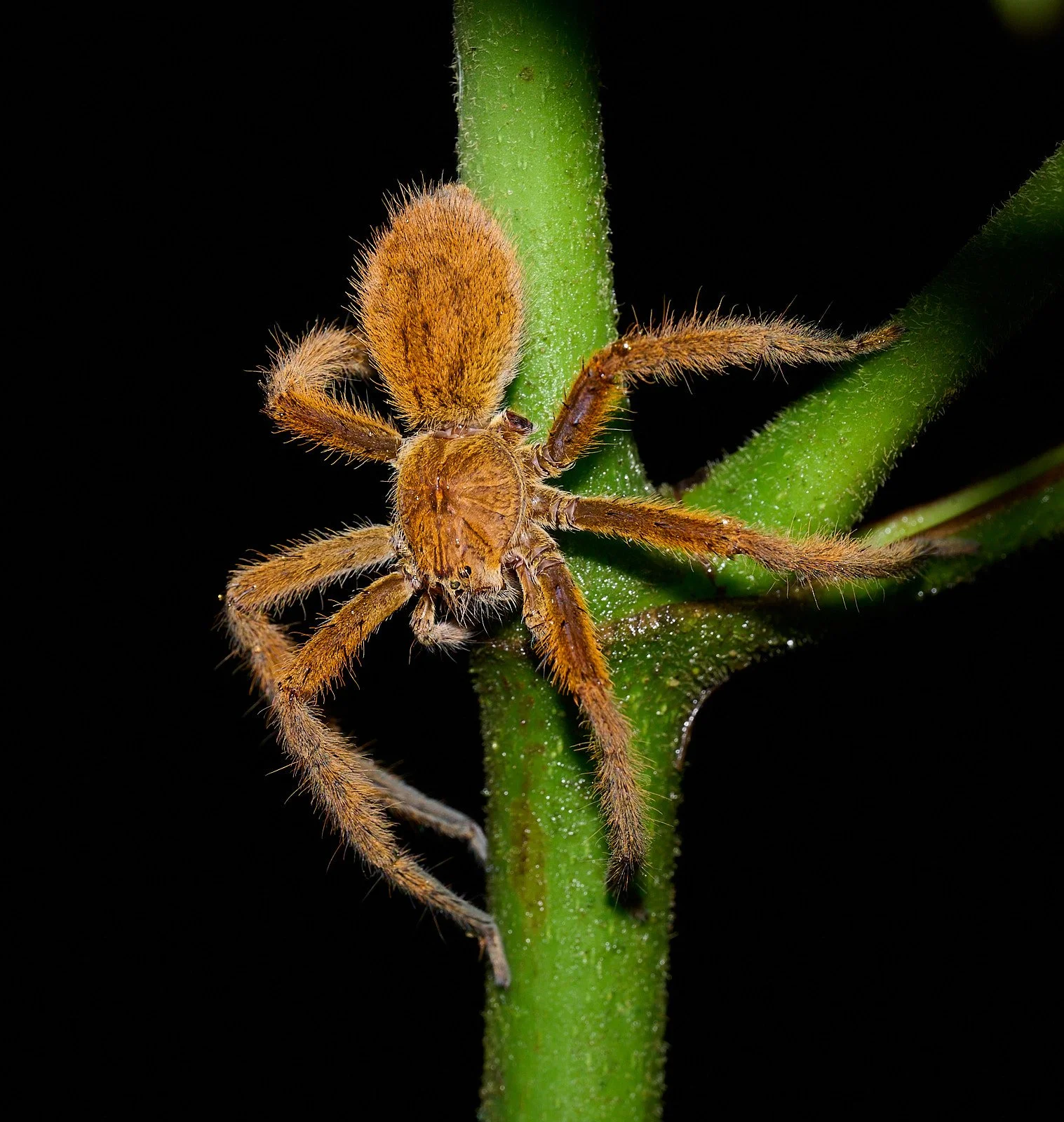
Orb spider
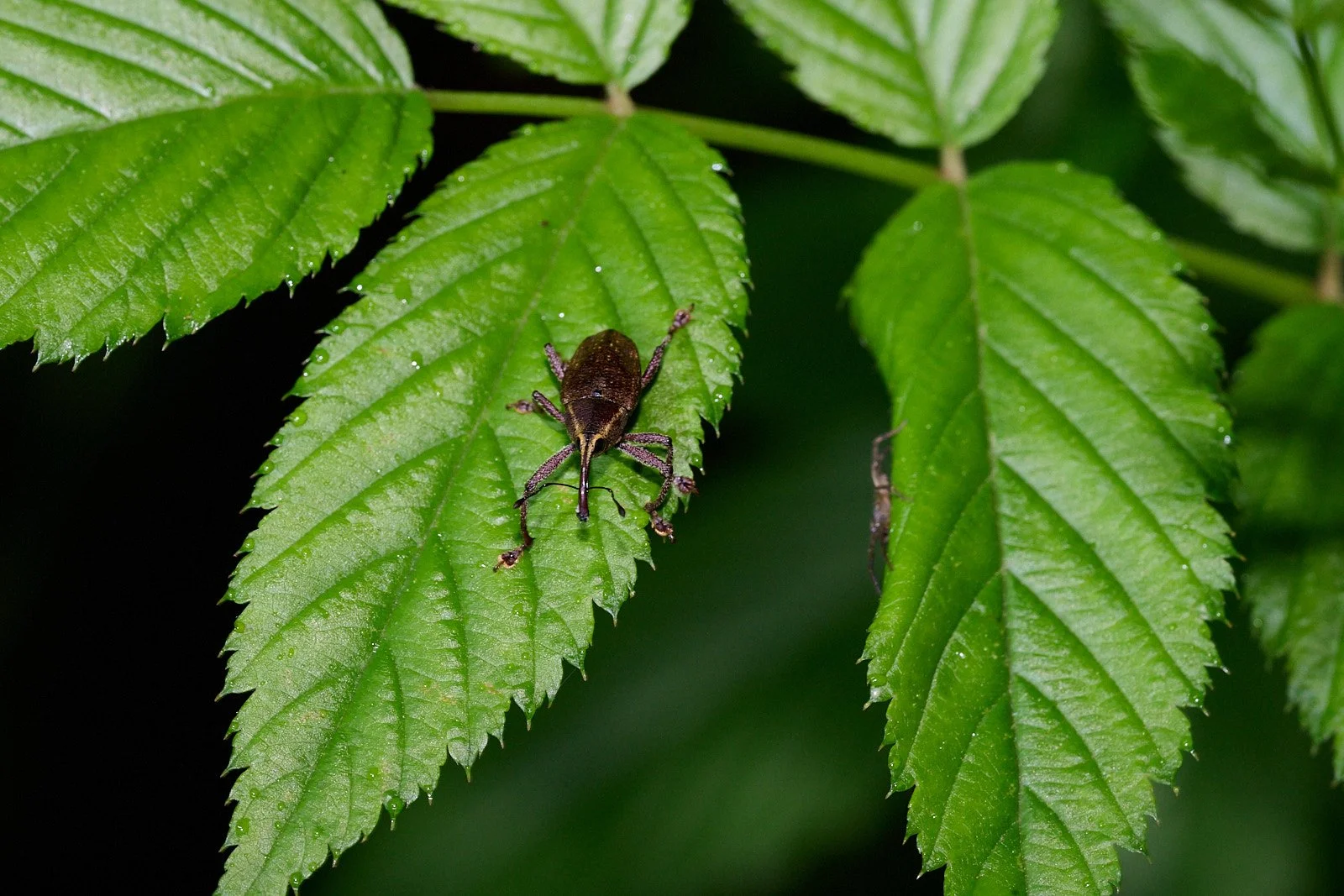
Lixus beetle
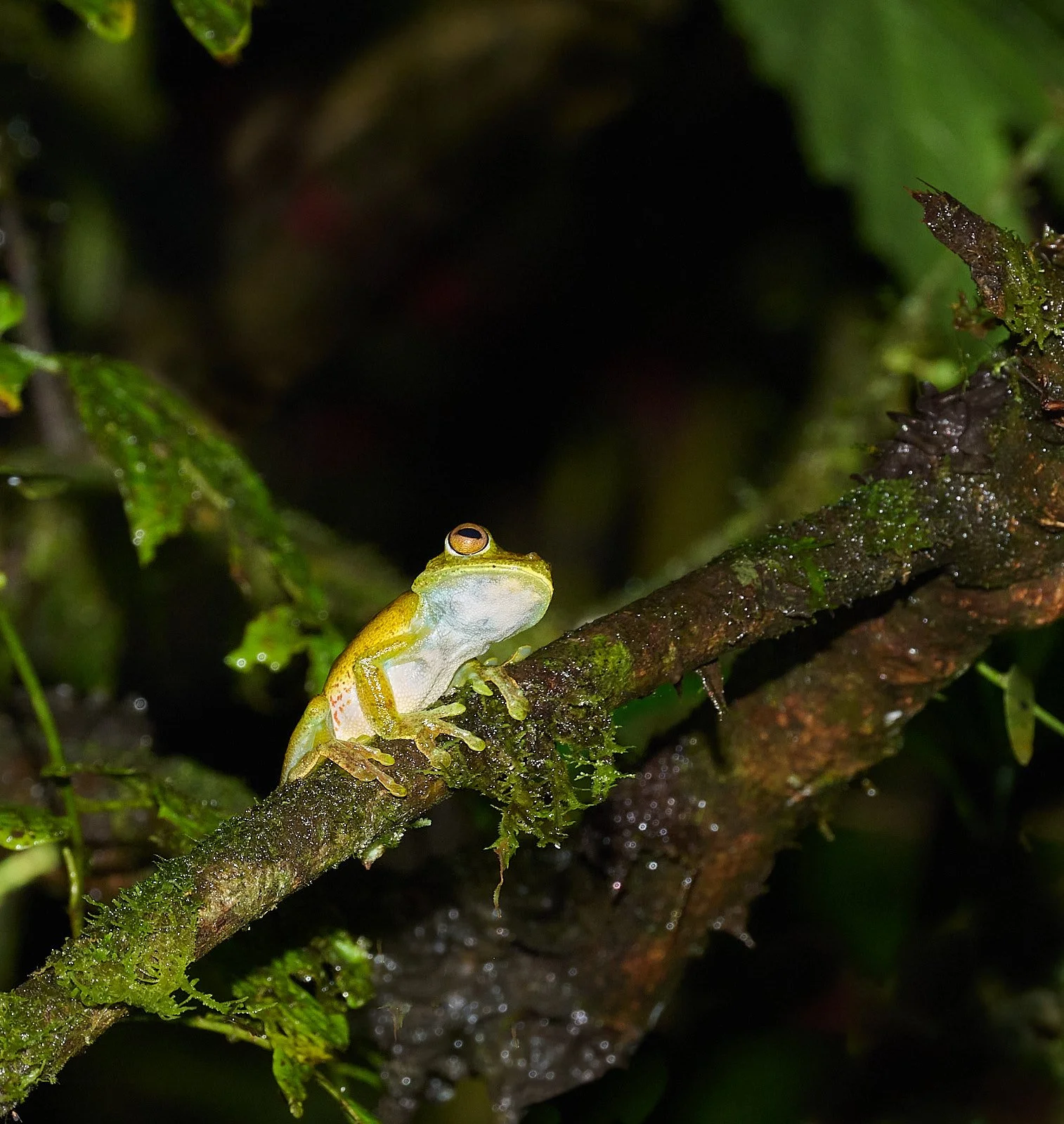
Emerald glass frog
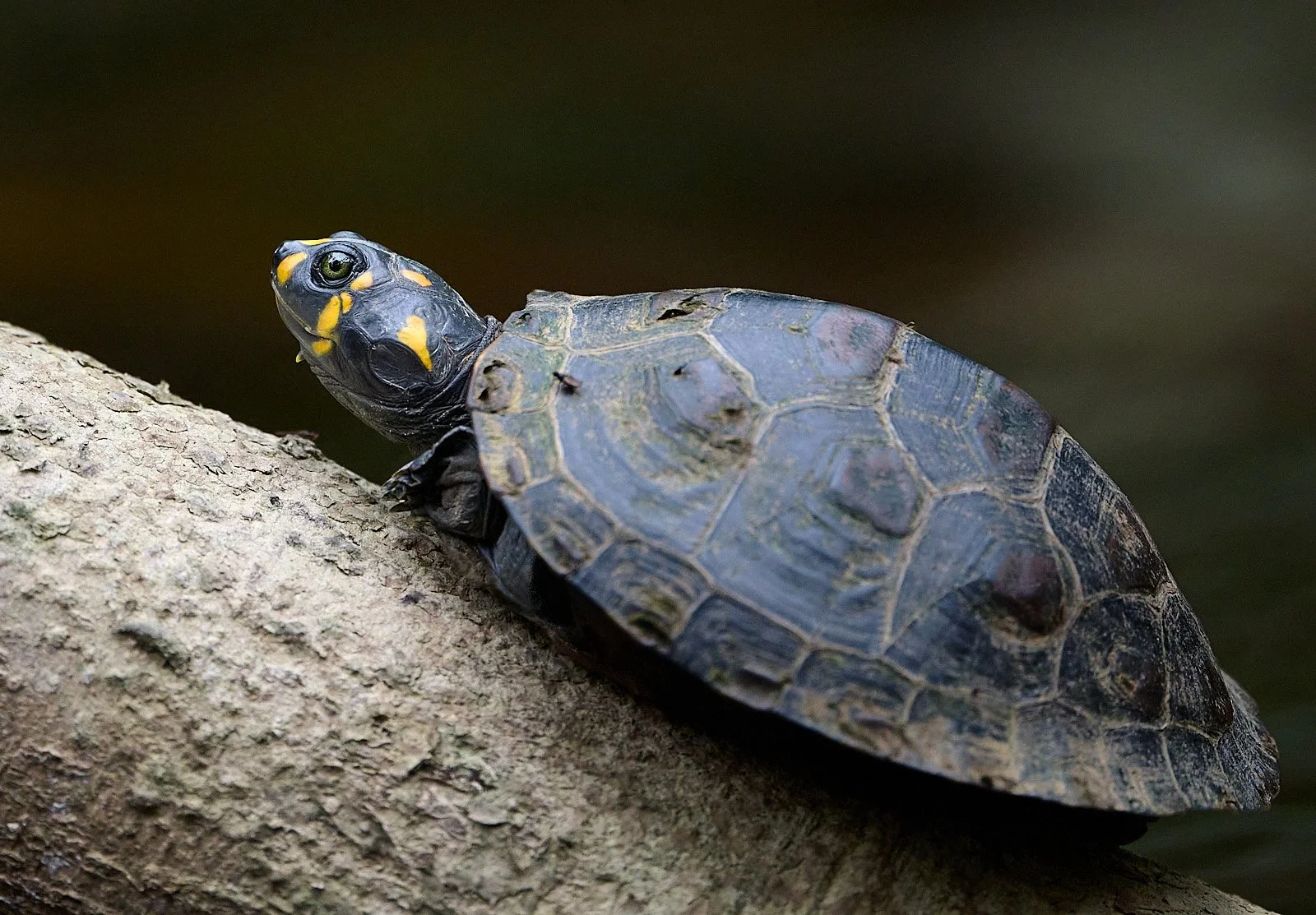
Yellow-headed Sideneck
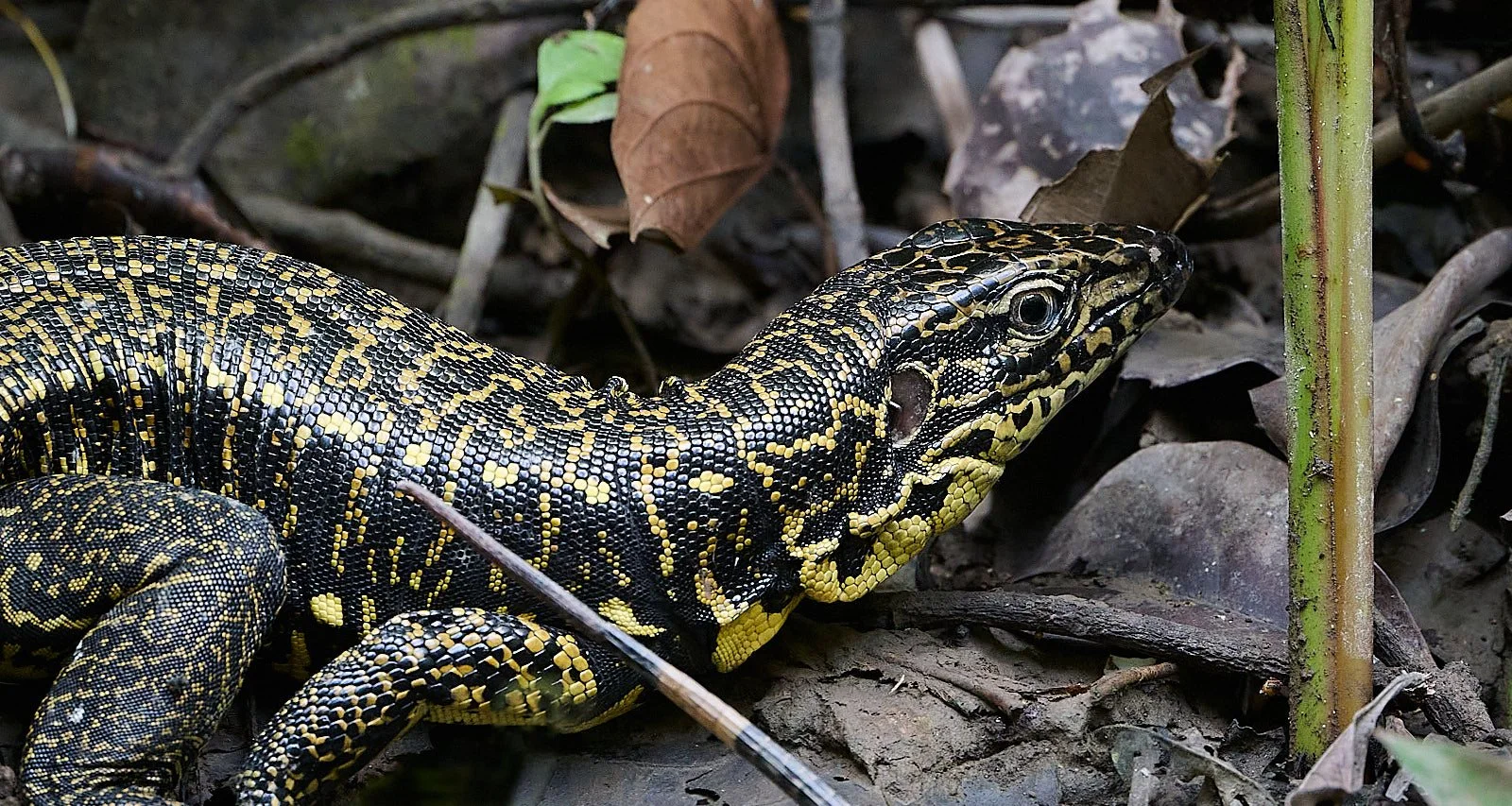
Cuzco Tegu
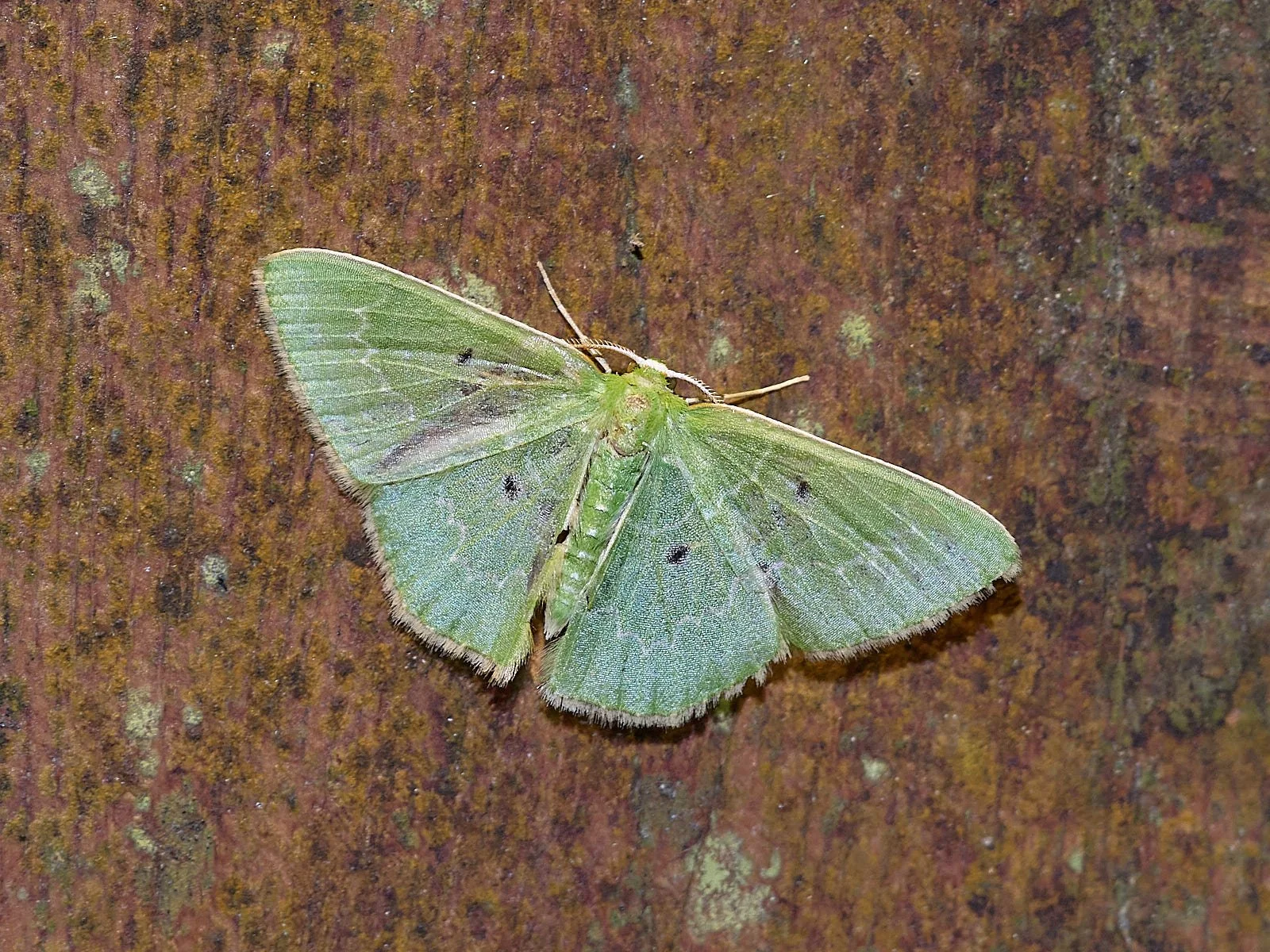
Unknown moth in Eastern Andes foothills
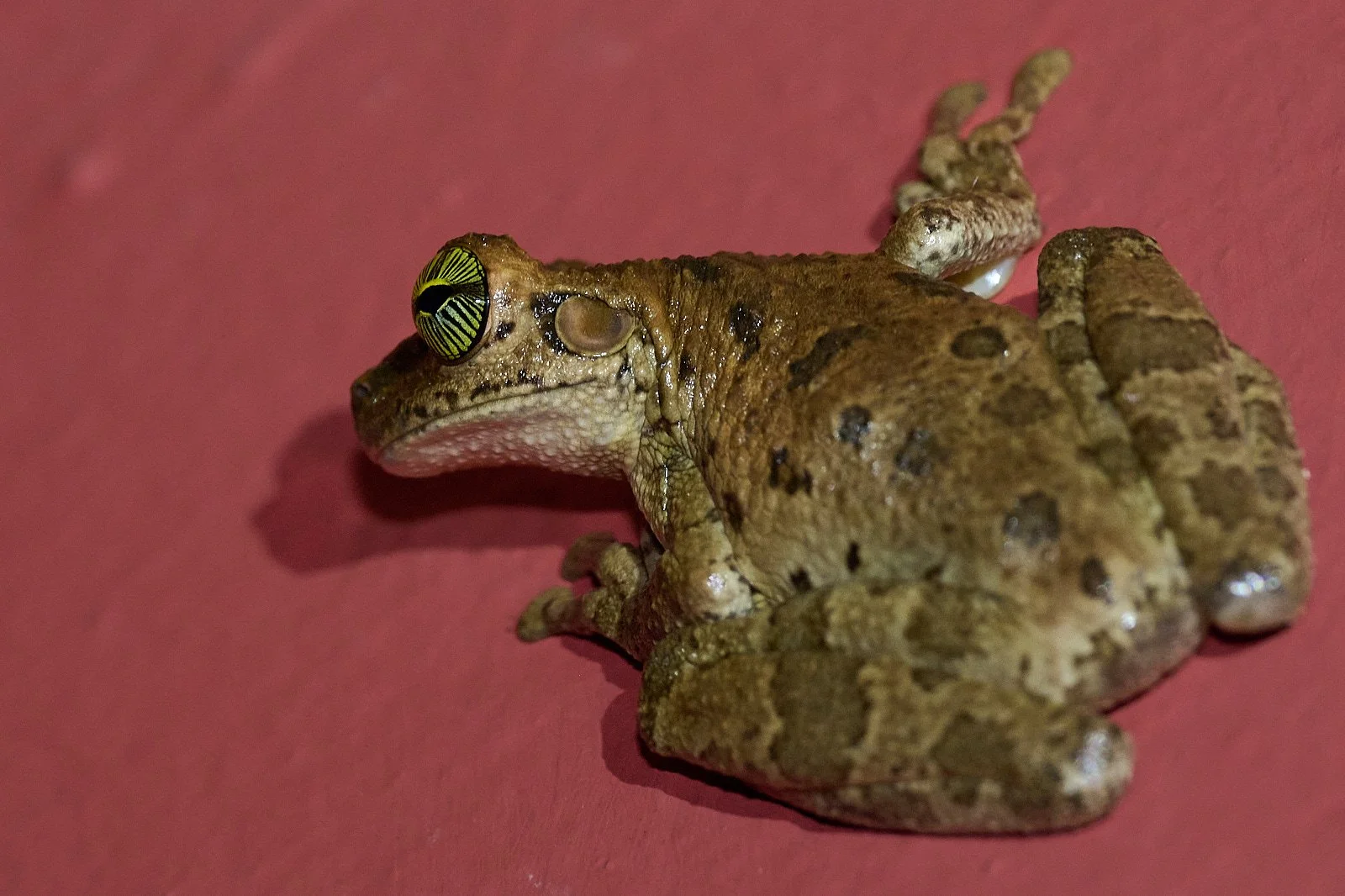
Unknown frog, Amazon lowlands
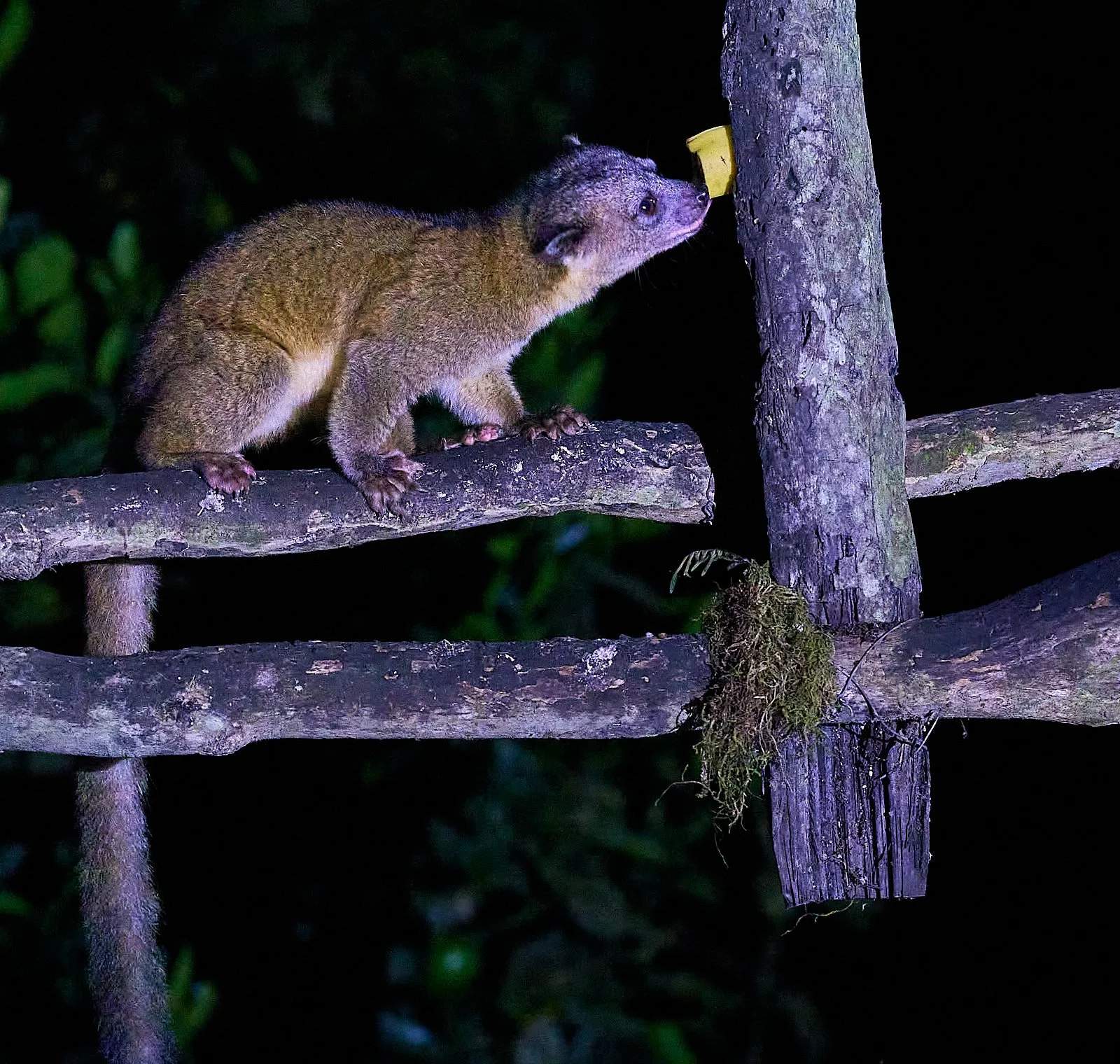
Western lowland olingo
Agouti
The Black Agouti is a common, large, diurnal rodent that lives in forests east of the Andes and eats seeds, fruit and roots. It dexterously holds and manipulates food, sitting much like a squirrel. Agoutis are important seed dispersers, collecting more seeds than they can consume at once and burying the remainder in a widely scattered pattern (scatter hoarding). This hides the cache from other seed consumers (e.g.: peccaries) and provides food during times of shortage.
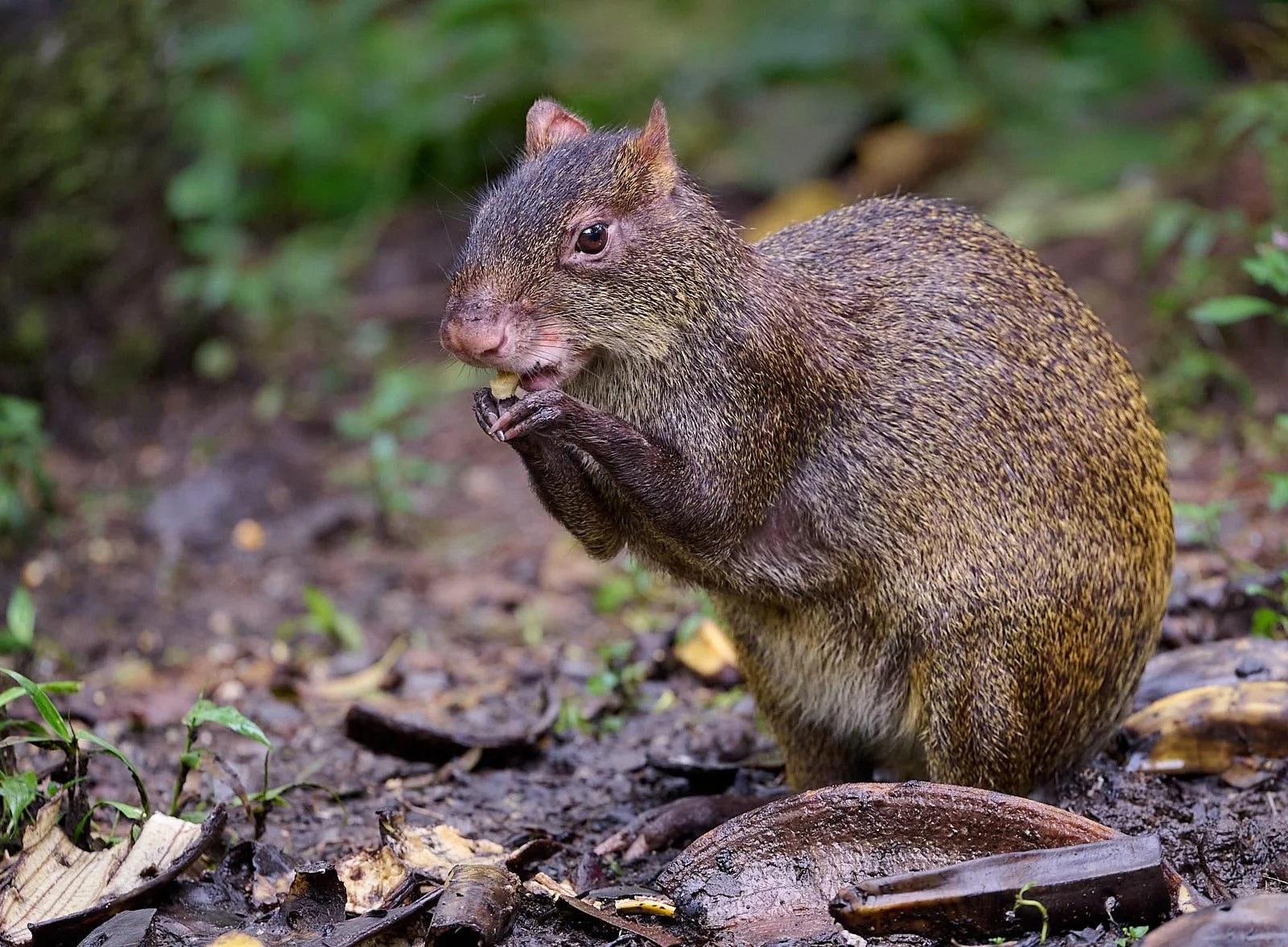
Black agouti
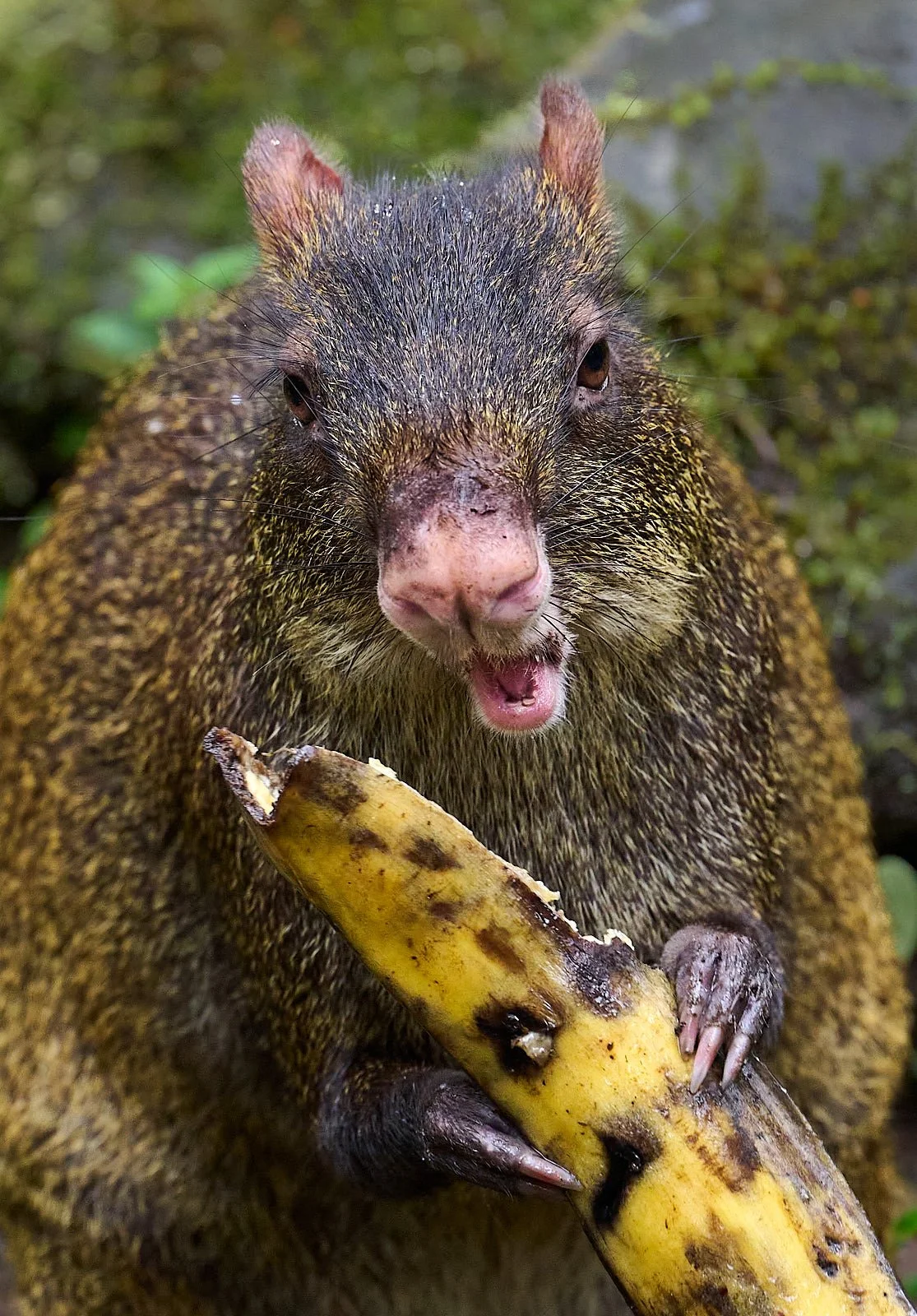
Black agouti
Giant Otter
A member of the weasel family (Mustelidae), the Giant Otter (Pteronura brasiliensis) is found in the Amazon Basin, usually at lakes and languid rivers. It is large (34 kg, 75 lb), has fully webbed feet, and a semi-flattened tail, somewhat like an elongate beaver’s tail. The white throat pattern is unique to each individual.
Giant Otters are highly social, quite vocal, and move in family groups. Group members share roles, structured around the dominant breeding pair. The species is territorial, with groups marking their ranges with latrines, gland secretions, and vocalizations. They are diurnal and spend nights in lairs. The diet is primary fish, but the otter is a fierce predator and will take small caimans and anacondas.
We encountered a family transporting their young pups while moving house.

Giant otter
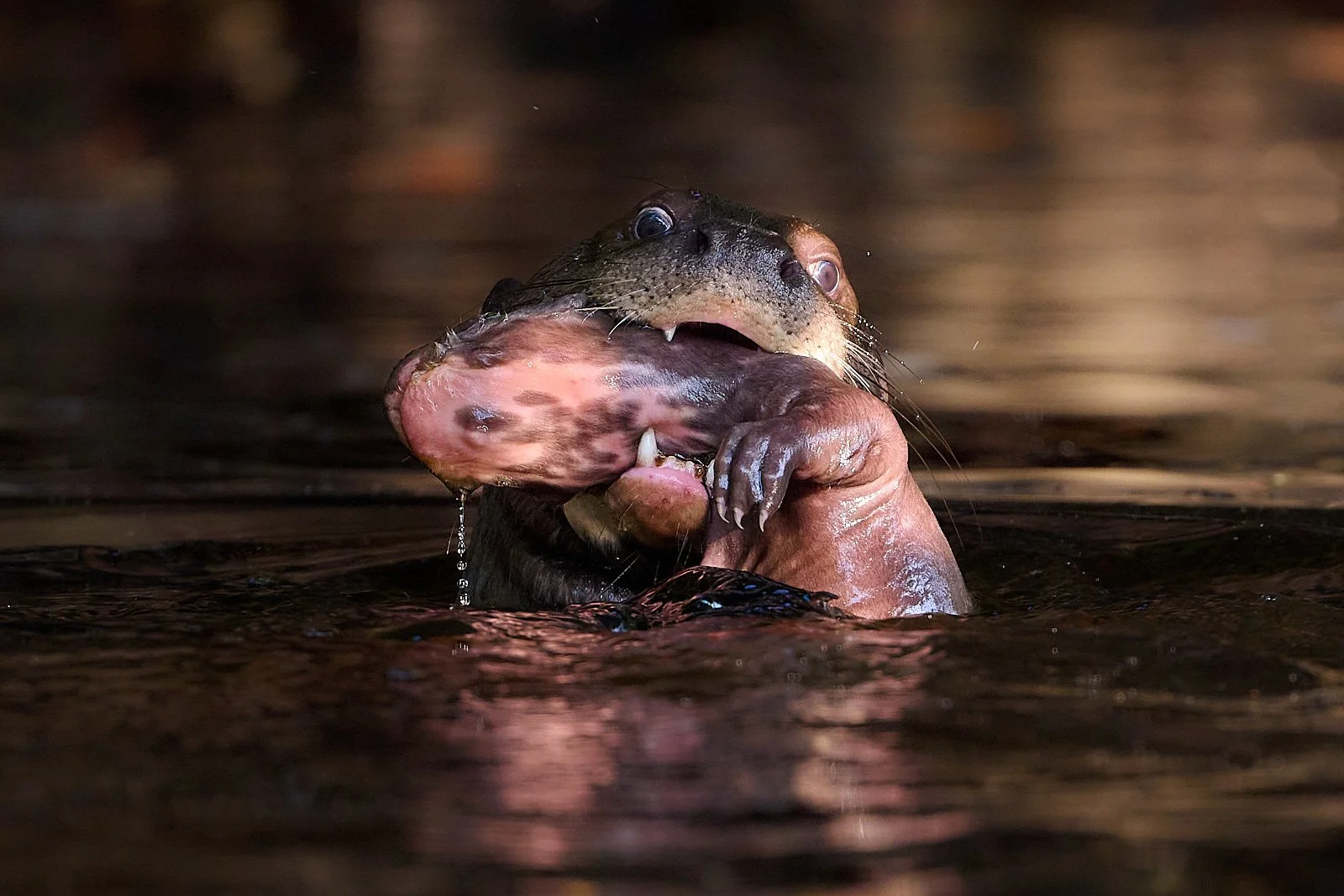
Giant otter with pup that must be about 4 weeks old. It’s eyes seemed to be closed and it could not walk.

Sunrise, photographed from a canopy tower