Ecuador #4: Andes to the Amazon. February 2026.
Amazon Basin
“No man ever steps in the same river twice, for it's not the same river and he's not the same man”. Heraclitus, circa 500BC
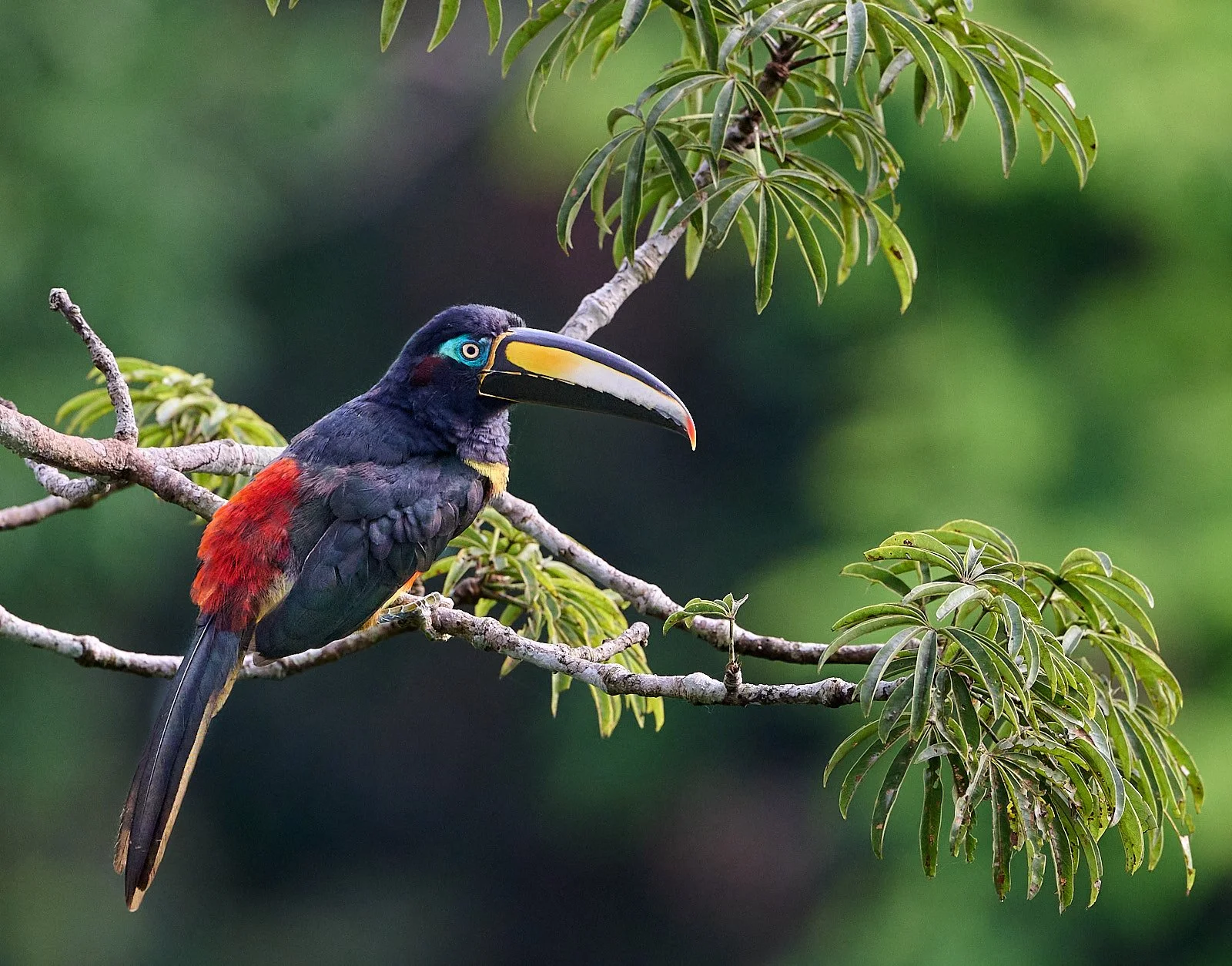
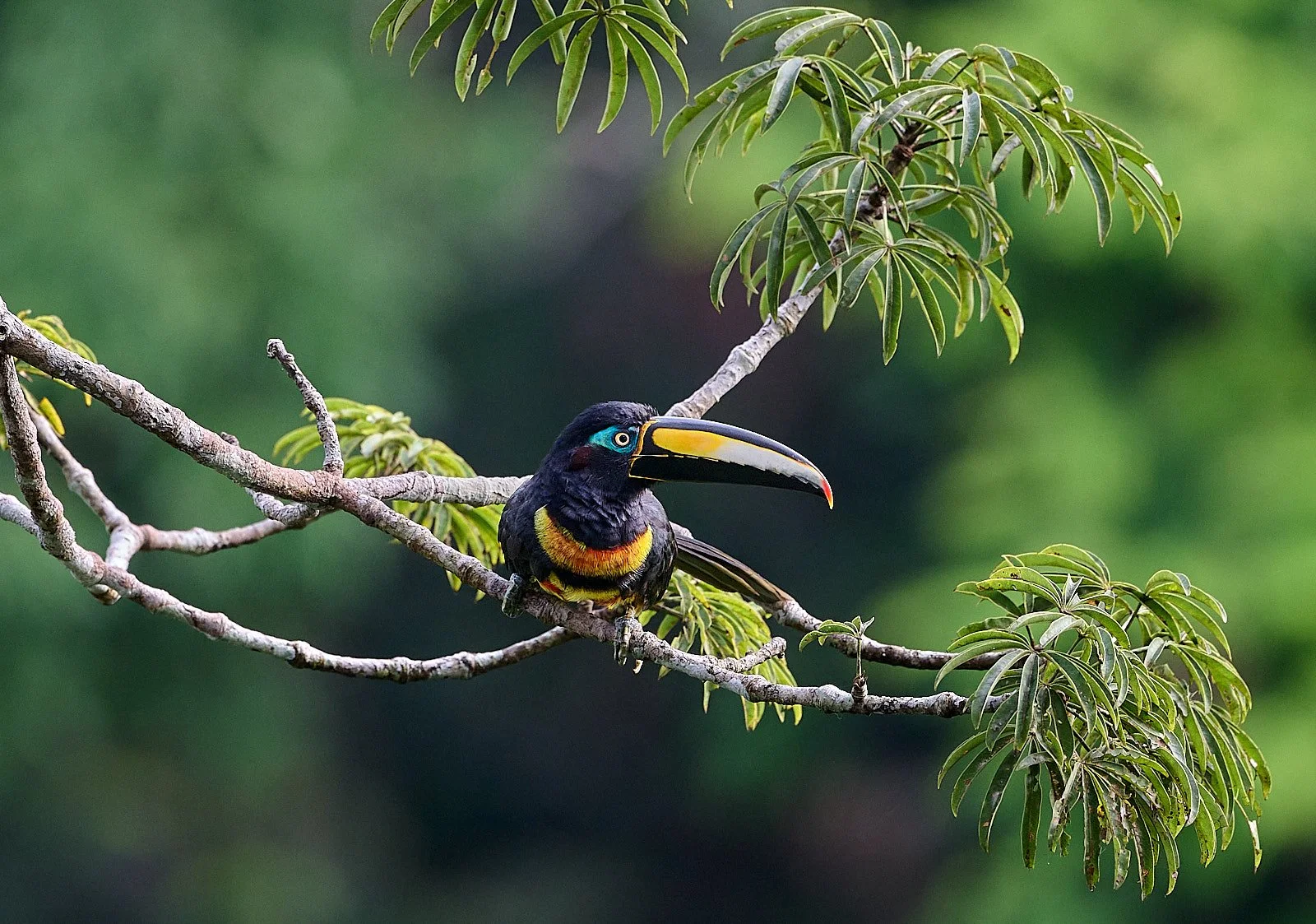
Many-banded Aracari
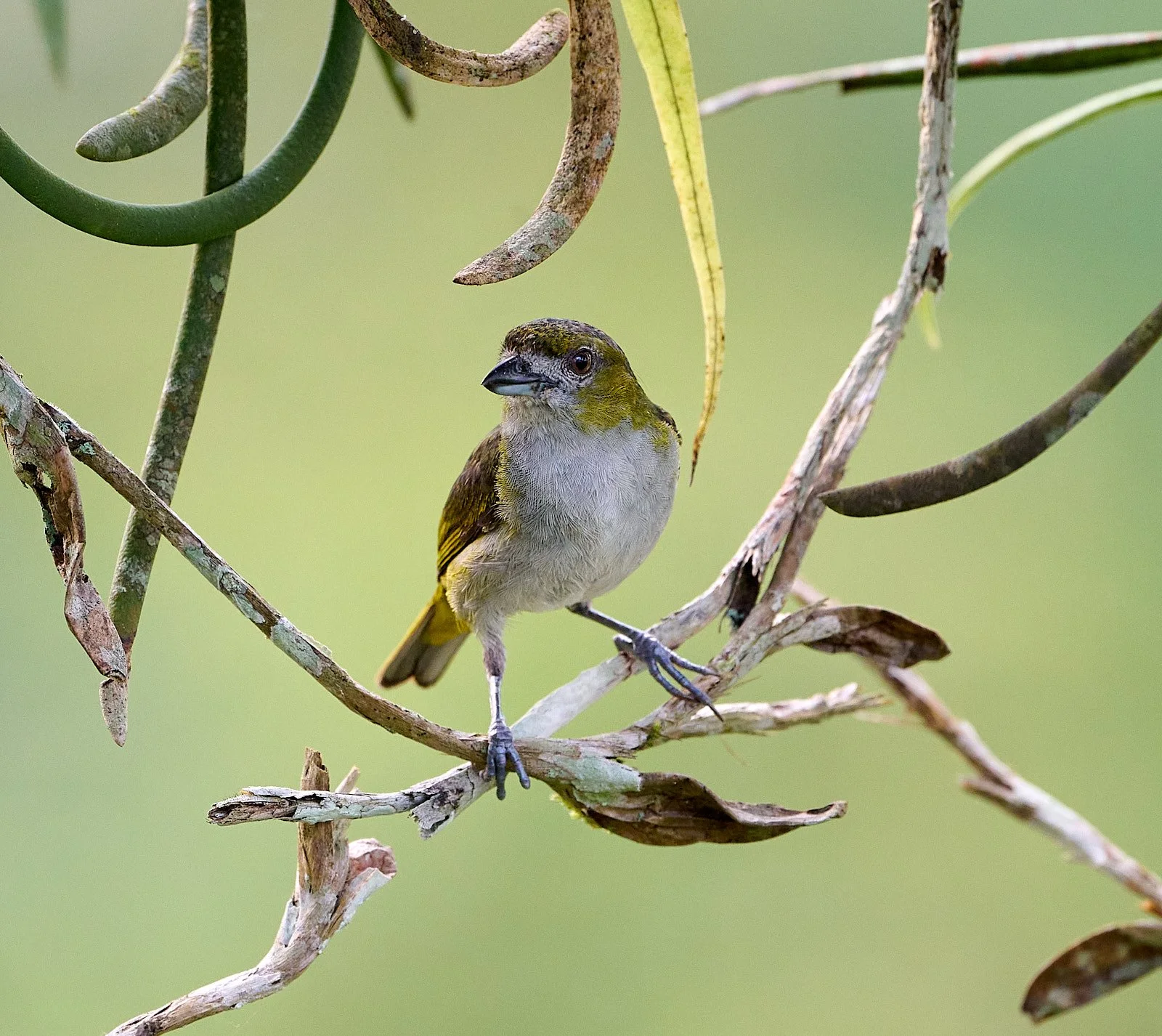
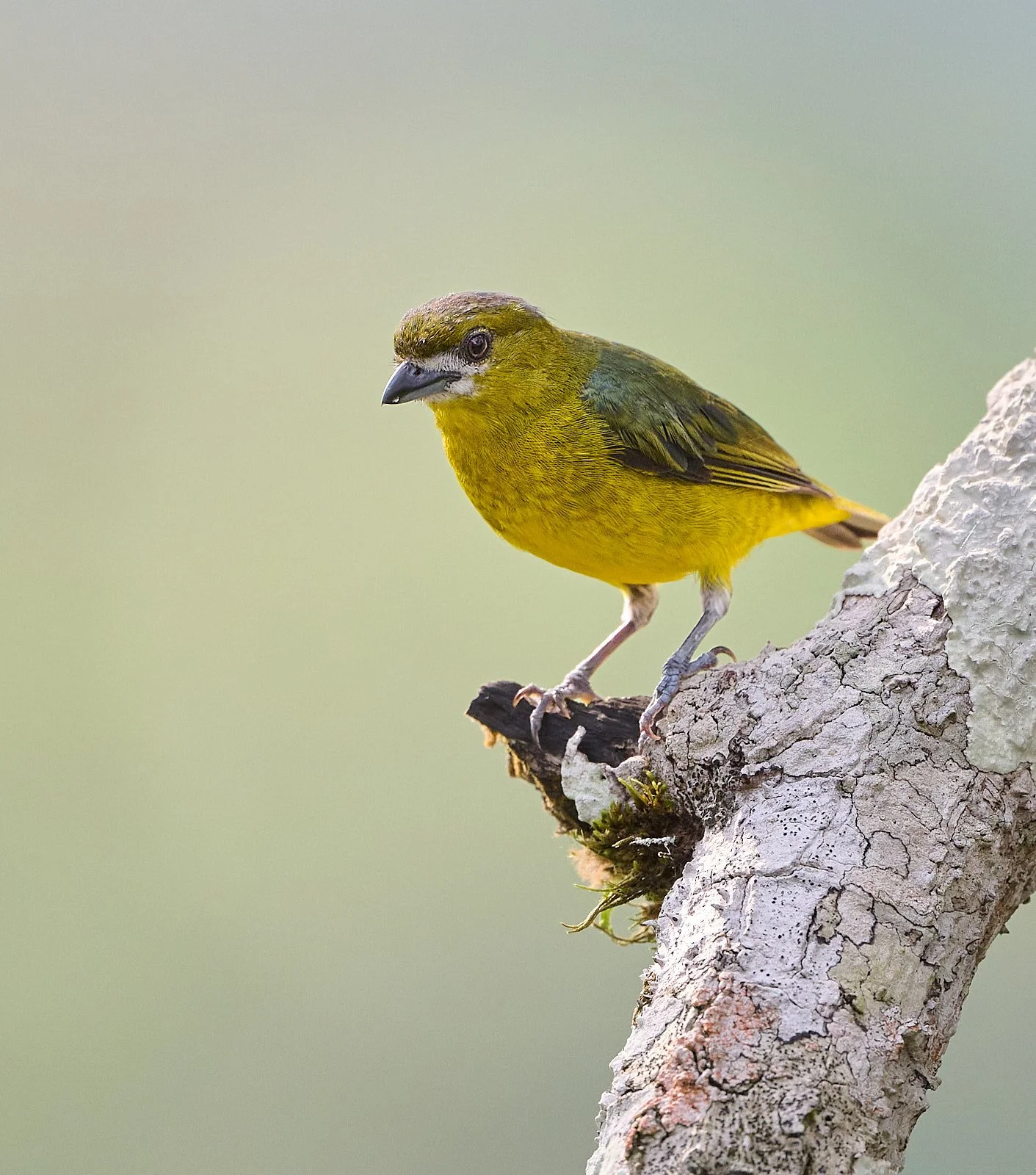
Golden-bellied Euphonia
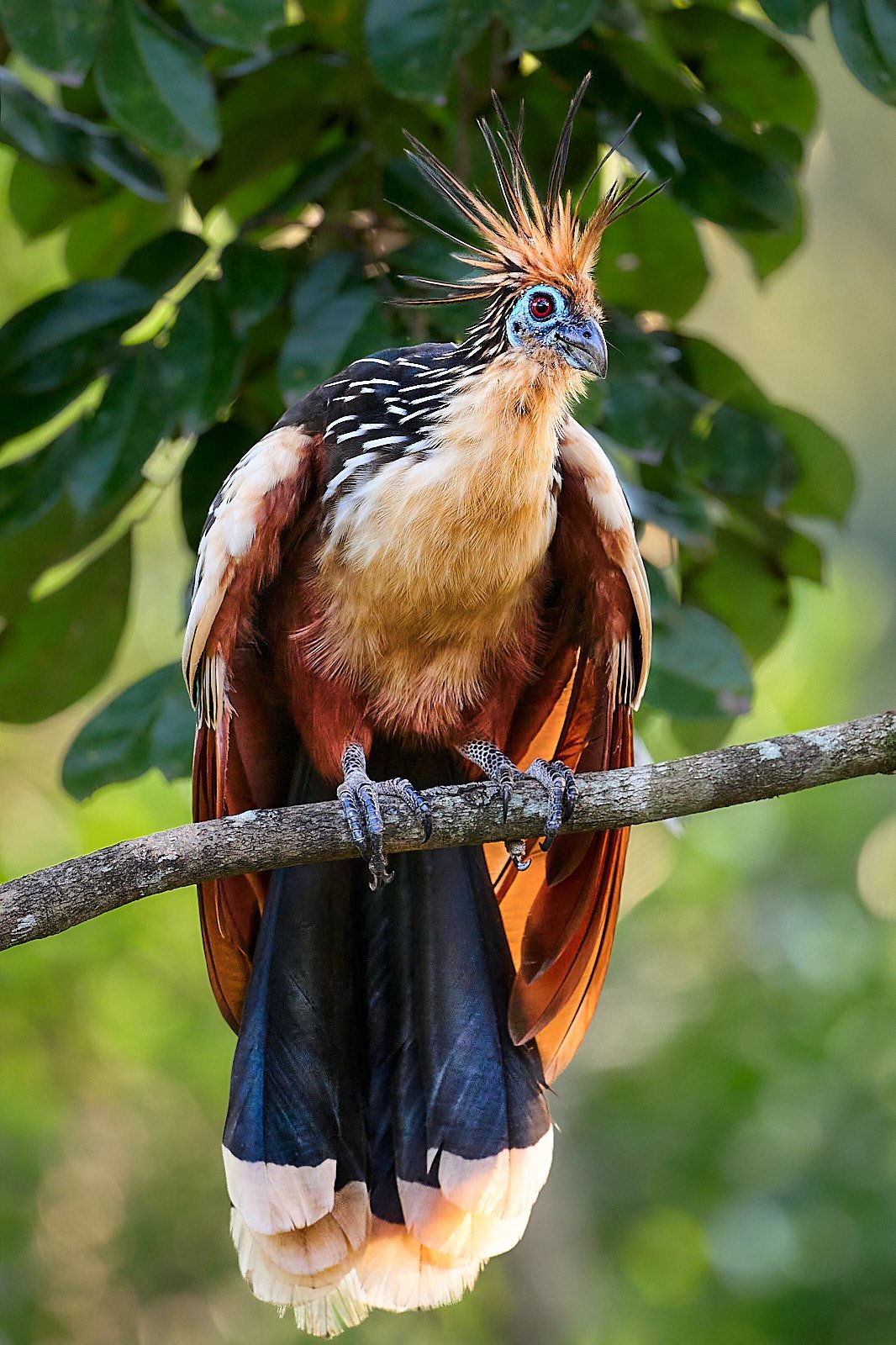
Hoatzin
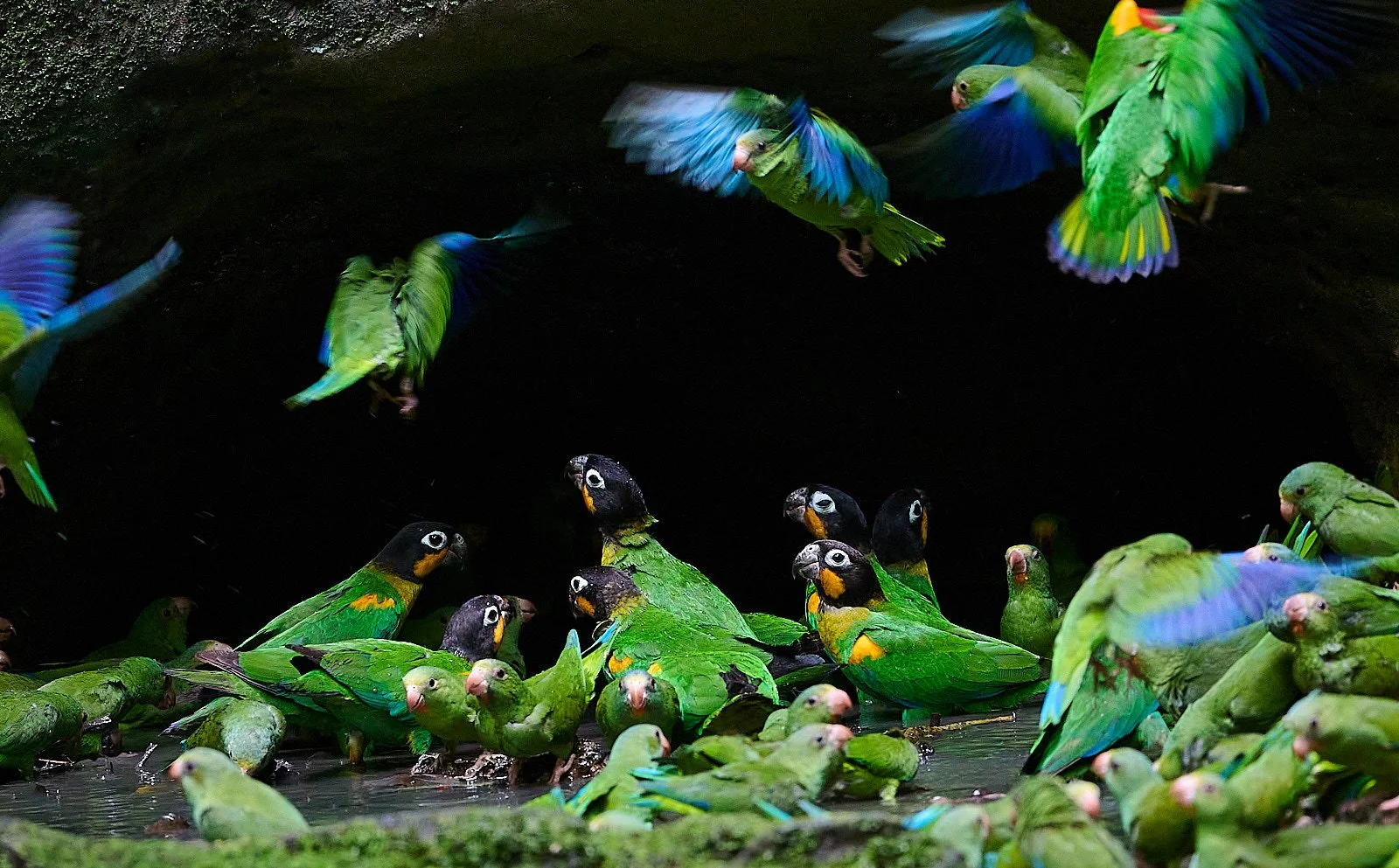
Orange-cheeked Parrots & Cobalt-winged Parokeets
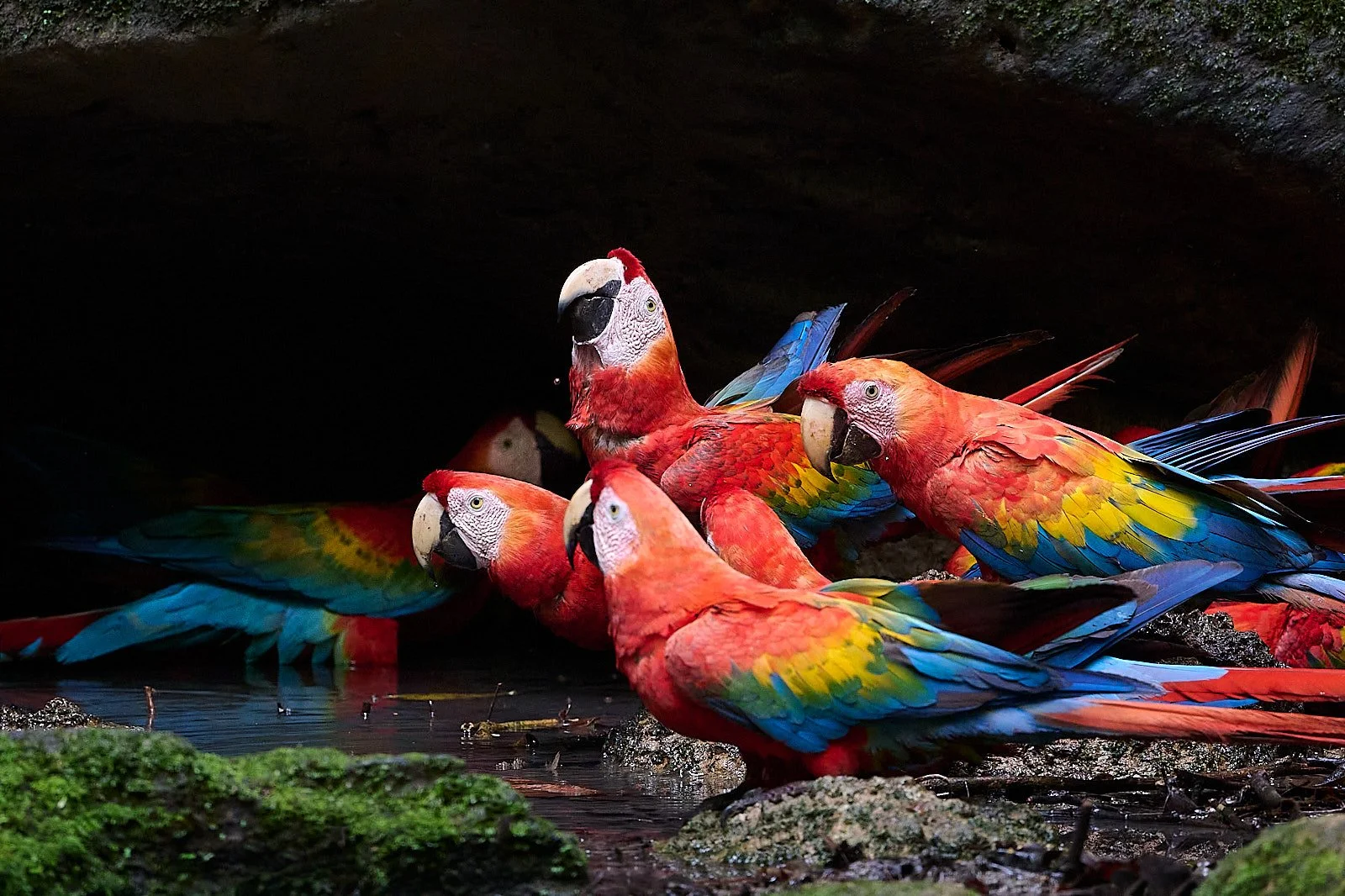
Scarlet Macaws
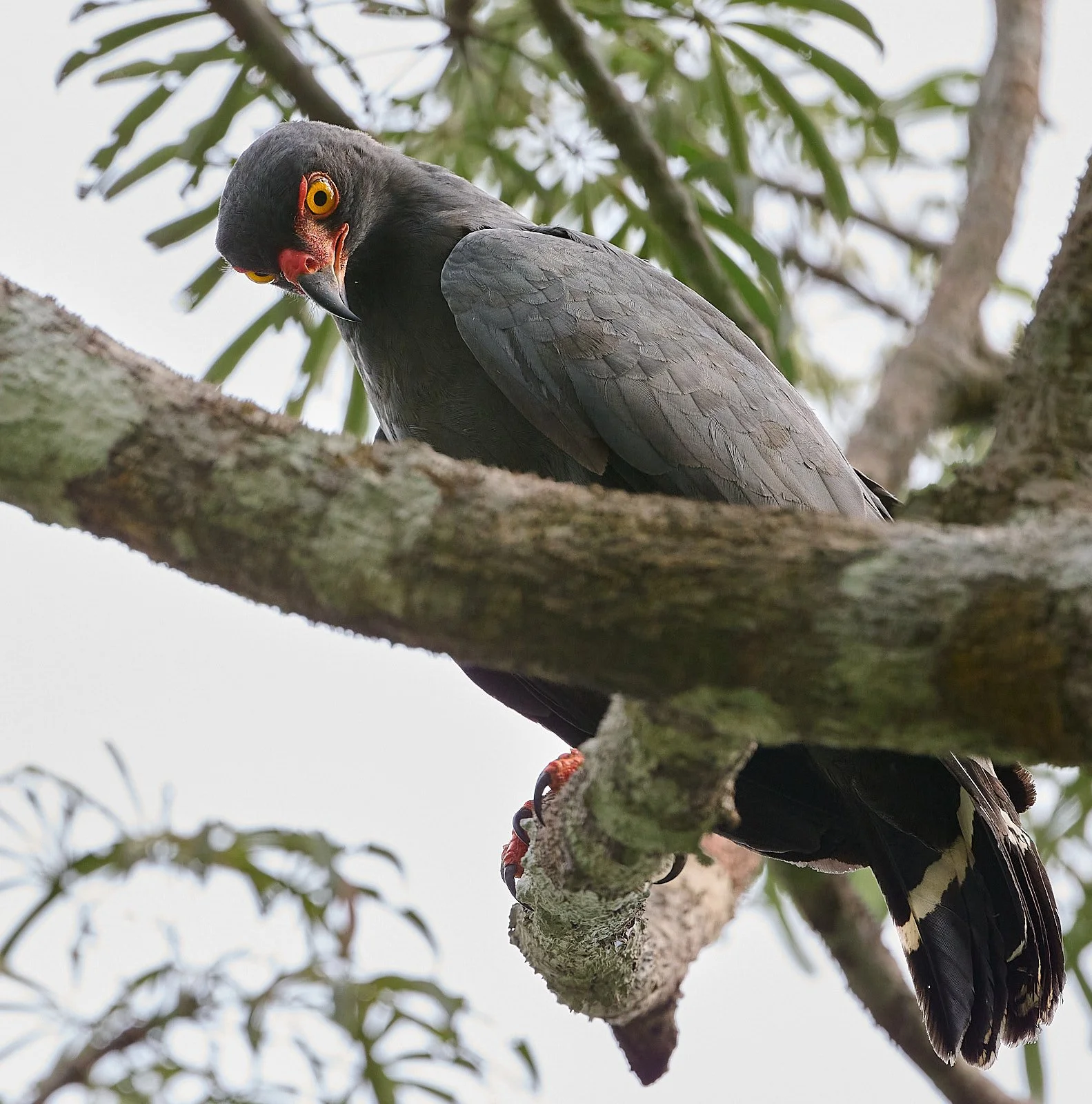
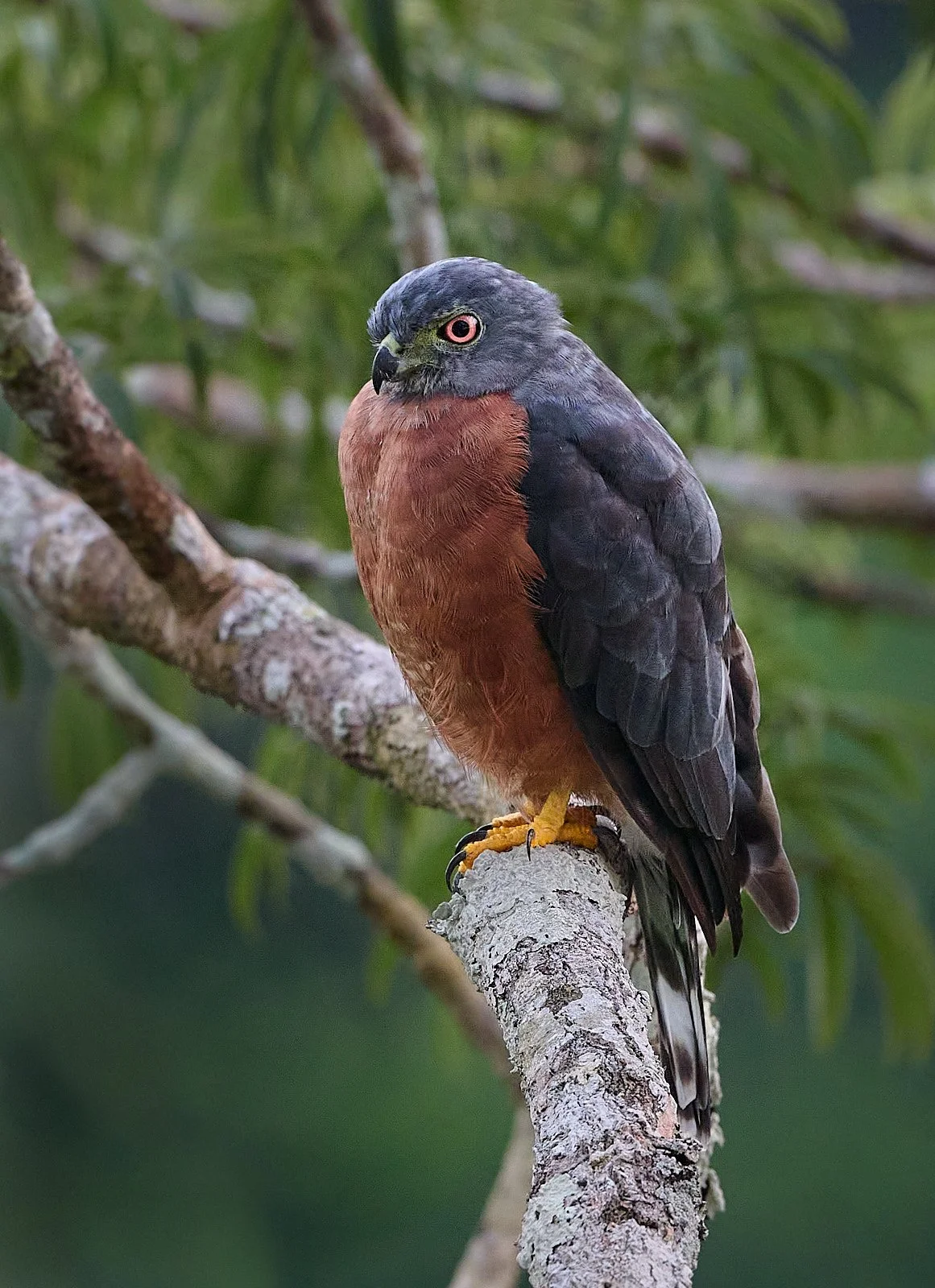
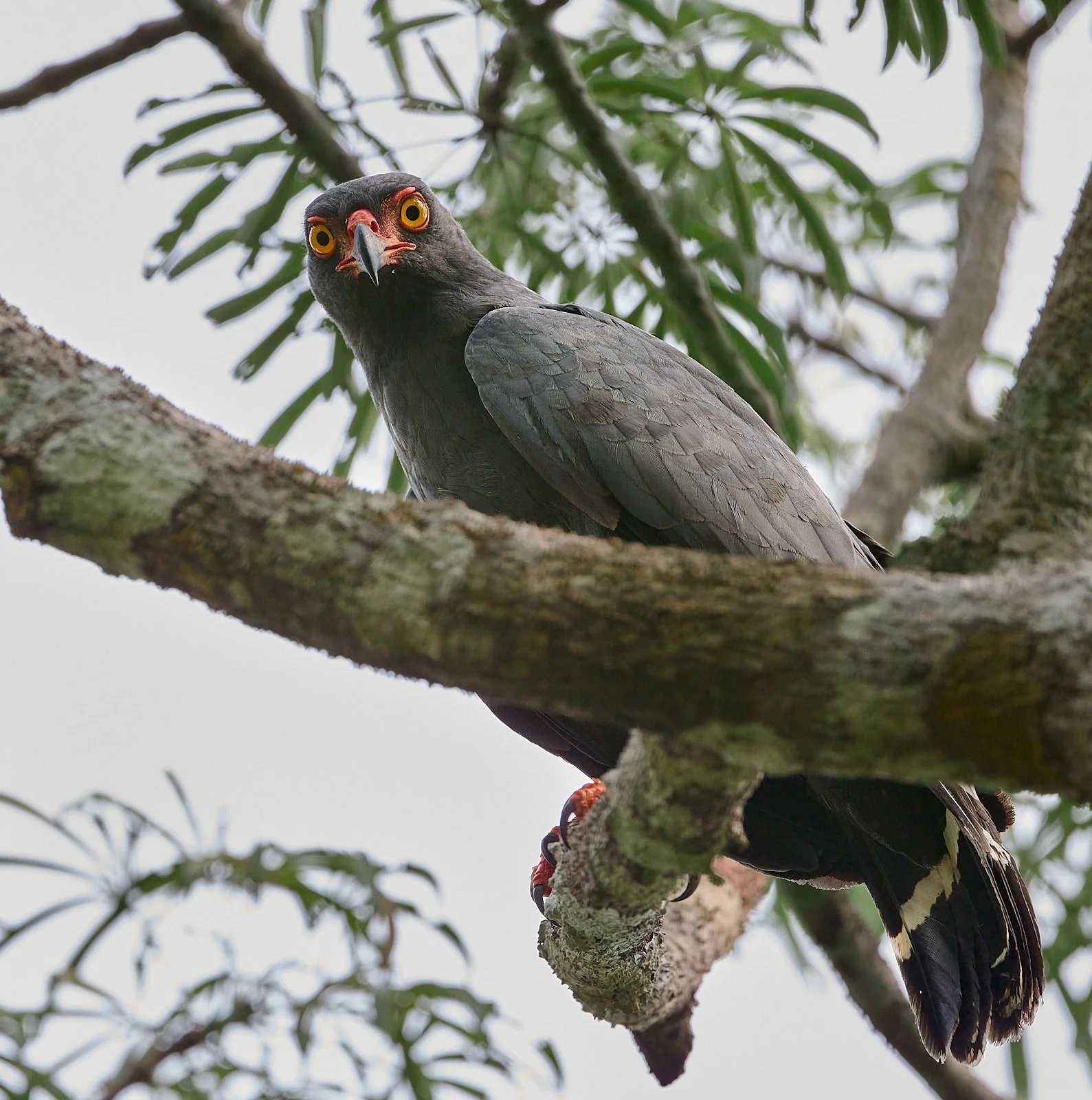
Slate-colored Hawk
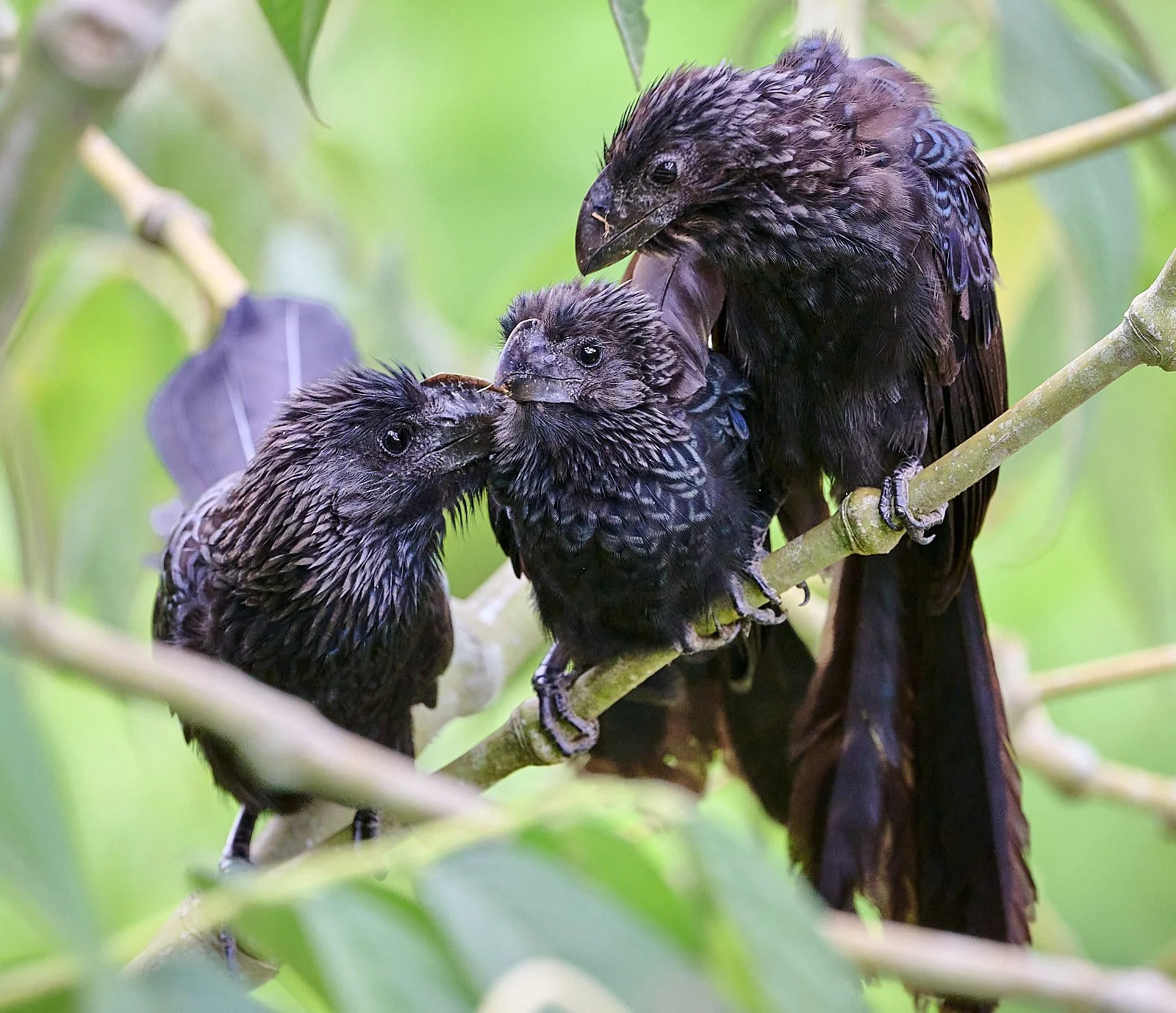
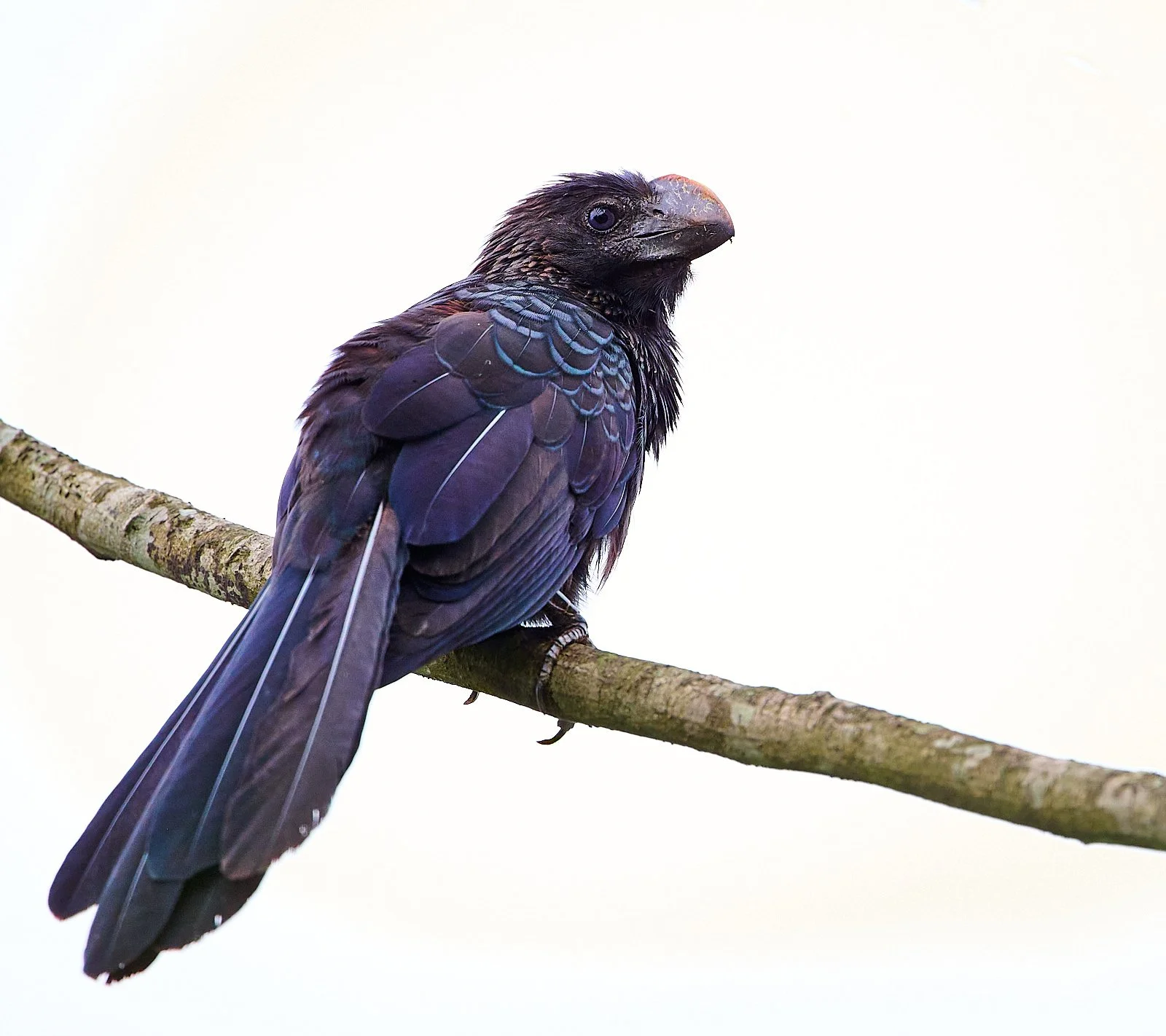
Smooth-billed Ani with young
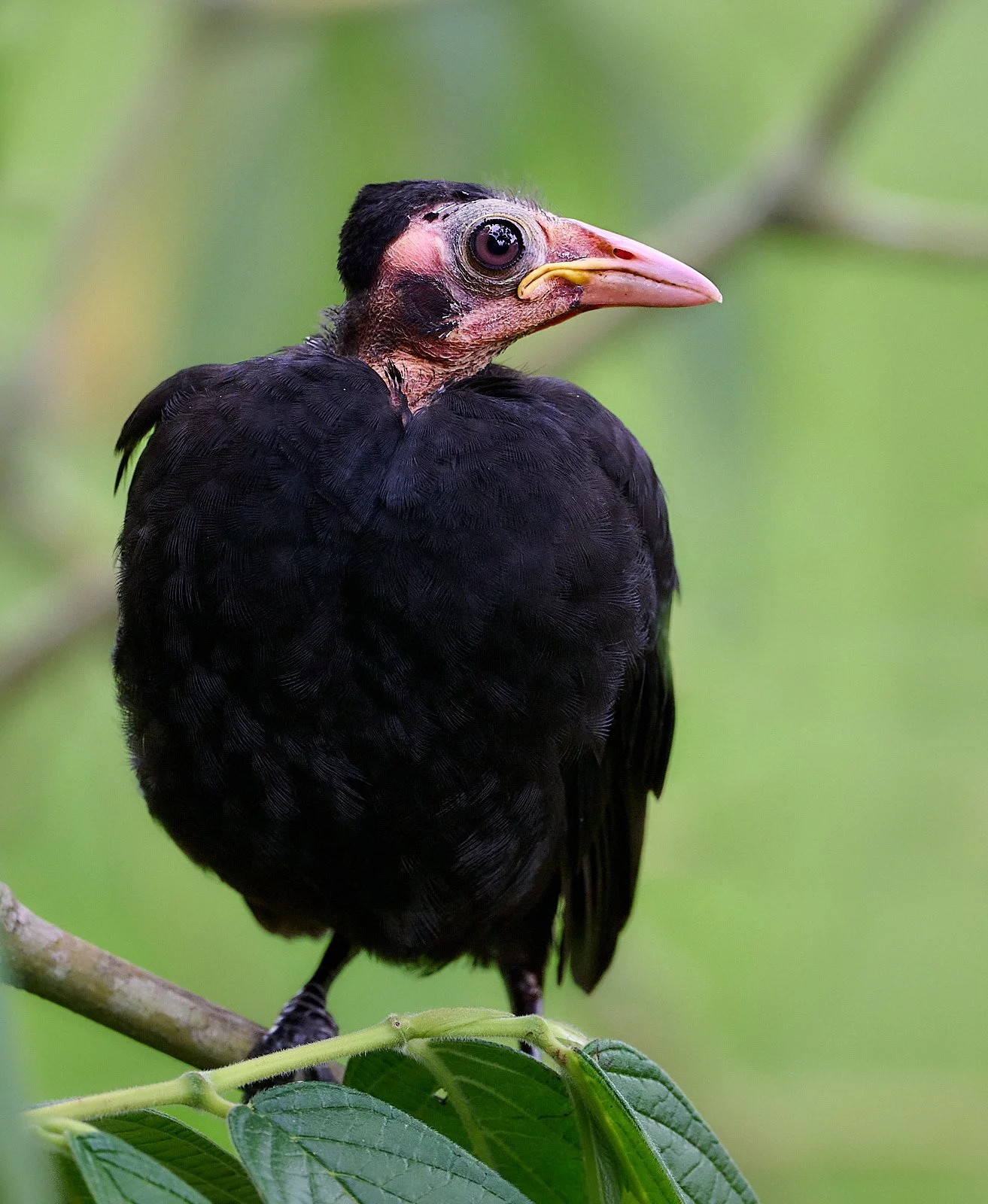
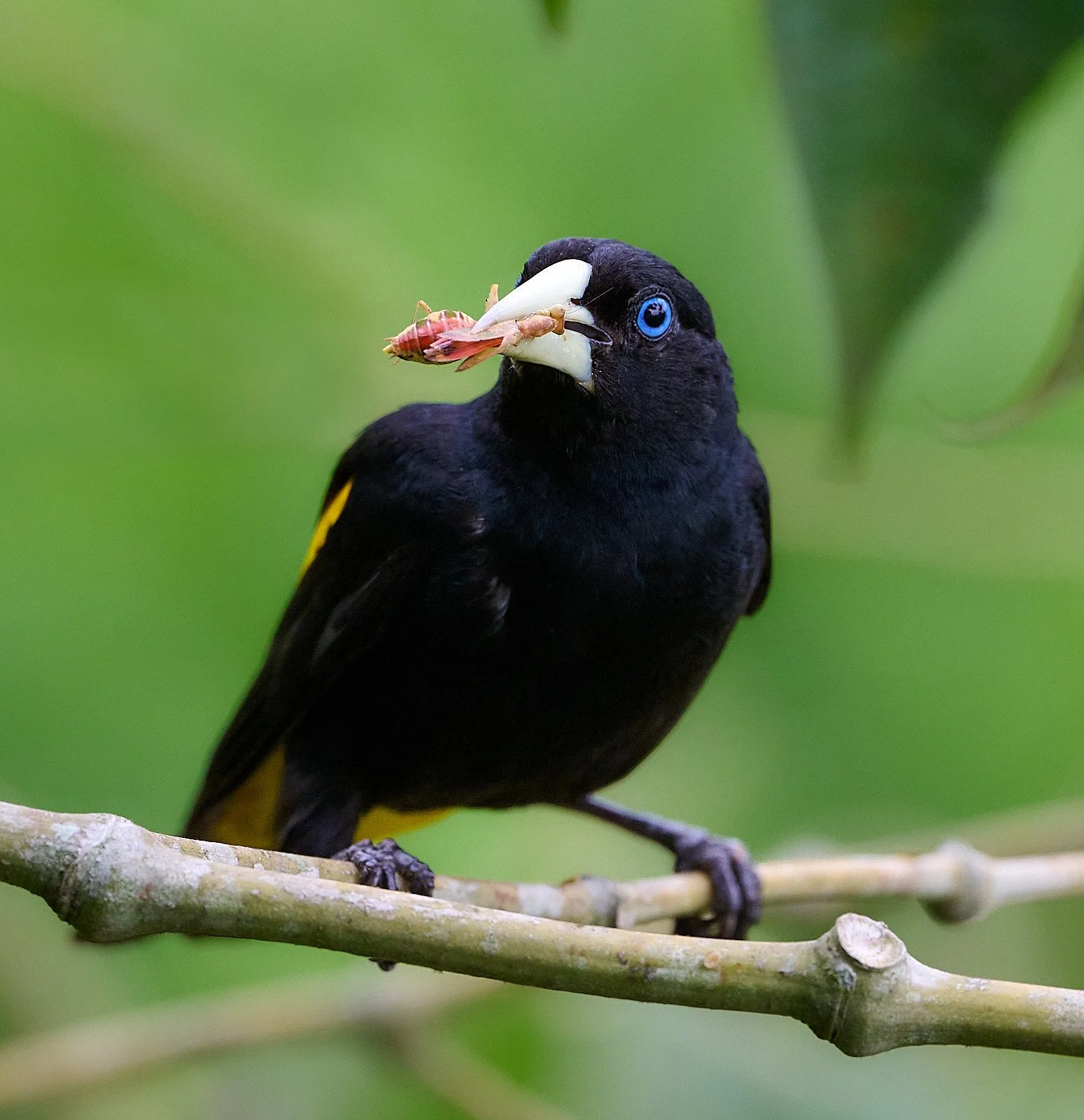
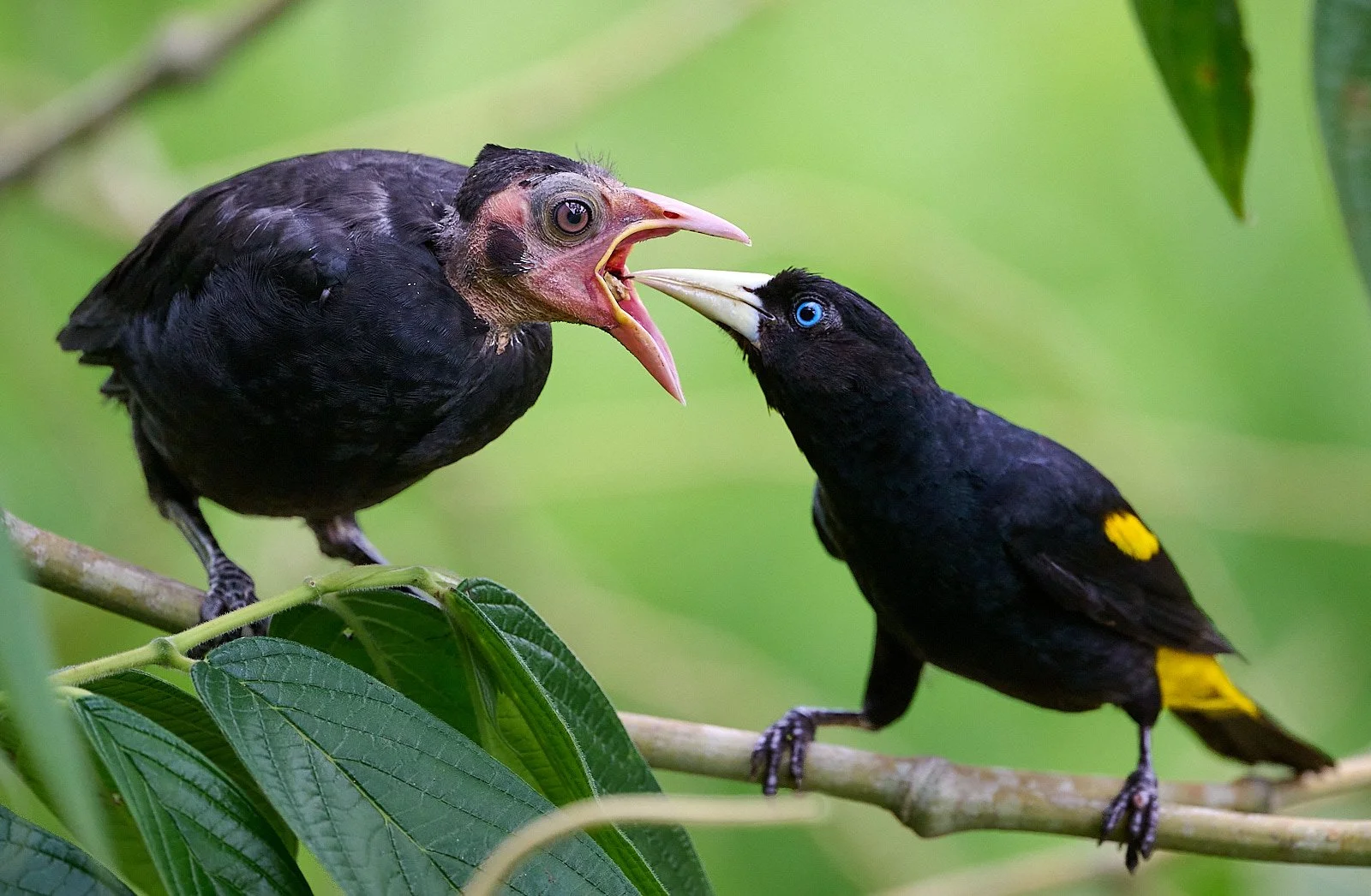
Yellow-rumped Cacique fledgling
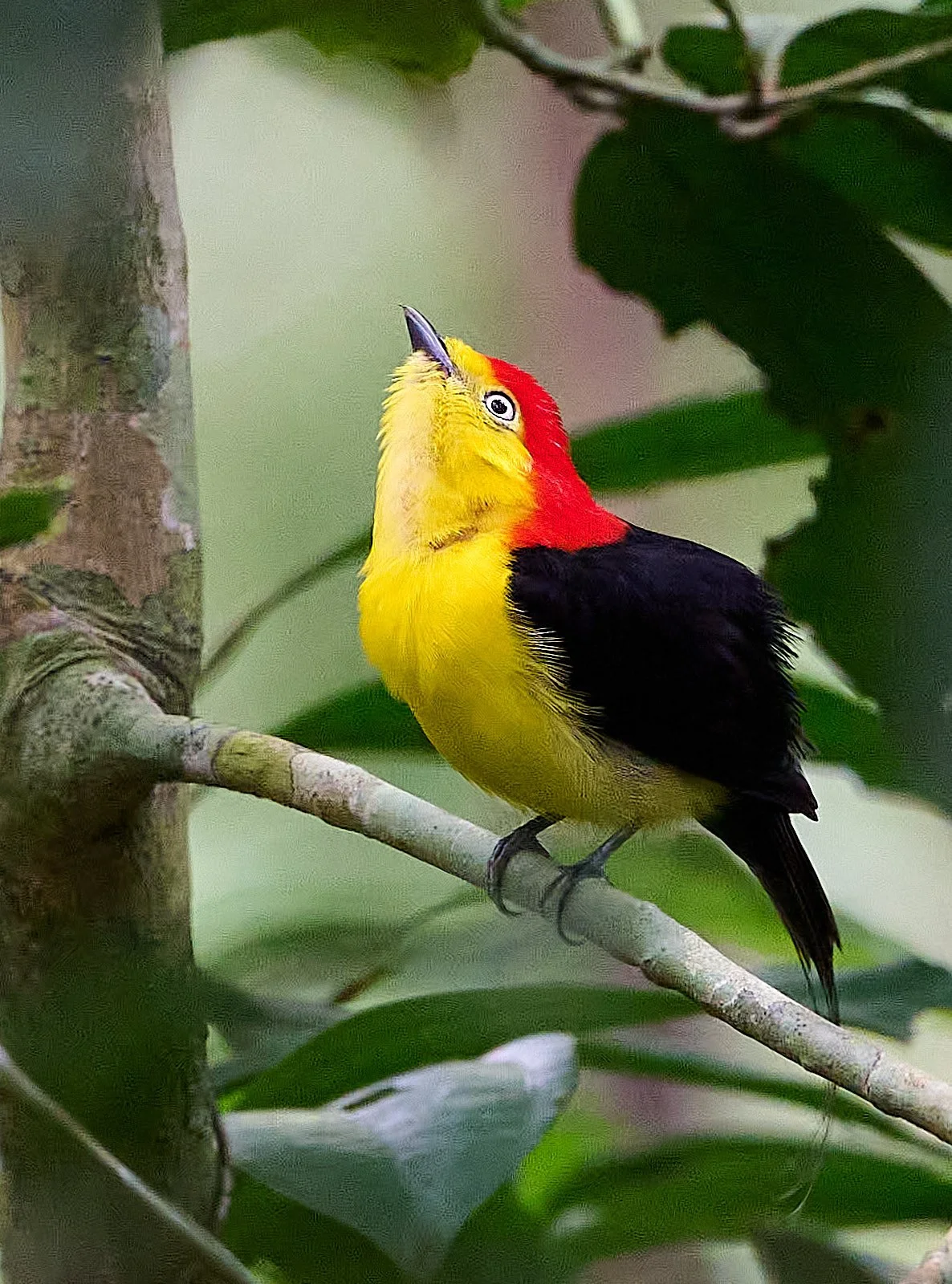
Wire-tailed Manakin
Napo River
The 670-mile Napo River arises in Ecuador on the flanks of the east Andean volcanoes of Antisana, Sincholagua and Cotopaxi.
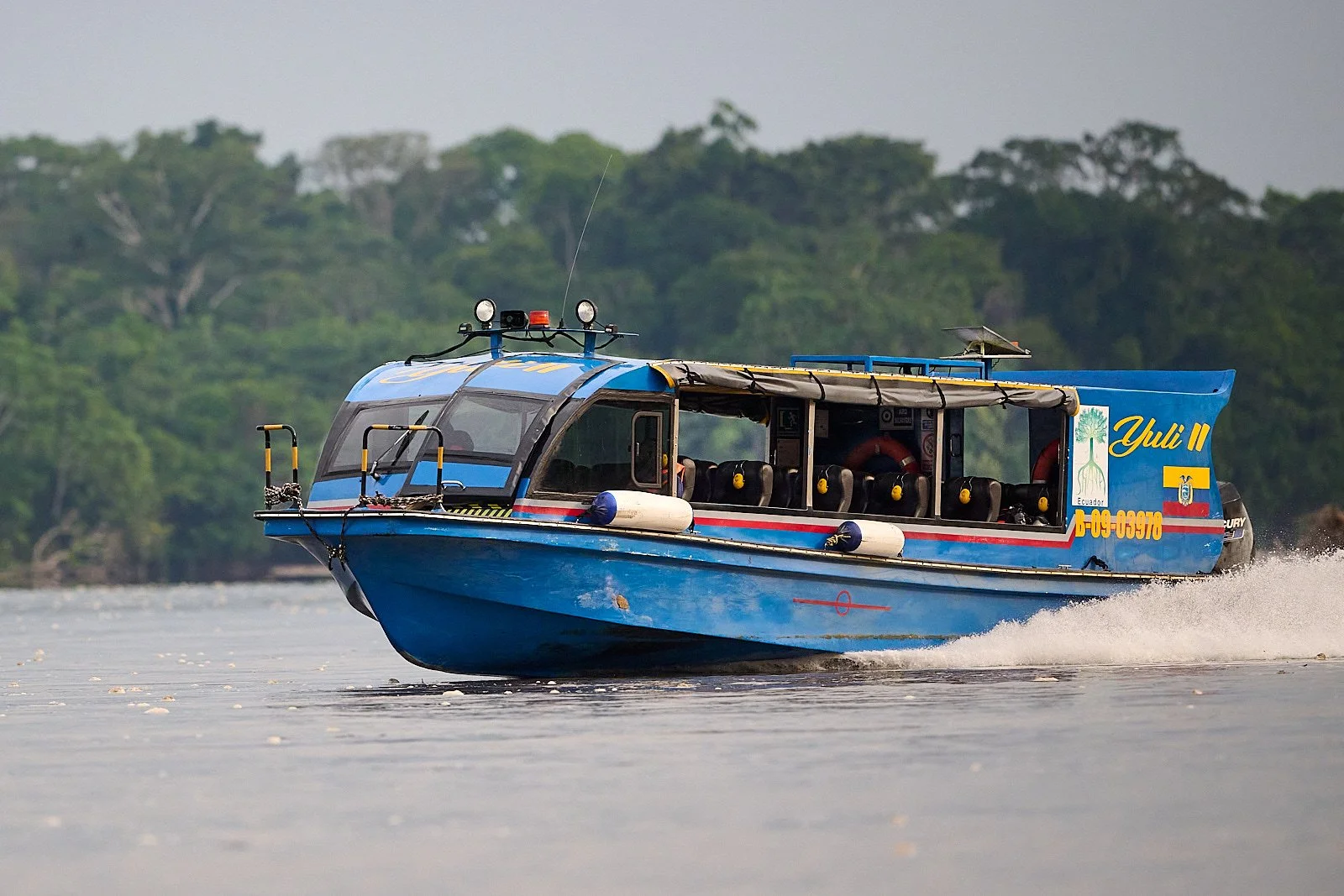
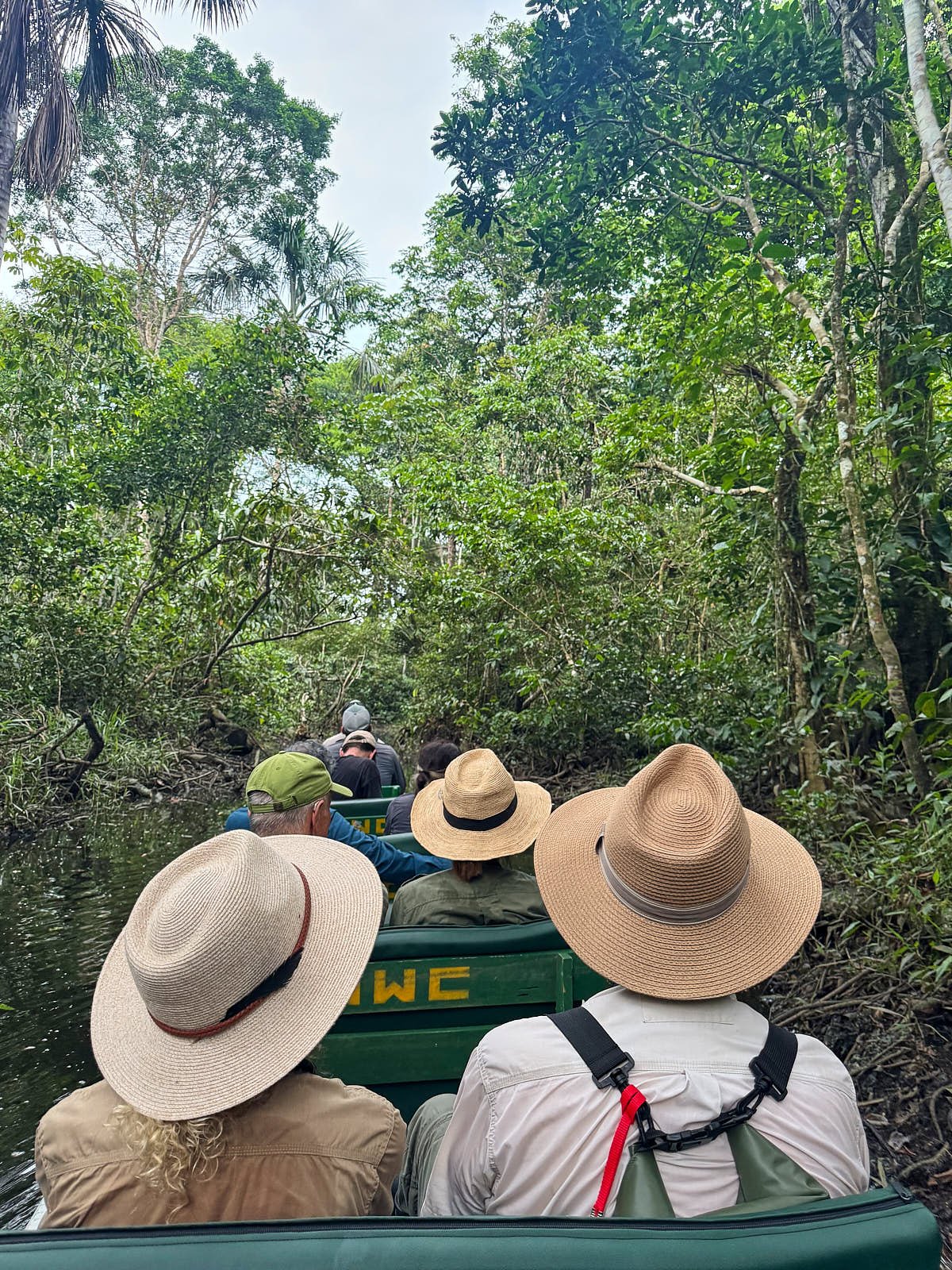
We drove to its confluence with the Coca River, boarded a motorized boat and journeyed downstream for several hours to enter Yasuni National Park.
Then we transferred to a canoe and were paddled up the Anangu Creek to the Napo Wildlife Center lodge.
Amazon River
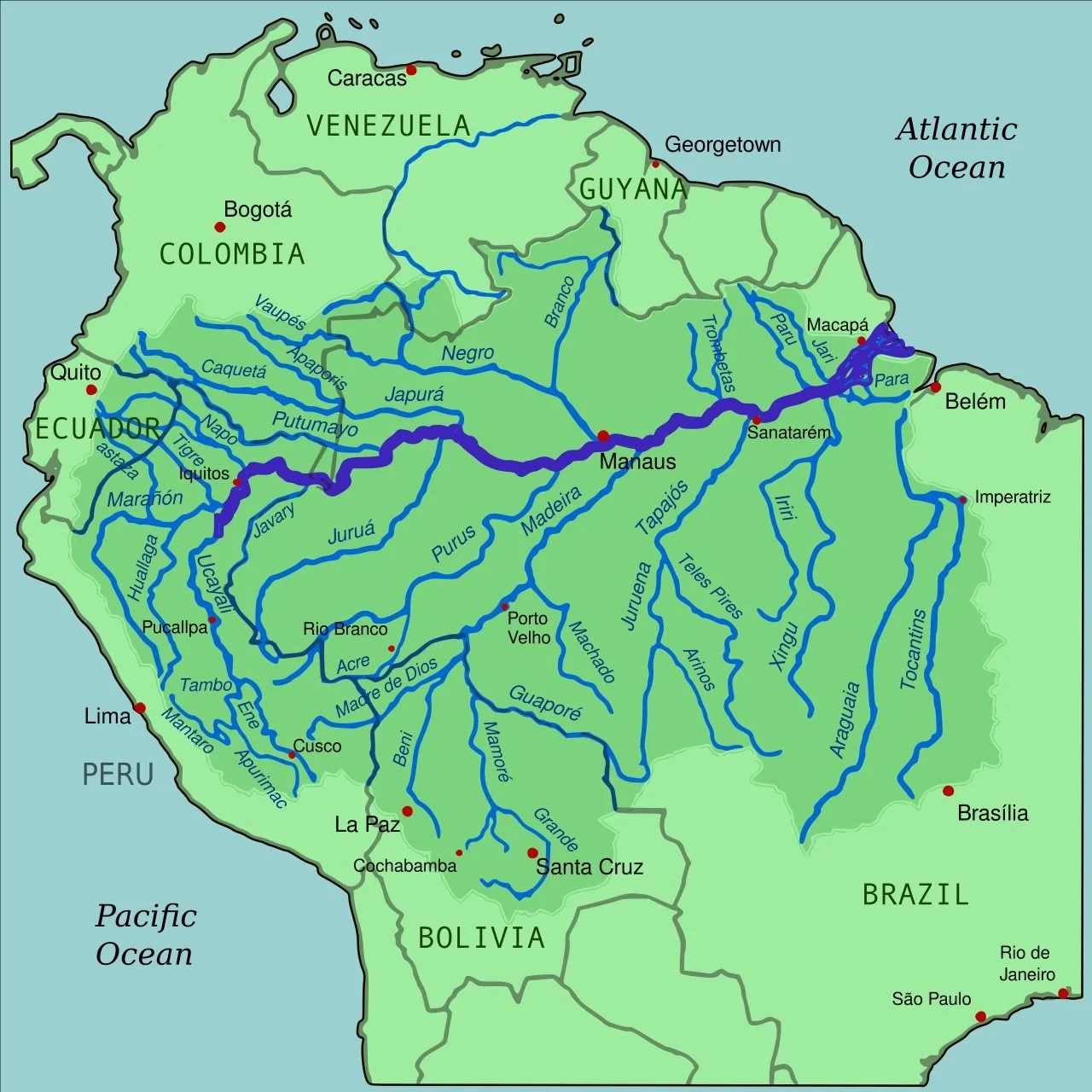
The Napo River joins the Amazon River about 200 river miles to the east of where we were situated. A little upstream of that confluence is the Peruvian town of Iquitos, some 2,300 miles from the mouth of the Amazon, and the last Amazonian port where large ships can dock.
Amazon statistics are mind-boggling. The river originates in the Peruvian Andes at 18,363 ft elevation, approximately 120 miles from the Pacific Ocean. It is the longest river (4,345 miles), carries the greatest volume of water (4x the Congo River, which is #2), and has a delta that is about 200 miles wide.
Originally, the Amazon flowed to the Pacific, entering near present-day Guayaquil, Ecuador. With Andean uplift, the river reversed its course about 10-15 million years ago. Initially, the uplift created a gigantic lake, bordered on the west by the Andes, and on the east by the Guiana and Brazilian Shields. The Shields are parts of the Amazonian Craton - an ancient and stable part of continental lithosphere. During the Pleistocene (2.6 million to 11,700 years ago), the Amazon cut its way to the Atlantic.
Amazon River basin
Watercolors
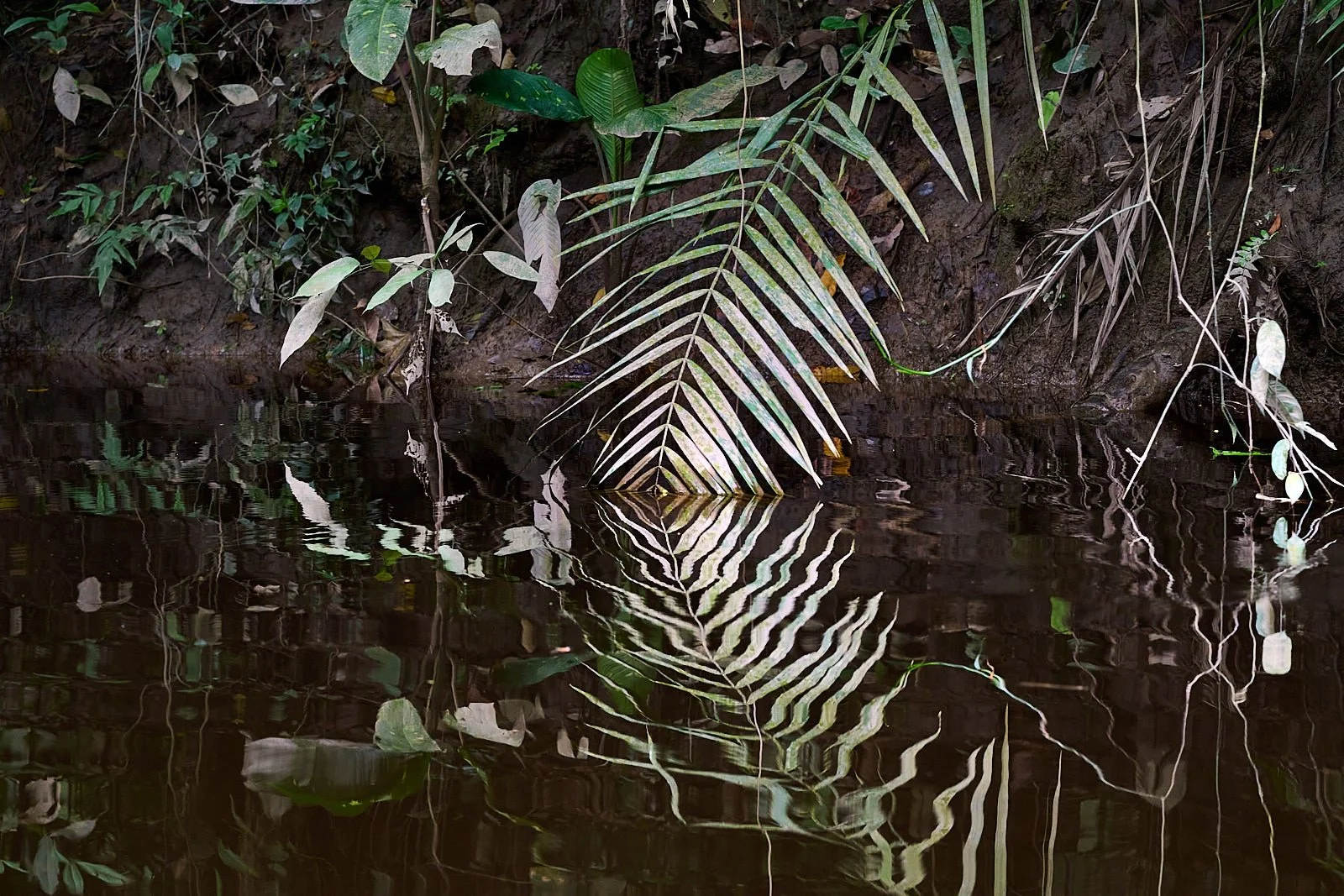
Anangu Creek is tea-like, clear and dark, colored by tannins and humic matter. It is an example of “blackwater” and is found where the soils are sandy and mineral-poor. Vegetation growing in these infertile soils attempt to preserve their foliage by concentrating defense compounds that discourage herbivory. Rain leaches the fallen tannin-rich leaves and stains the river.
Blackwater channel, gently flowing and dark
Whitewater
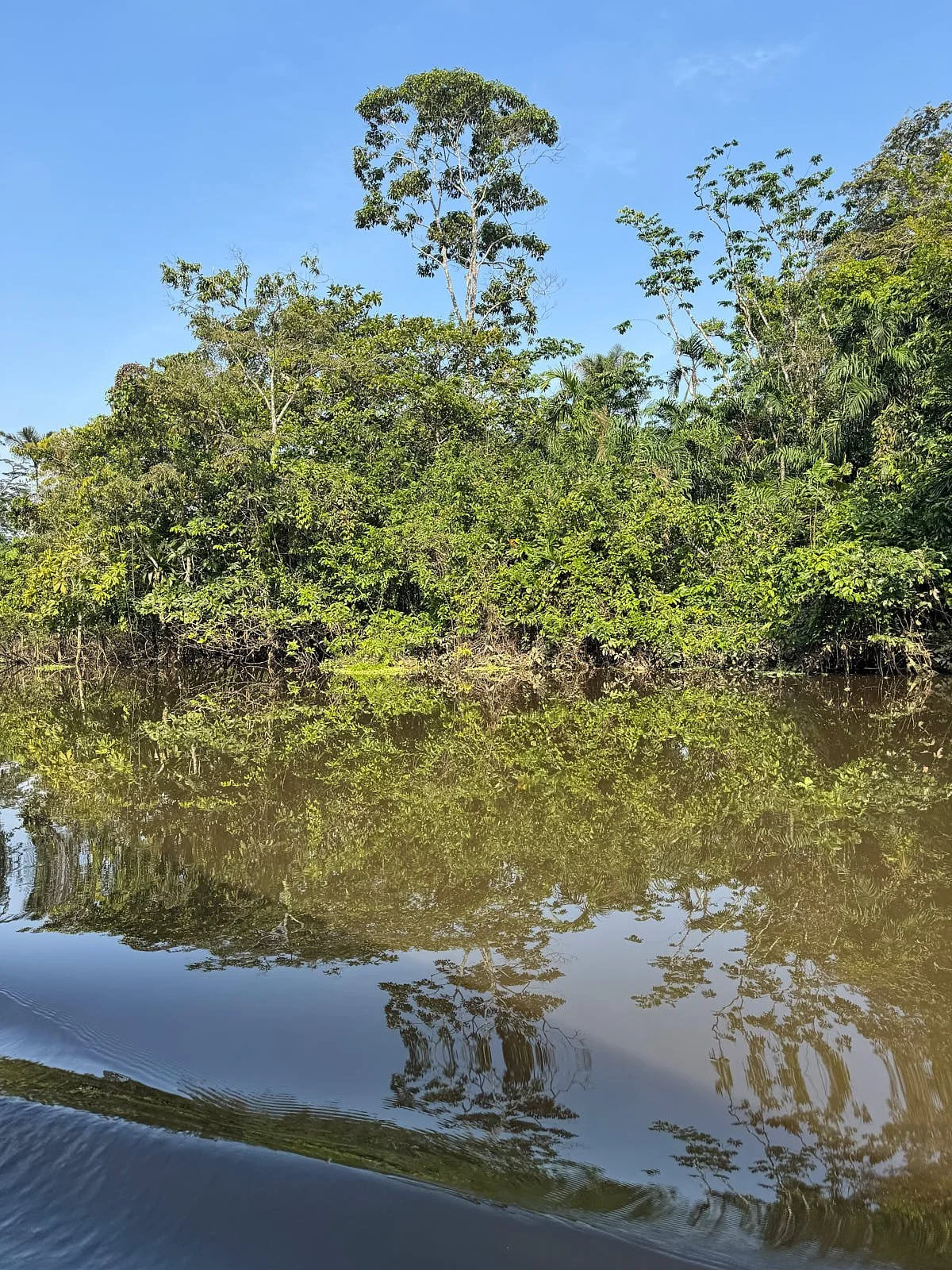
The Napo River is, in contrast, an example of a “whitewater” river. It drains the mineral-rich volcanic soils of the Andes. The water is mocha brown and cloudy. The river floodplains are fertile and can support agriculture.
The Napo, a “whitewater” river
Lowland forests of the Amazon Basin
“FloodplaIn” forest is so called because it is subject to seasonal flooding. It covers 4% of the Amazon Basin. Forests flooded by blackwater are termed “agapó”, while those inundated by whitewater are called “várzea” and have greater biomass than agapó. Certain monkey species are restricted to floodplain forest, as are many species of birds and arthropods. Fish consume fallen fruit during flooding and are important seed dispersers.
Forest above the flood-line is termed “terra firme”. Tree diversity is greater than in floodplain forest, the trees are taller, with even taller emergents, and the understory is less crowded.
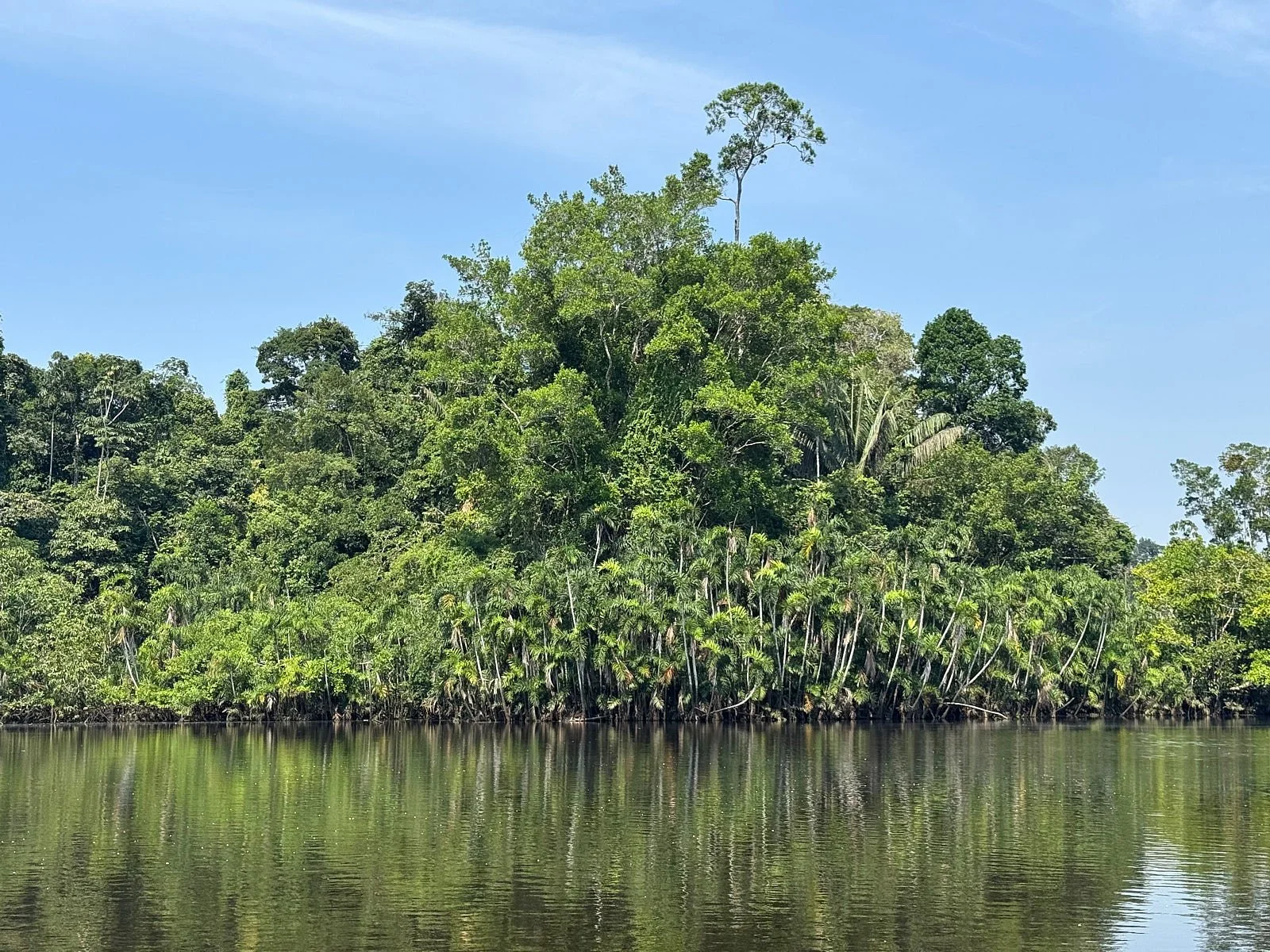
Terra ferme
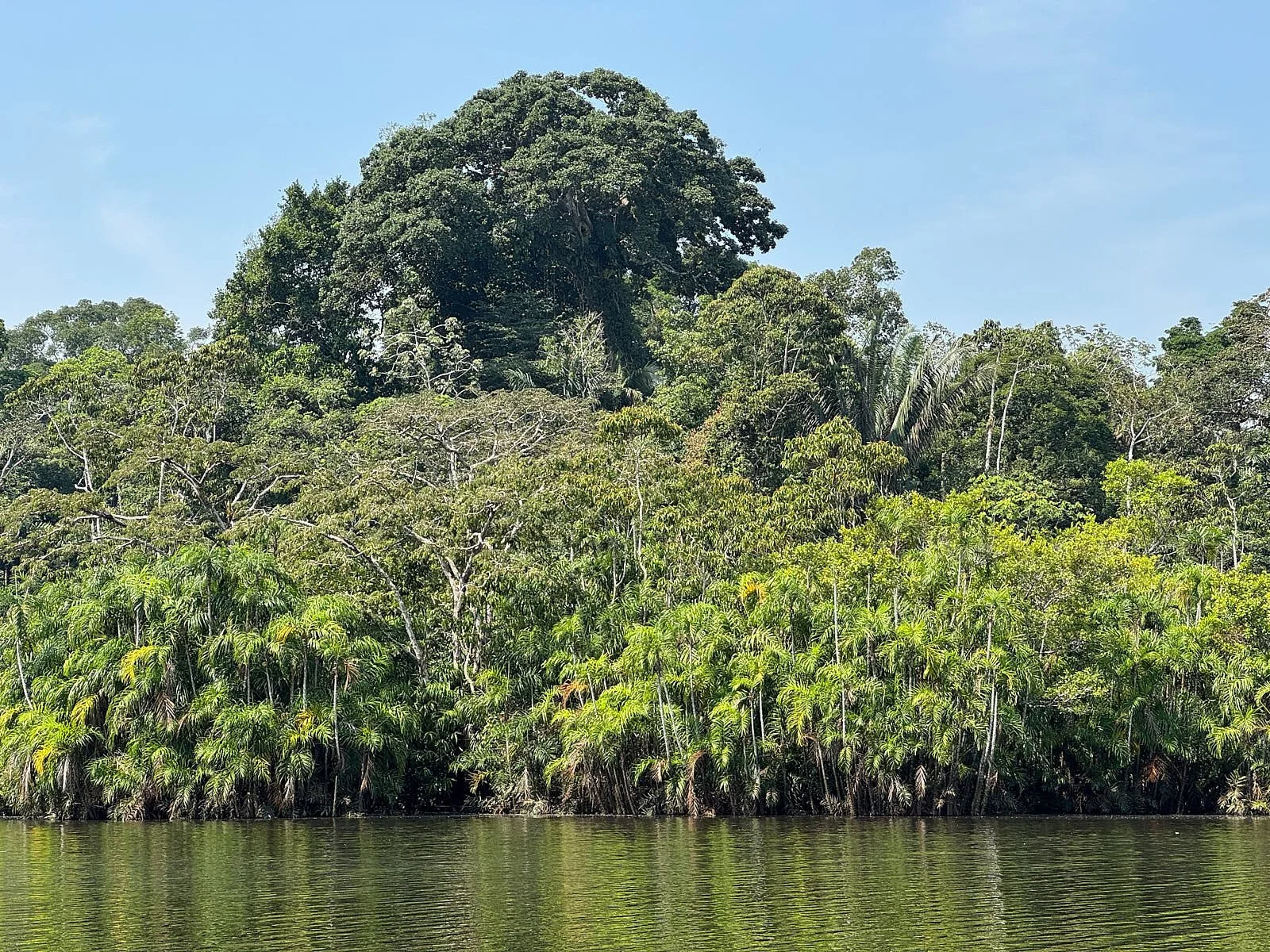
Tall trees that rise above the canopy are termed “emergents”
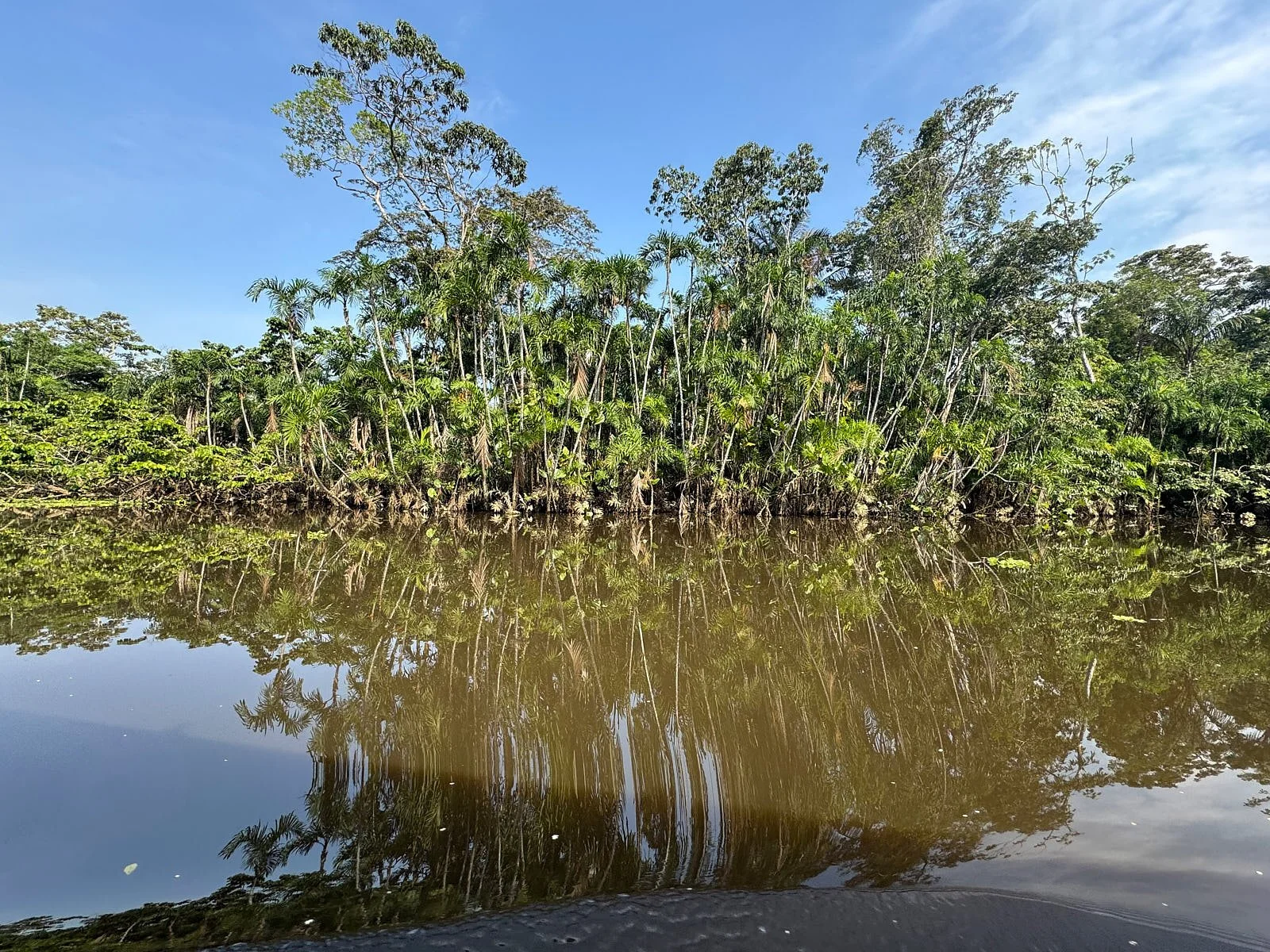
An area more subject to flooding
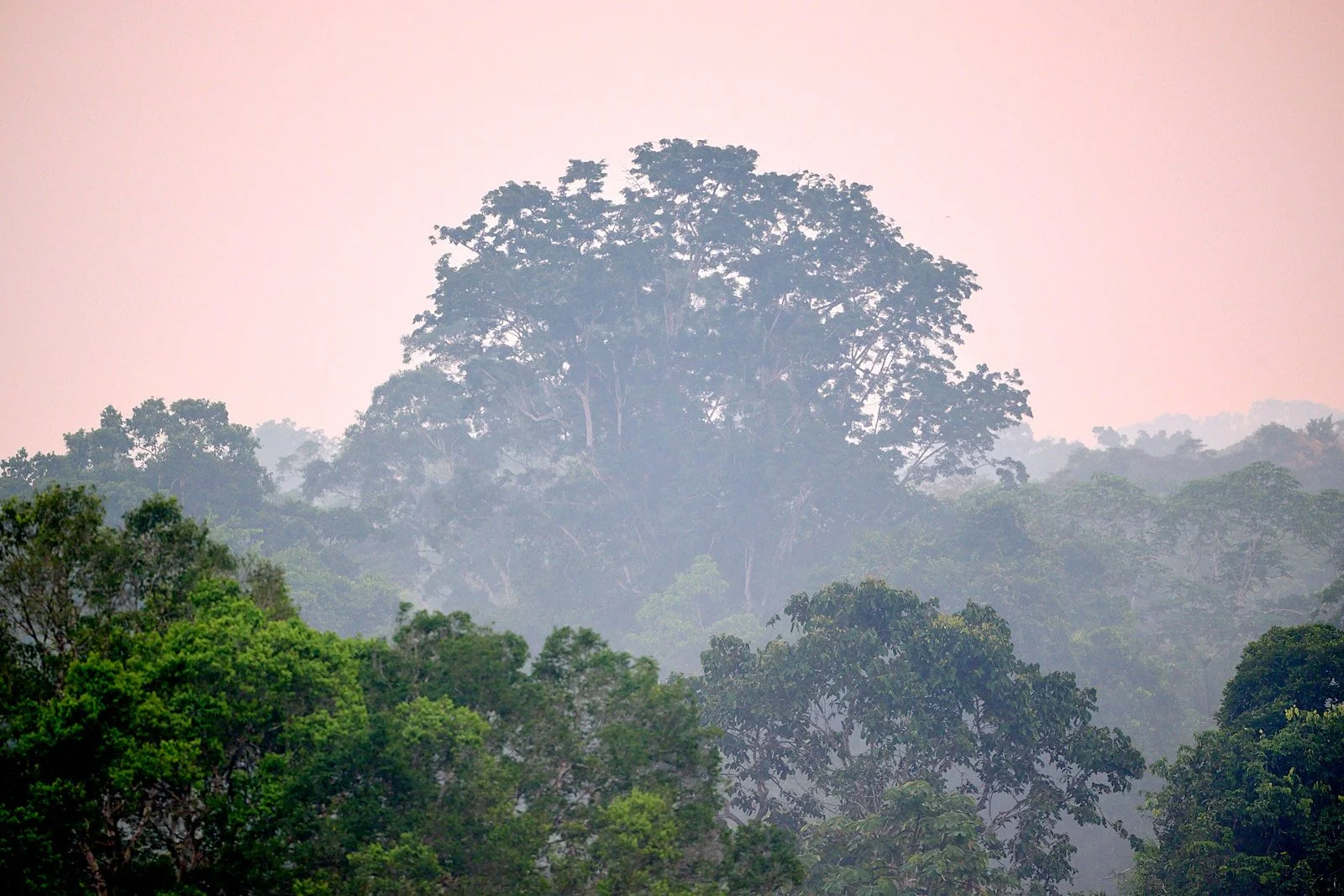
View from a canopy tower. Dawn mist is glowing.
Understory
Our first Amazon Basin lodge was on the banks of a placid blackwater lake which connects to the Napo River.
The surrounding humid tropical forest was lush and dense. We were provided with rubber boots because the soil was tenacious, wet, red clay. Also, stinging insects, malevolent vegetation, and venomous snakes were not merely a theoretical concern.
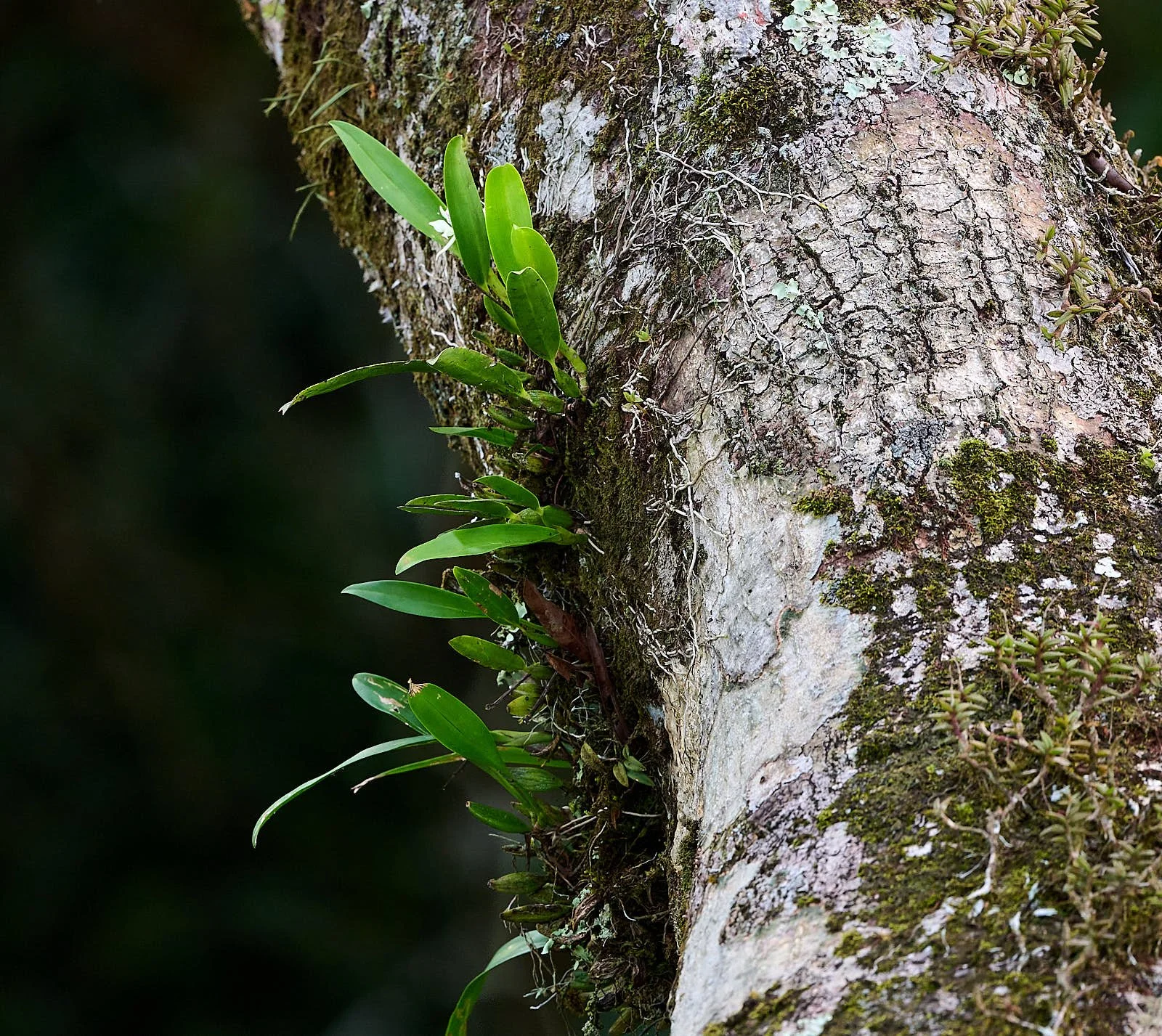
Although we did hike in the forests, most of our travel was by canoe. For me, it was an unforgettable experience to glide silently along a narrow channel, with the forest canopy arched above, the trees festooned with epiphytes, ferns and lianas, and the dawn bird chorus intermingling with chirping frogs, spider monkey chatter, and wisps of fog.
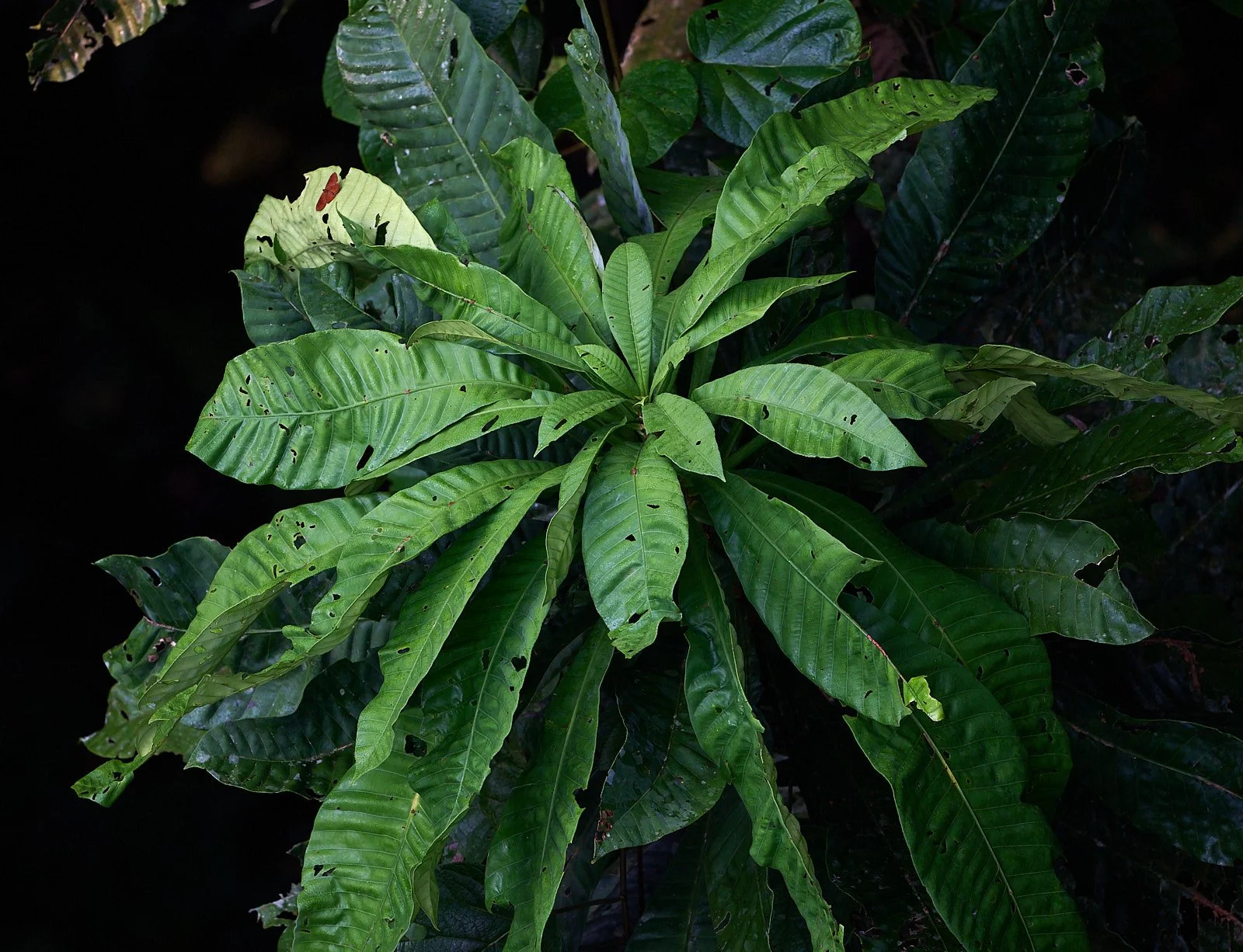
Searching for sunlight in the dim understory
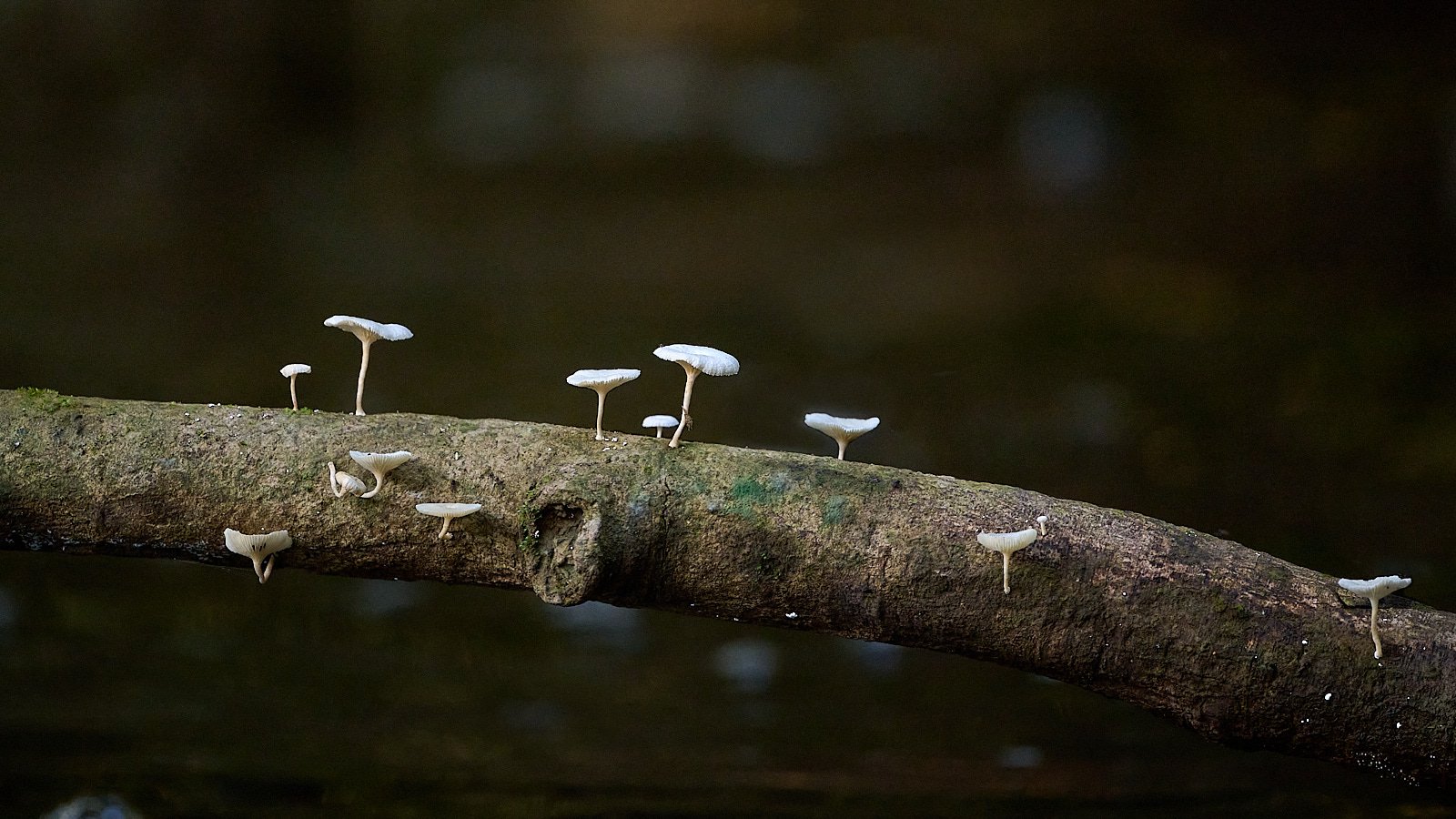
Mushrooms abound
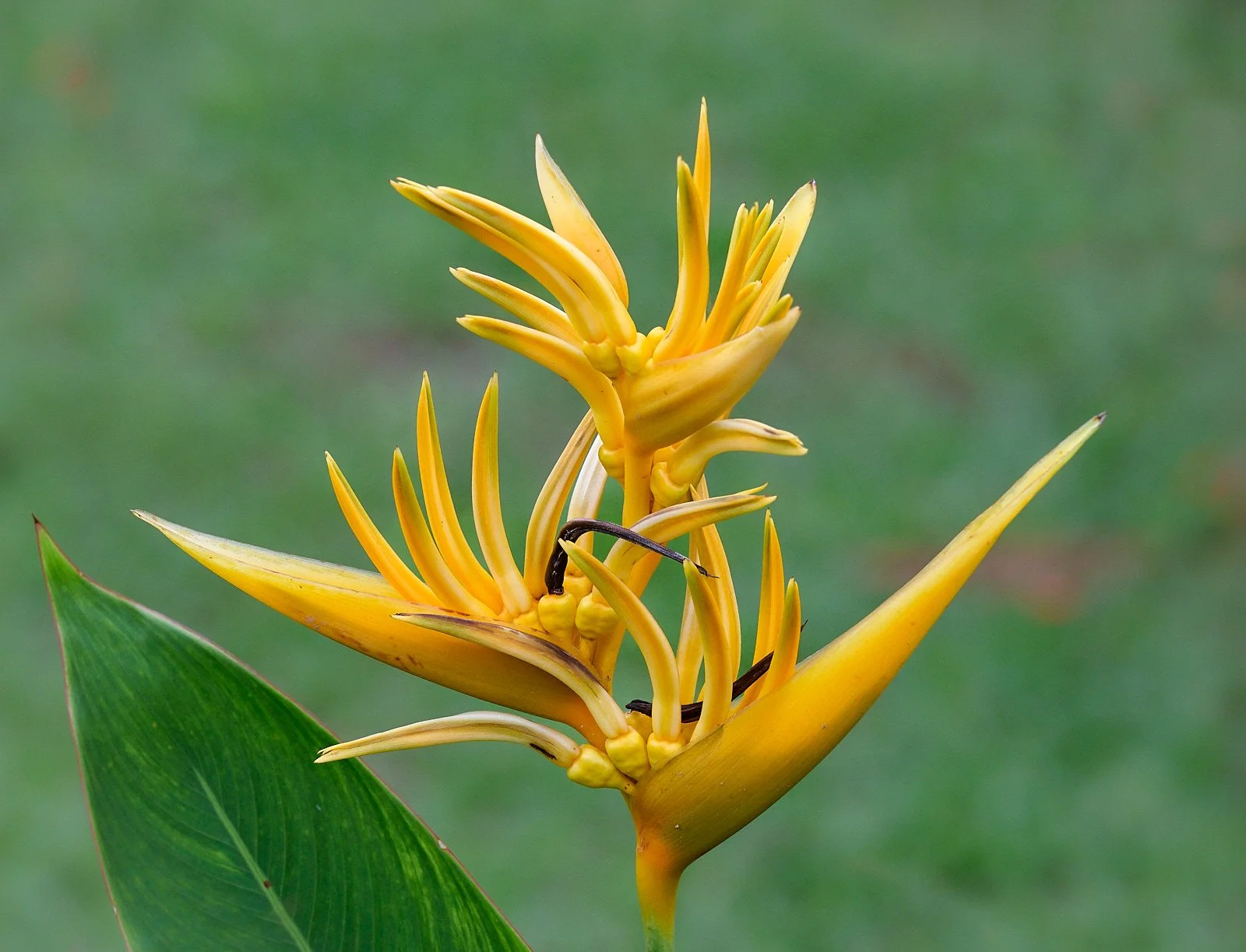
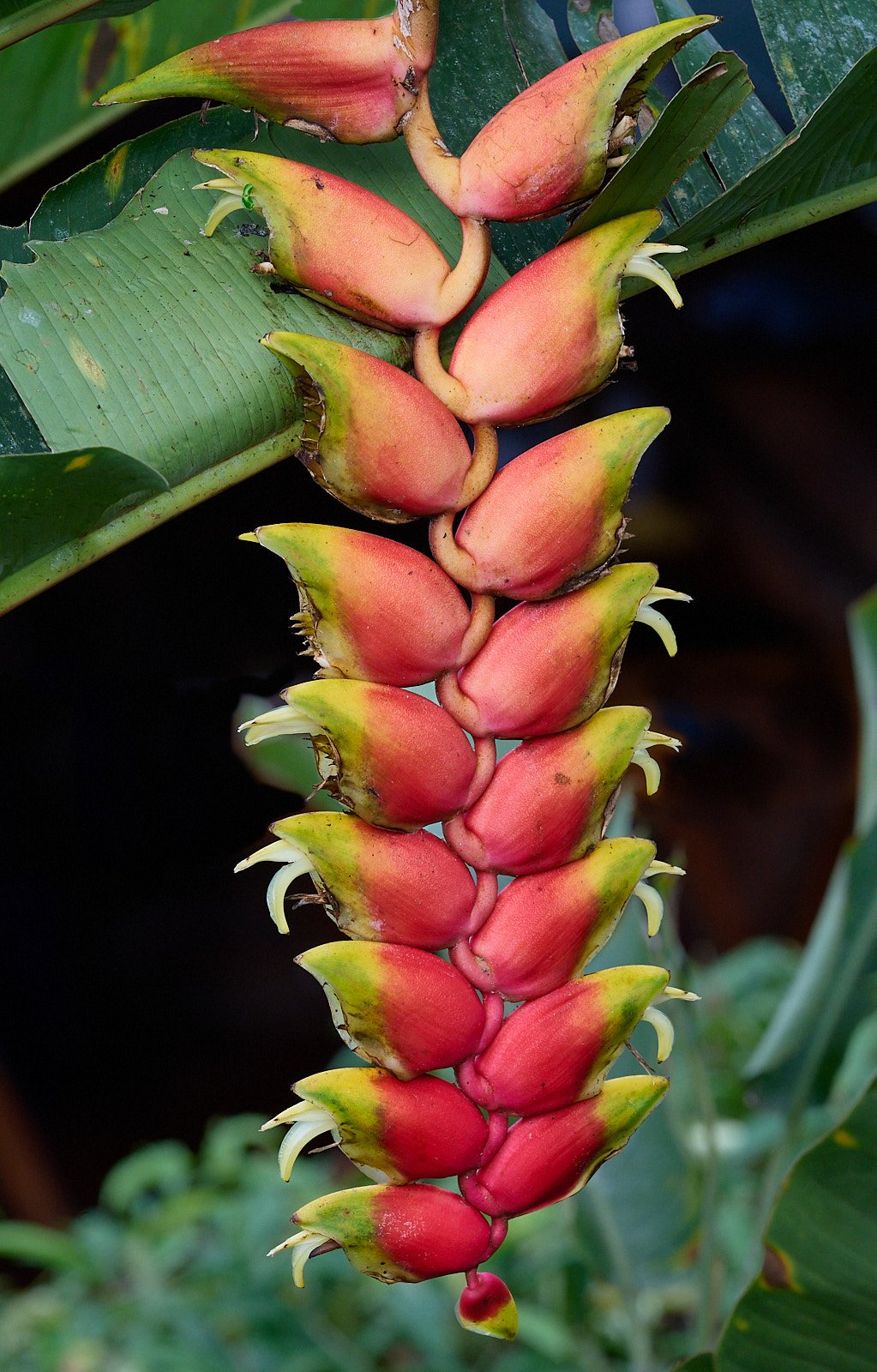
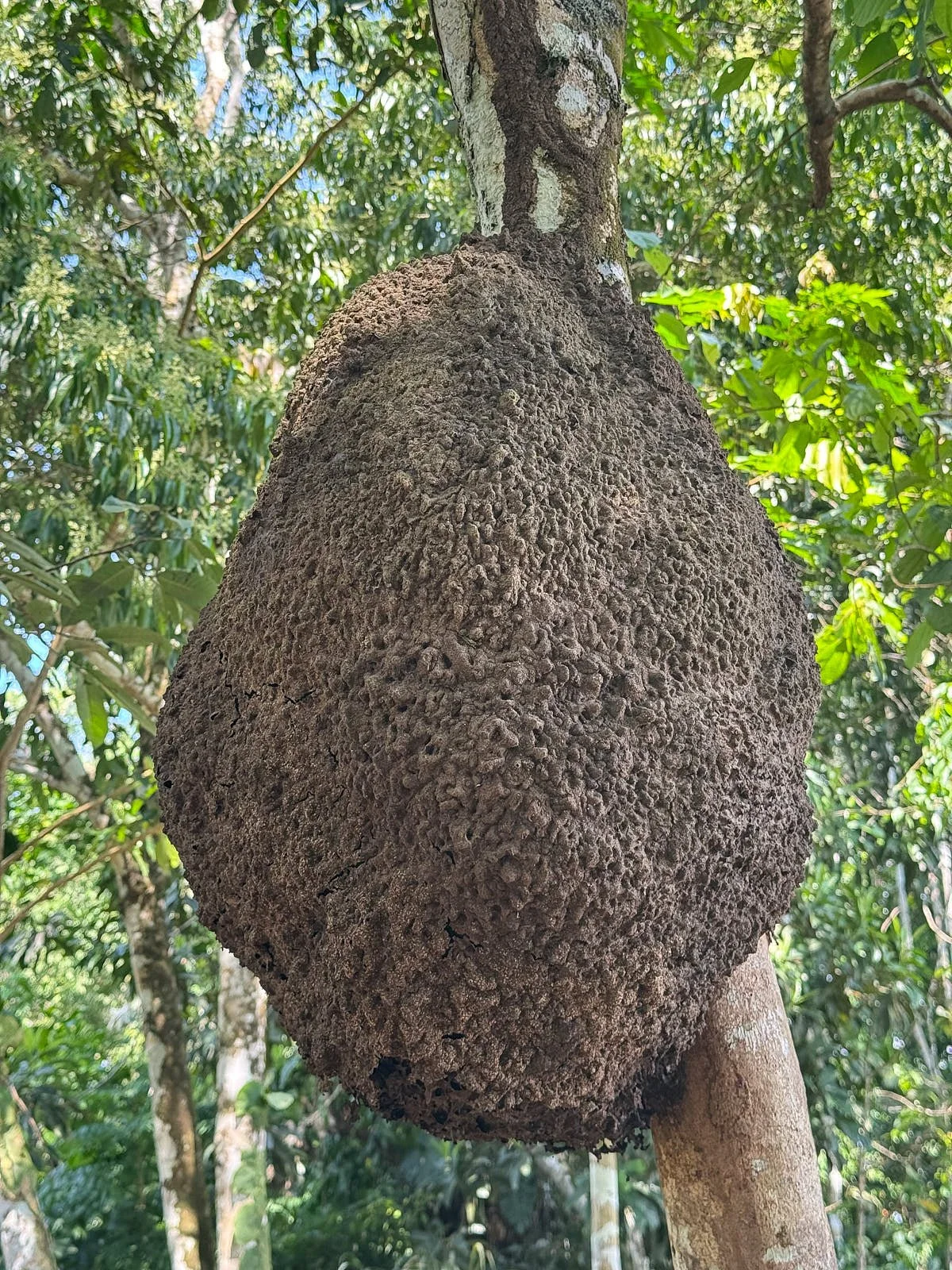
Termites nests are common. The insects play a vital ecological role by recycling cellulose. Their gut flora digest wood.
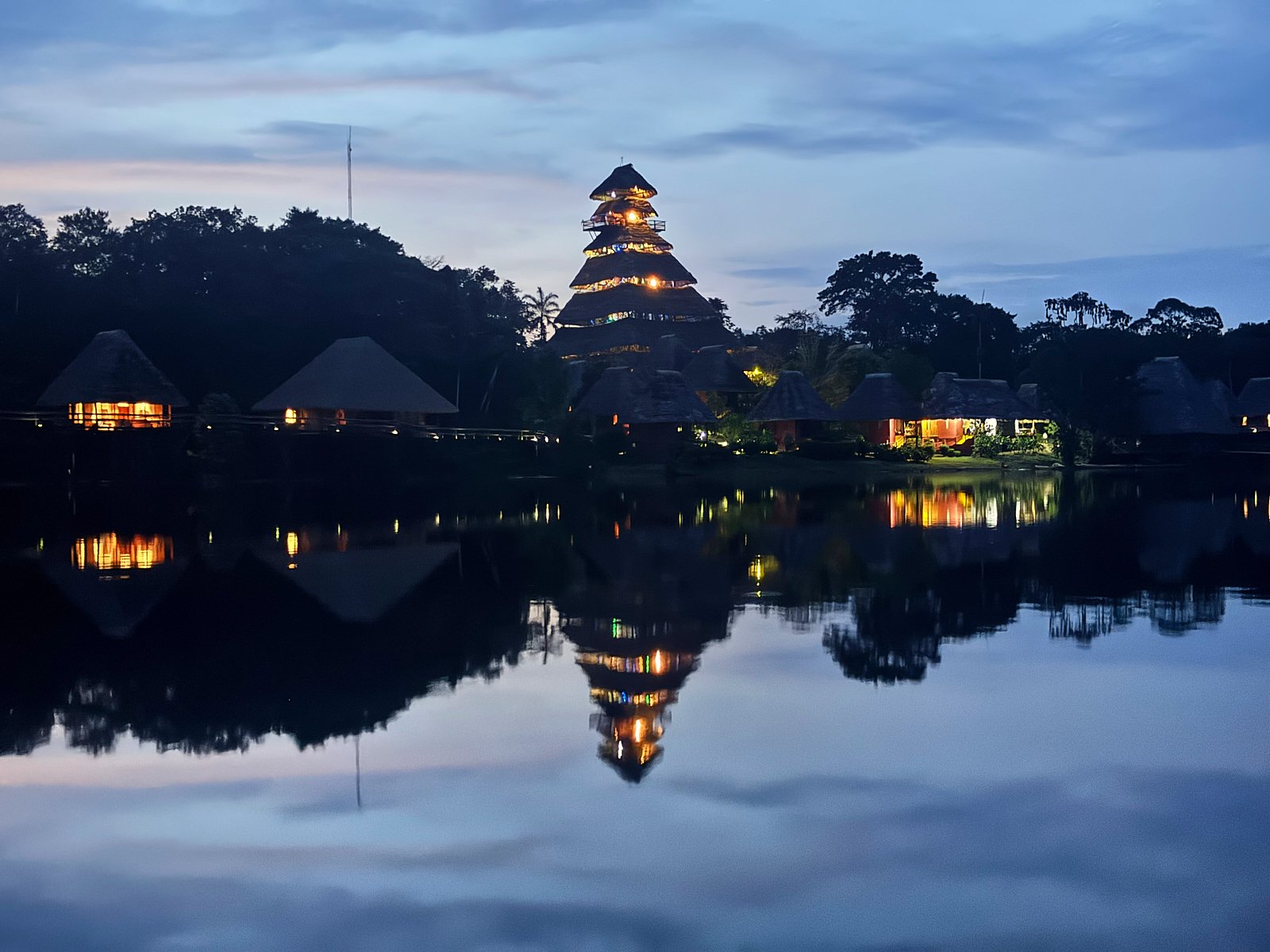
Returning to the lodge at twilight
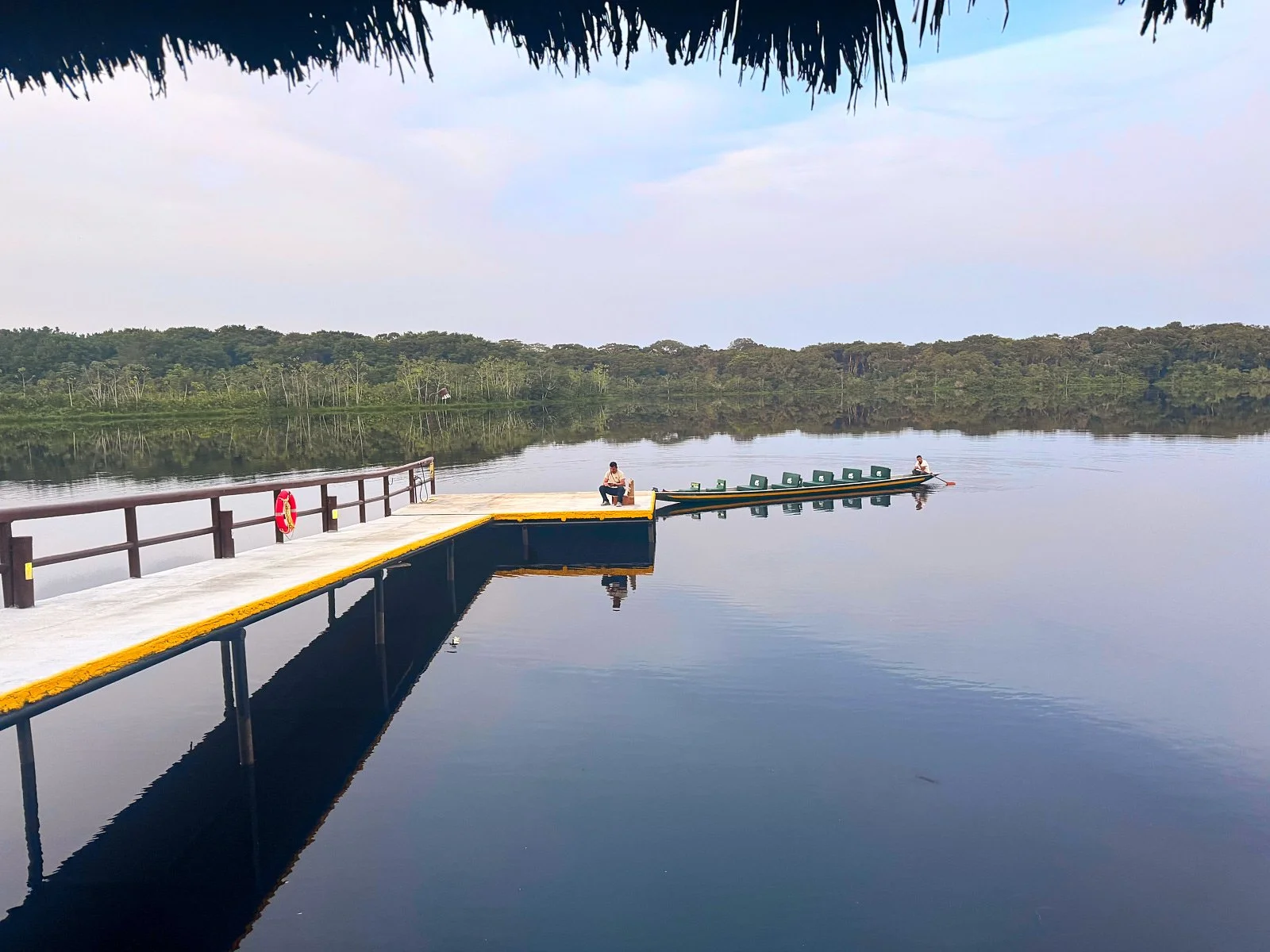
Your transport is awaiting
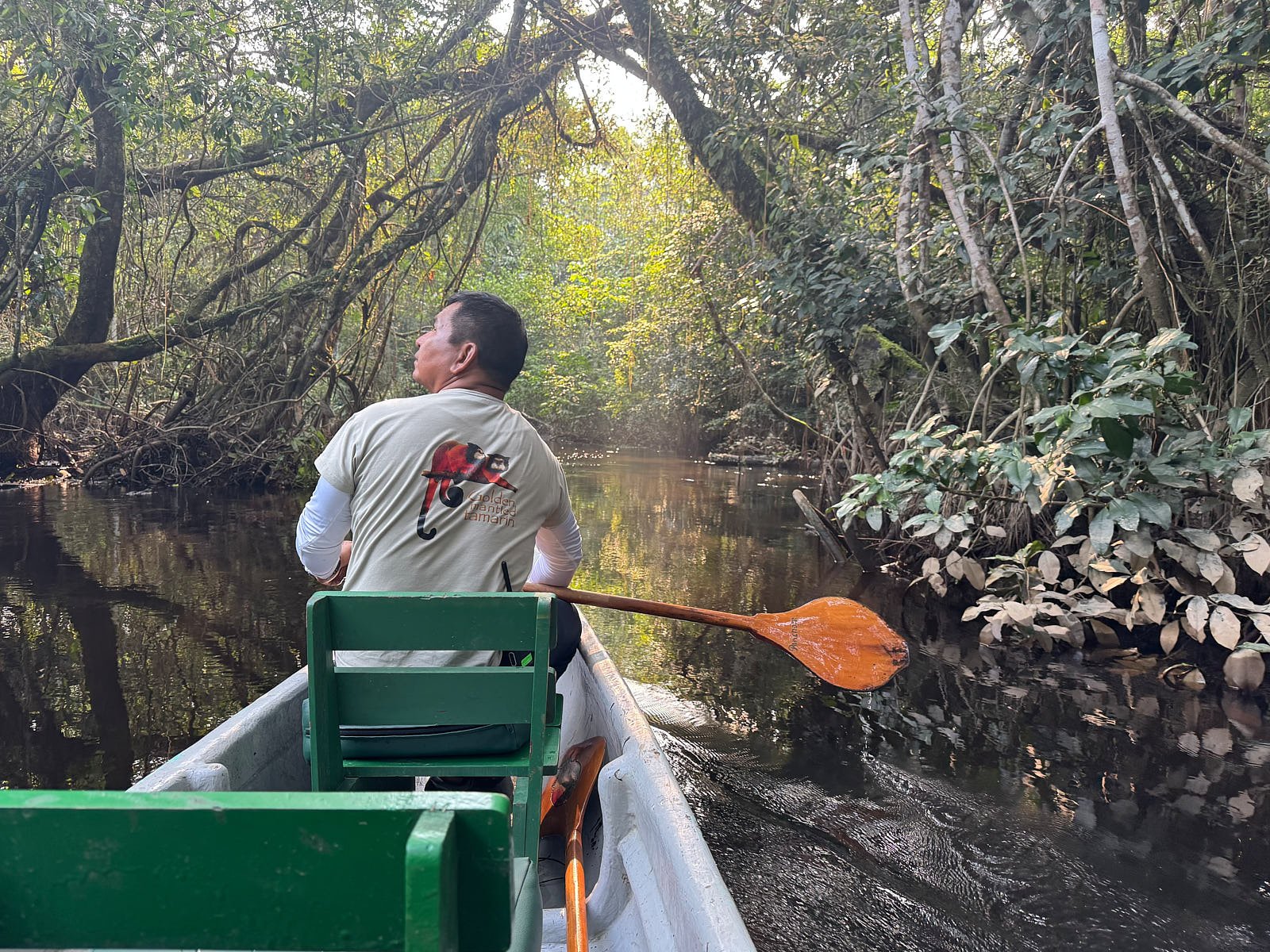
Identifying the bird calls
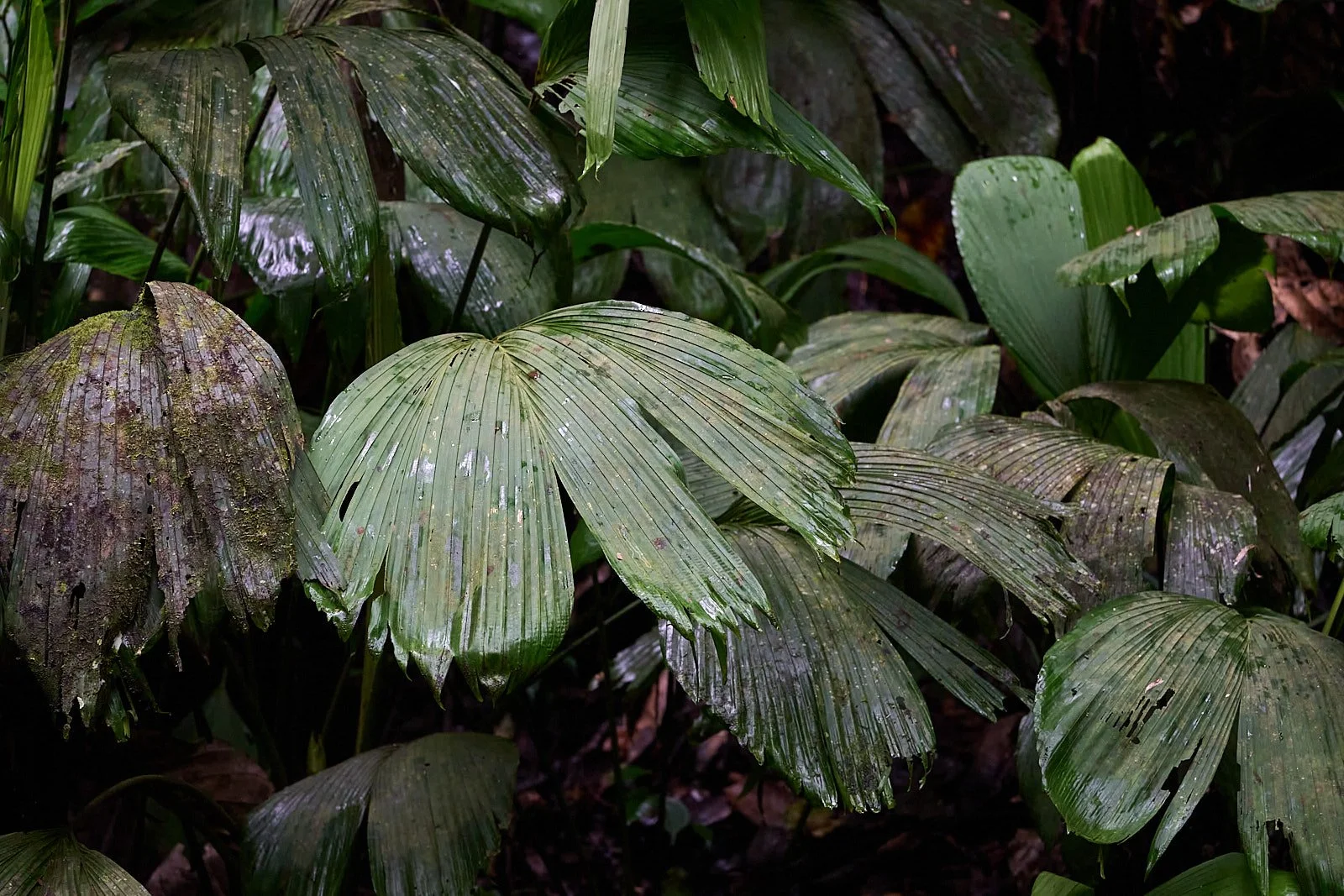
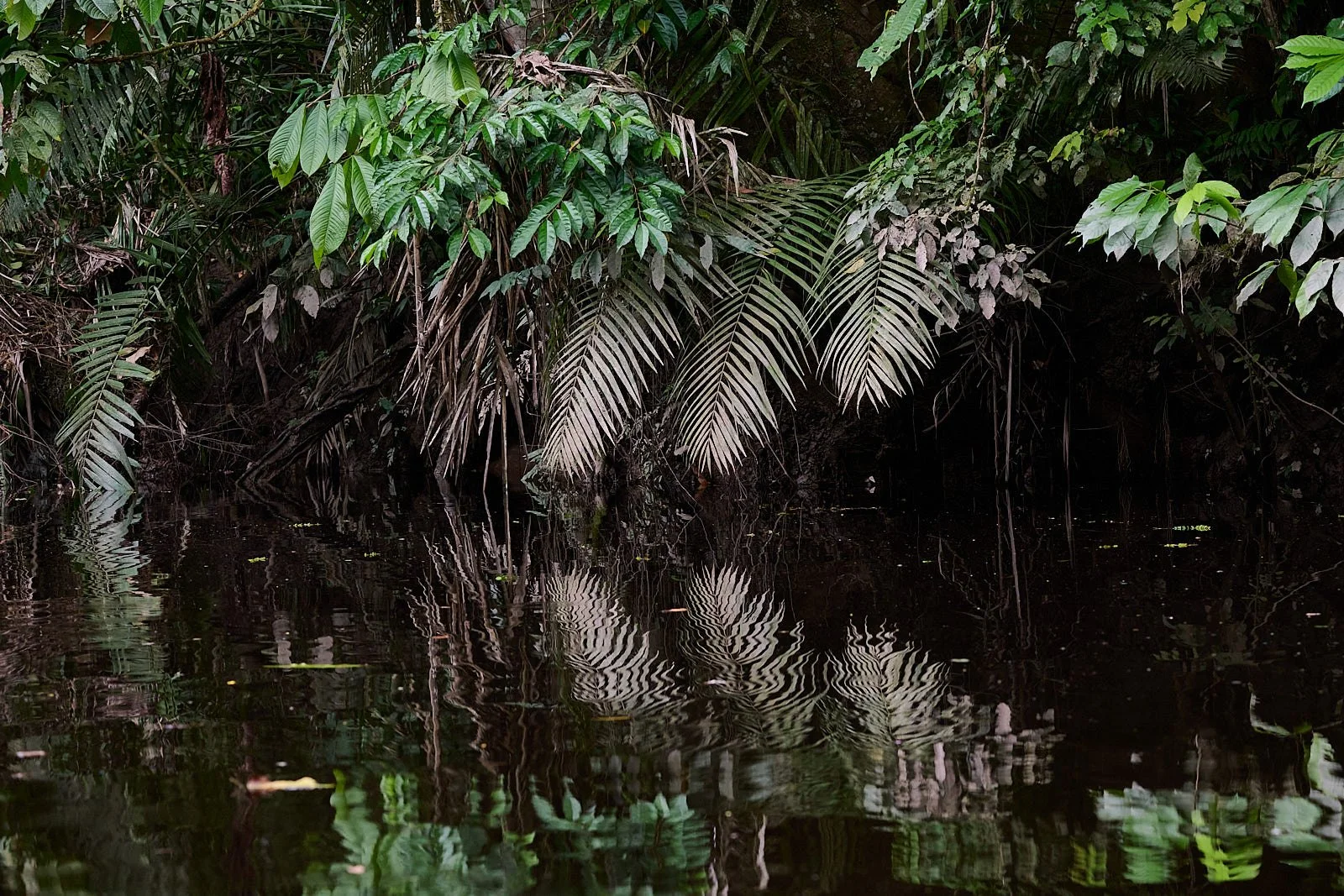
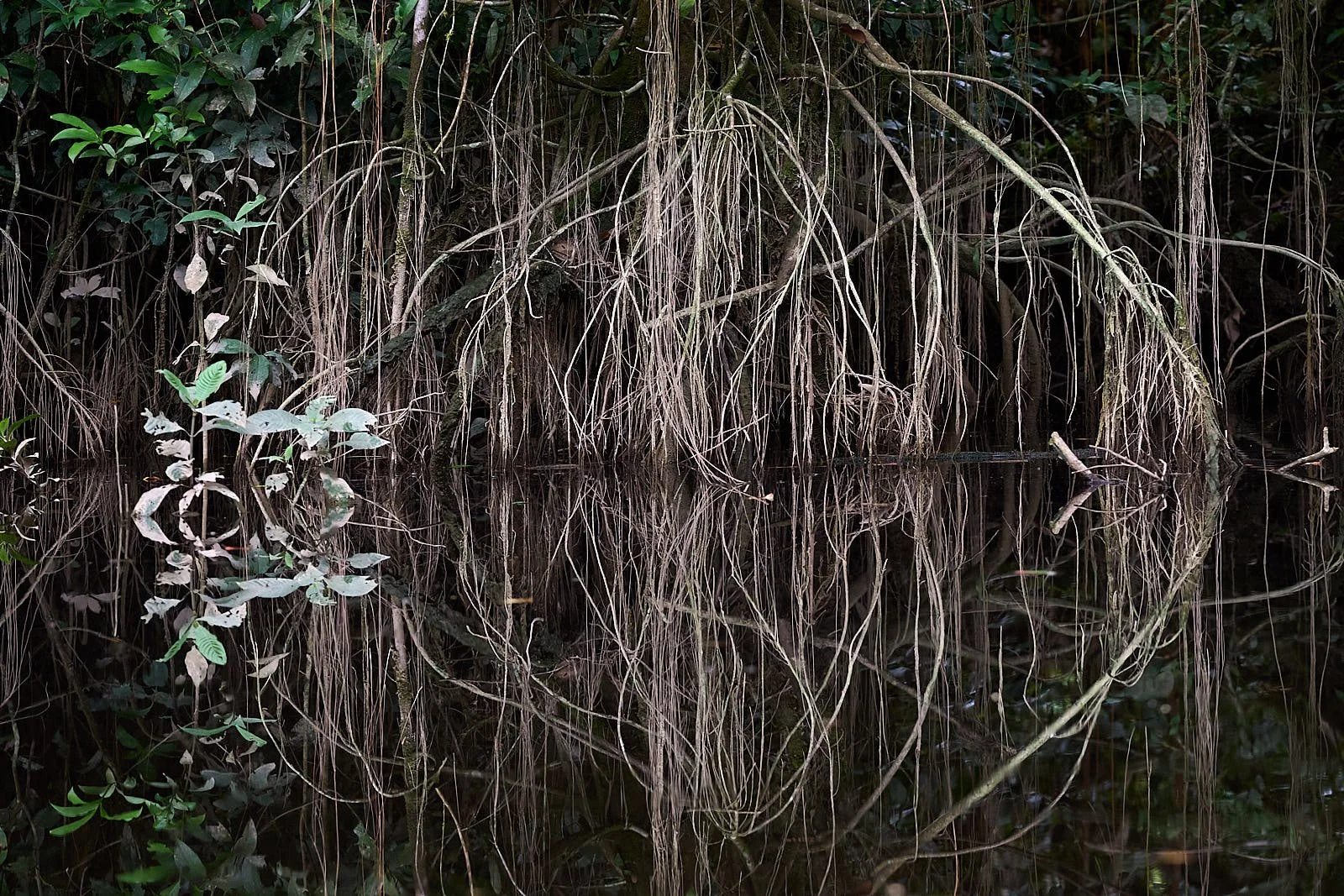
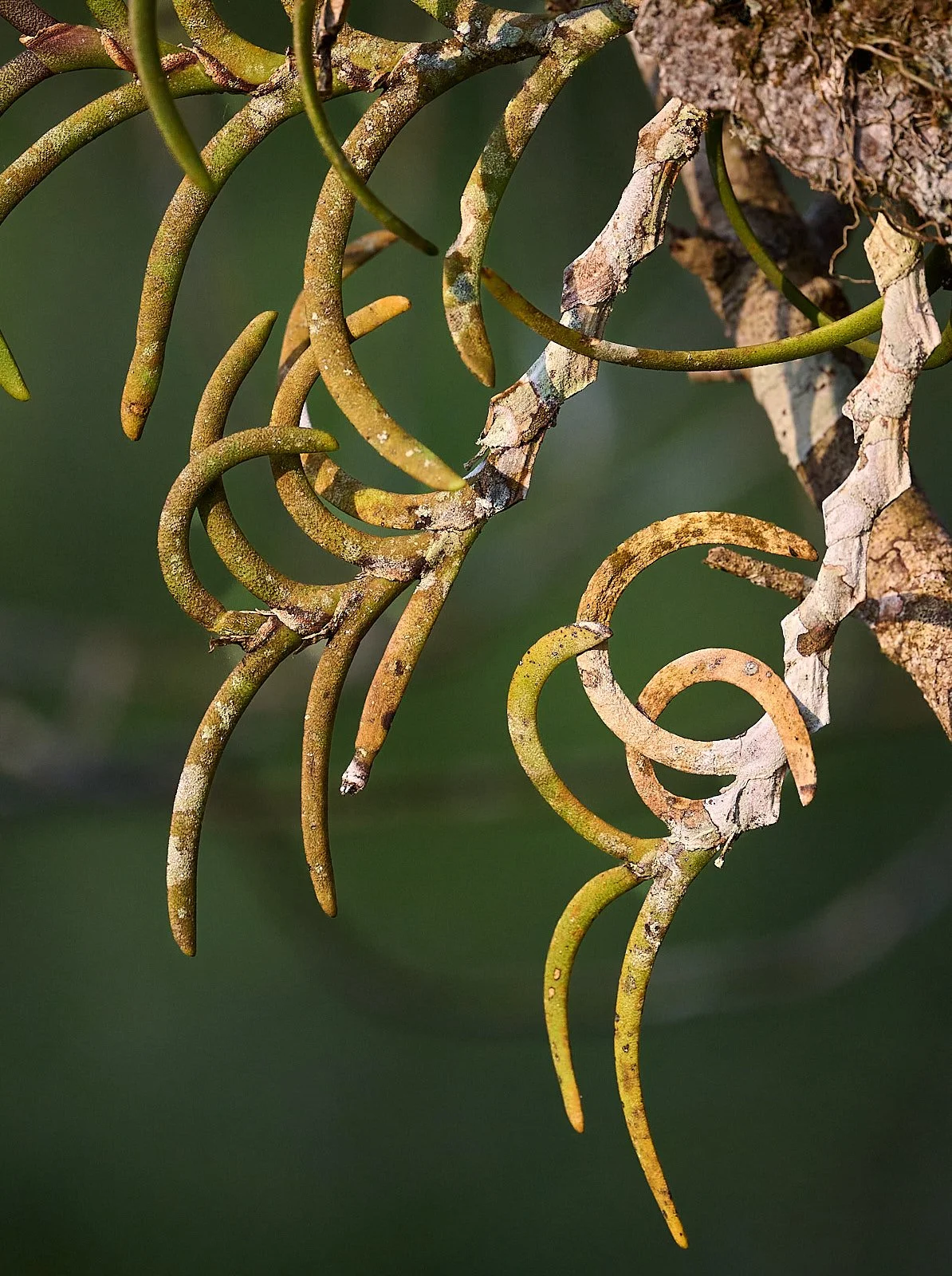
Aerial roots
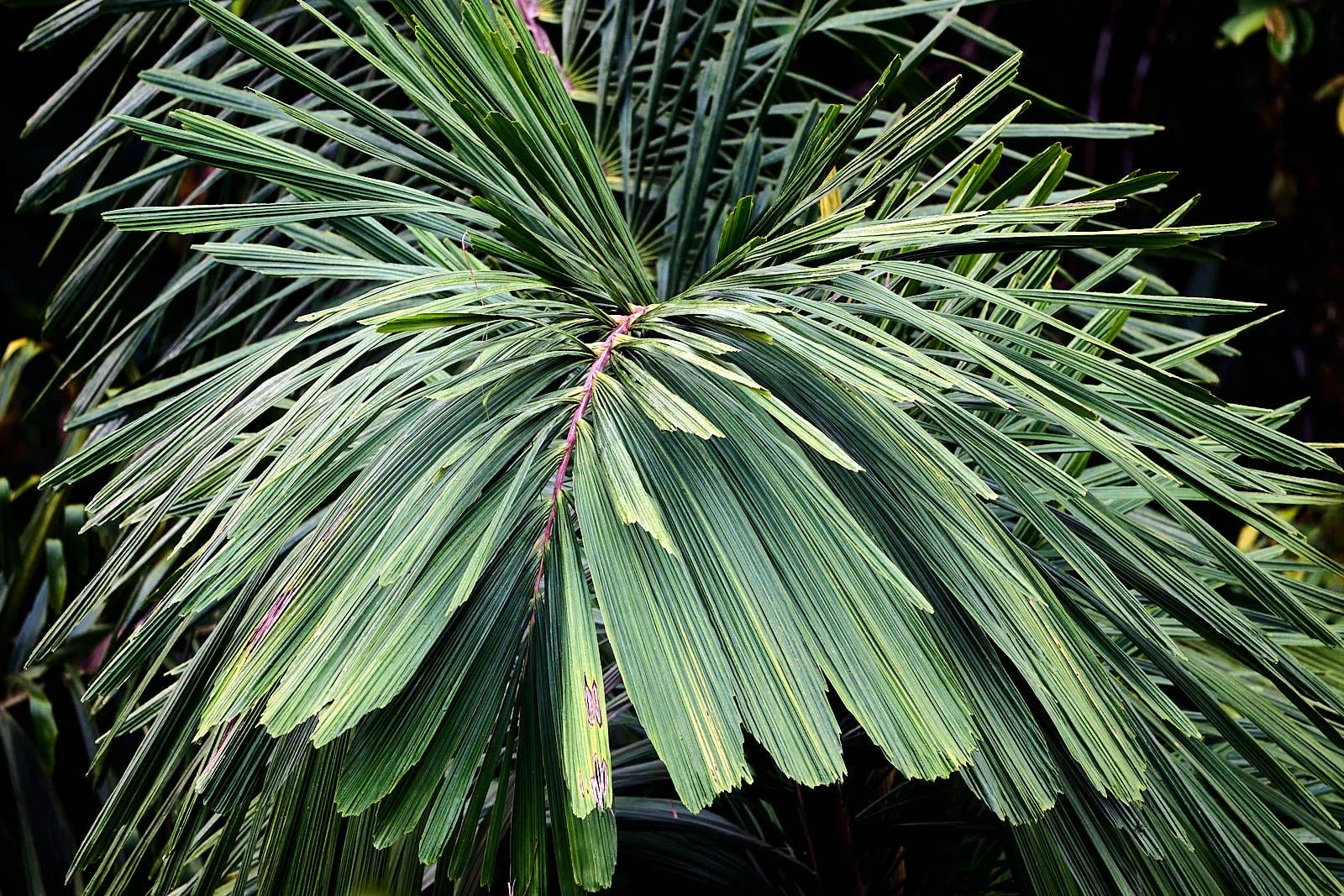
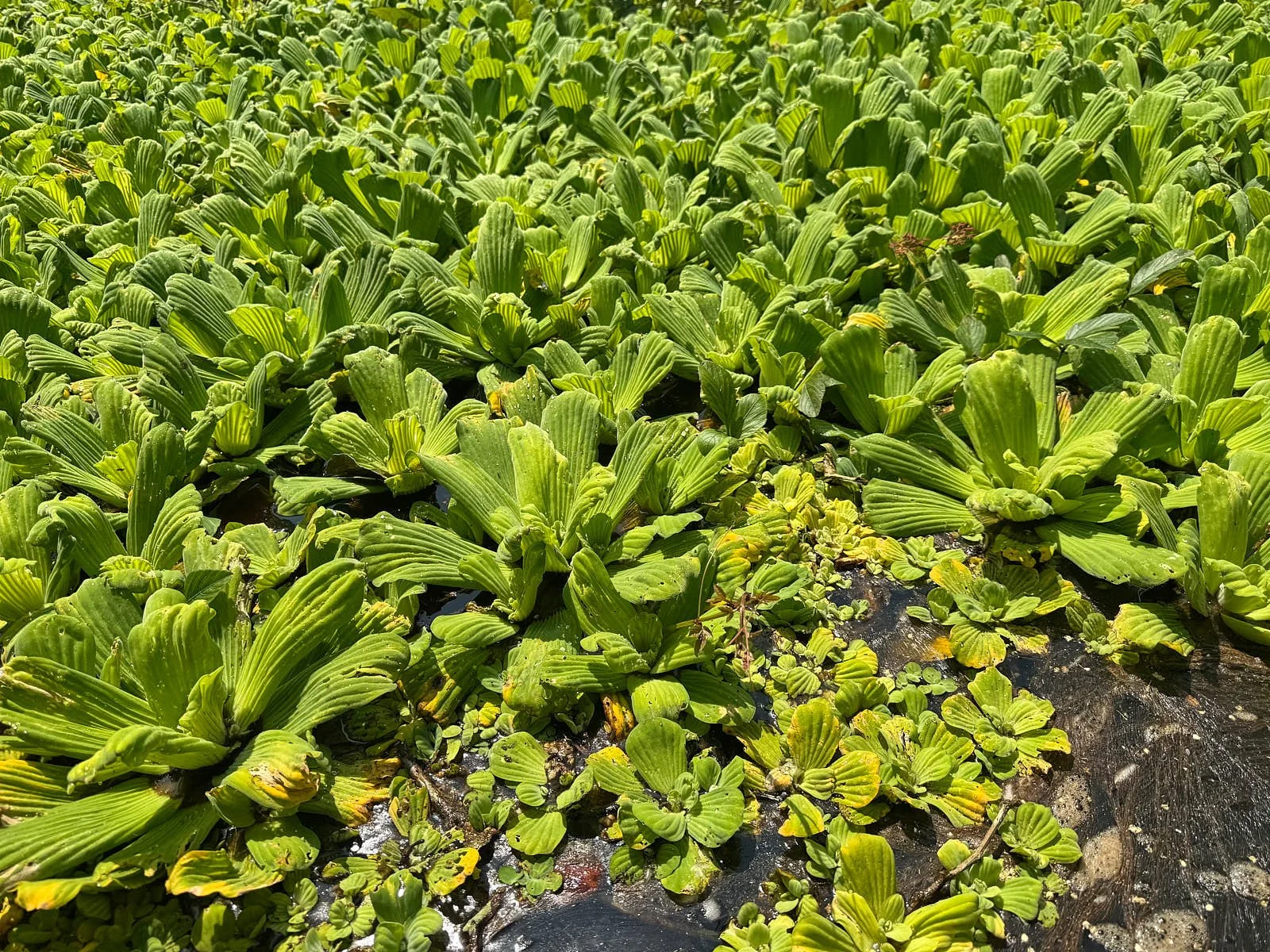
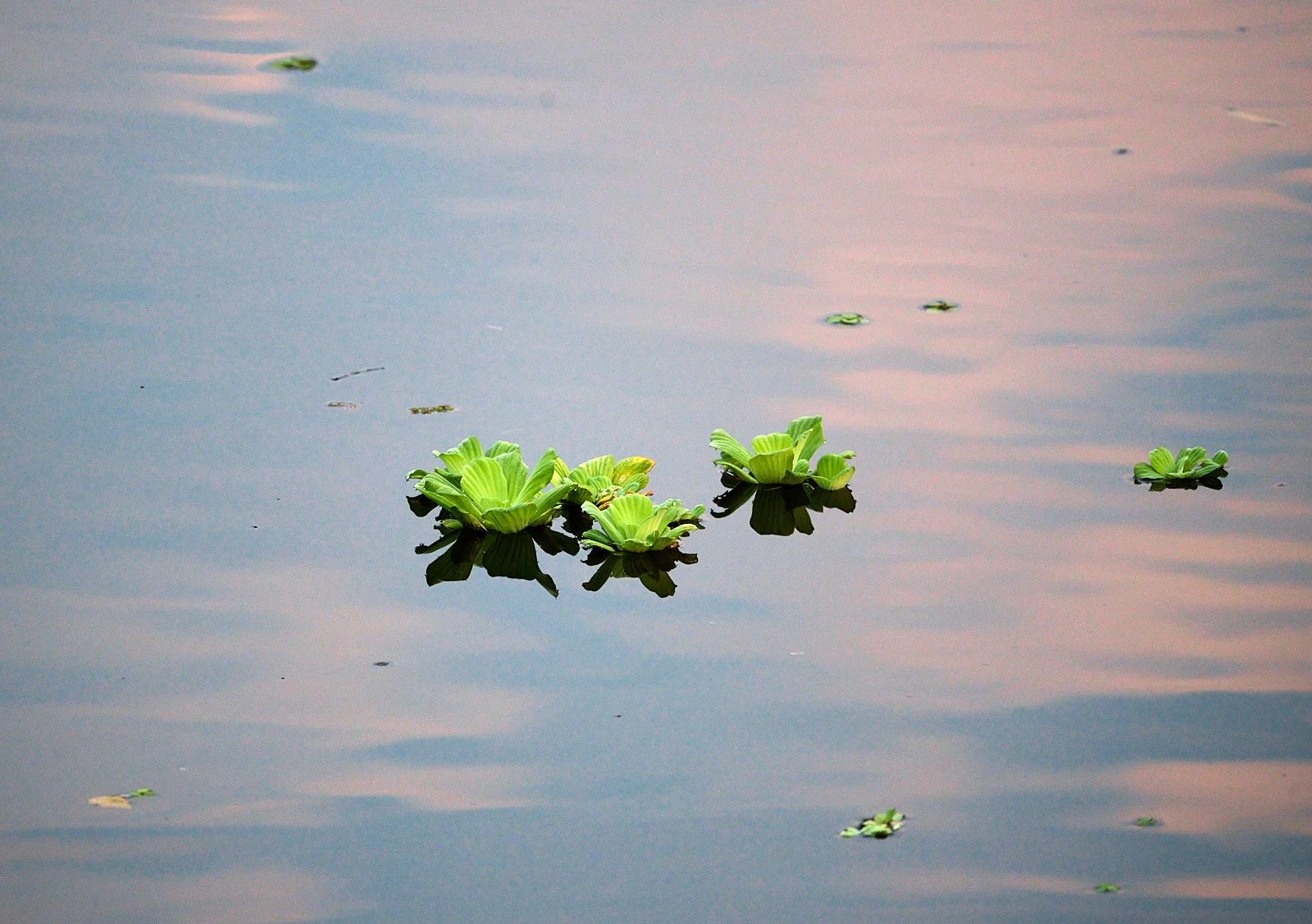
Water cabbage, widespread in South America and Africa
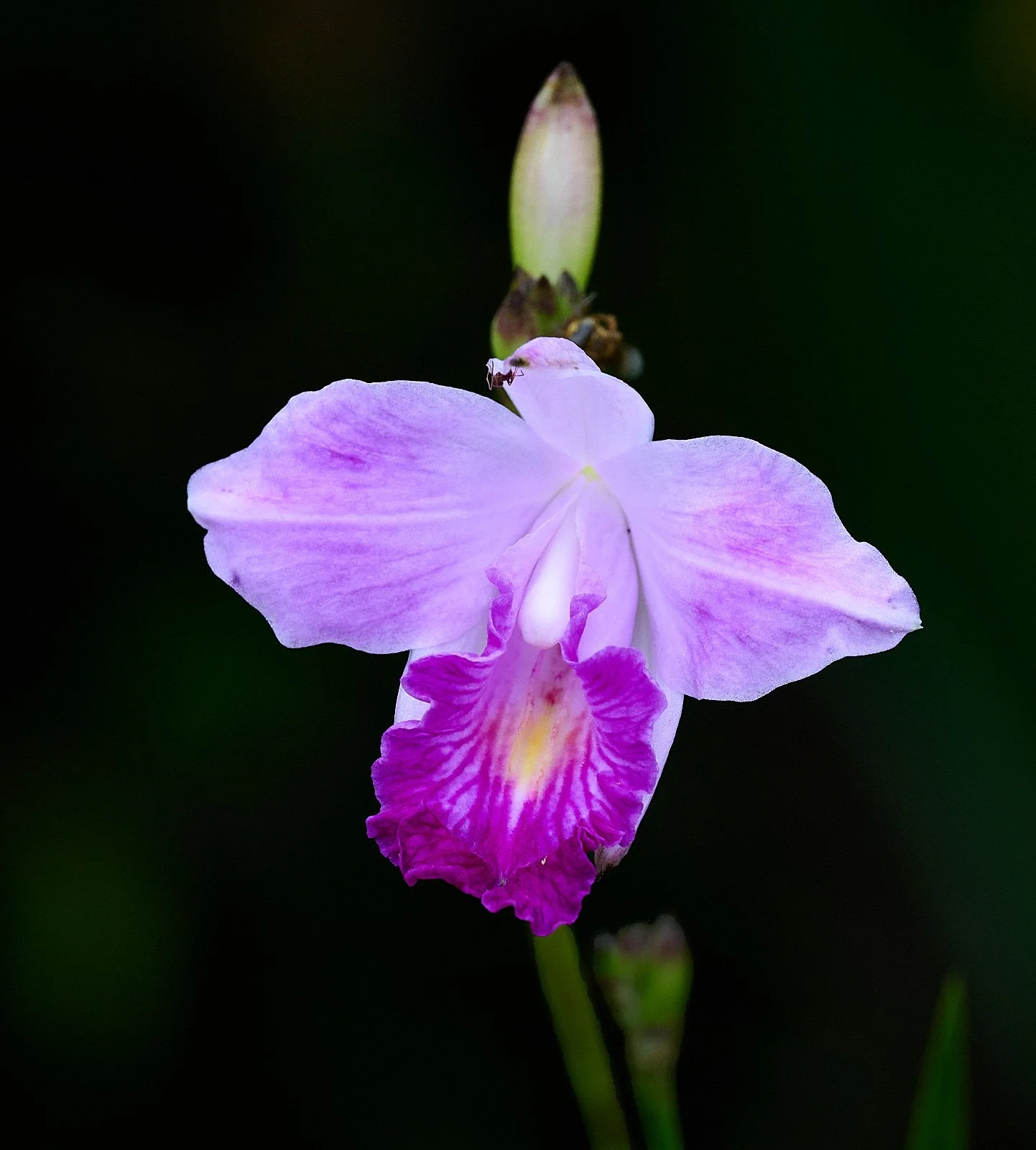
Orchid
Amazonian Umbrellabird
The Amazonian Umbrellabird was described by Sir Alfred Wallace. It is a large, bizarre cotinga of the Amazon basin. Males have a long, feathered wattle dangling off their chests that is inflatable and amplifies their deep, booming, far-reaching call. They forage at upper levels in the forest for fruit and arthropods, but the species is more often seen in lumbering flight over open areas. The males gather in loose leks, where they call and extend their wattles to attract females. Nest building and care of the young is the female’s responsibility.
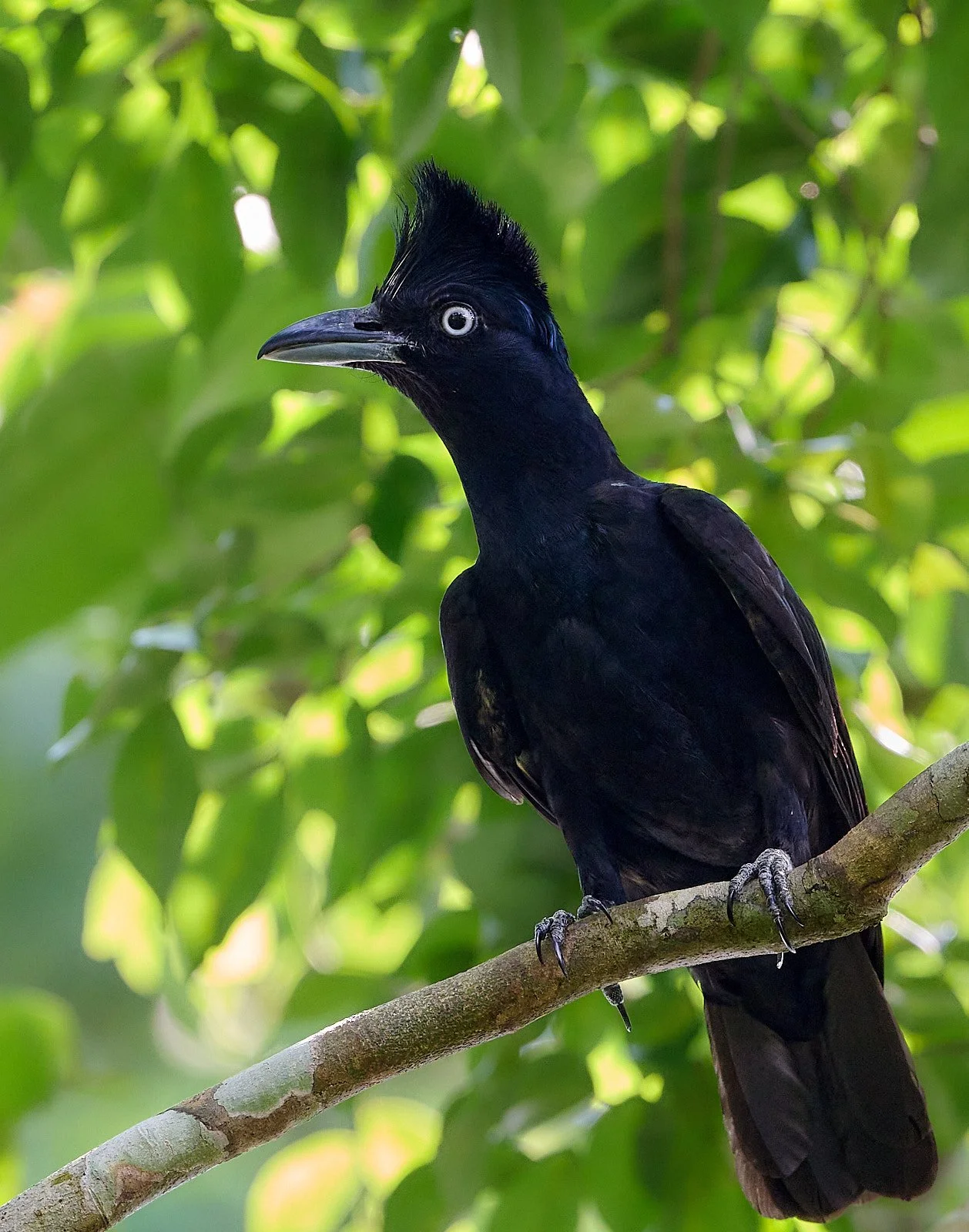
Amazonian Umbrellabird, female
Clay licks
We visited two clay licks that are frequented by several species of parrots (family Psittacidae). There was no activity at the first site because an Orange-breasted Falcon was lurking close by. The second site was fantastic. We saw Scarlet Macaws, Red-and-green Macaw, Cobalt-winged Parakeet, Blue-headed Parrot, Orange-cheeked Parrot, Mealy Amazon, and Yellow-crowned Amazon taking clay and drinking from a pool at the base of the lick.
Clay licks are called “collpas”. Collpas are used often by birds in western Amazonia. There have been several theories why some birds eat soil (geophagy).
At first, studies hinted that the clay might help remove toxins, such as naturally occurring tannins, that the birds ingest from plants. When birds consume clay, the clay binds to the tannins present in the ingested food and decreases the amount of tannin absorbed by the gastrointestinal system. The toxins then get excreted alongside the clay.
Donald Brightsmith and colleagues have studied a salt lick in Peru and contend that the birds eat clay to help augment a sodium-poor diet. The western Amazon Basin is known to be lacking in salt. The farther an area is from the ocean, the more its rain may lack salt. Additionally, in inland areas with high rainfall, sodium may leach out of the soil. Parrots feed on seeds and fruit which are low in sodium. The sodium content of collpas soil was six times greater than that of the parrots’ diet. Sodium was nearly 40 times more concentrated in the collpas clay than in surrounding soils. Brightsmith points out that parrots in other regions around the globe consume foods that contain toxins, including those with tannins, and yet it’s only those in the western Amazon basin that visit these clay licks.
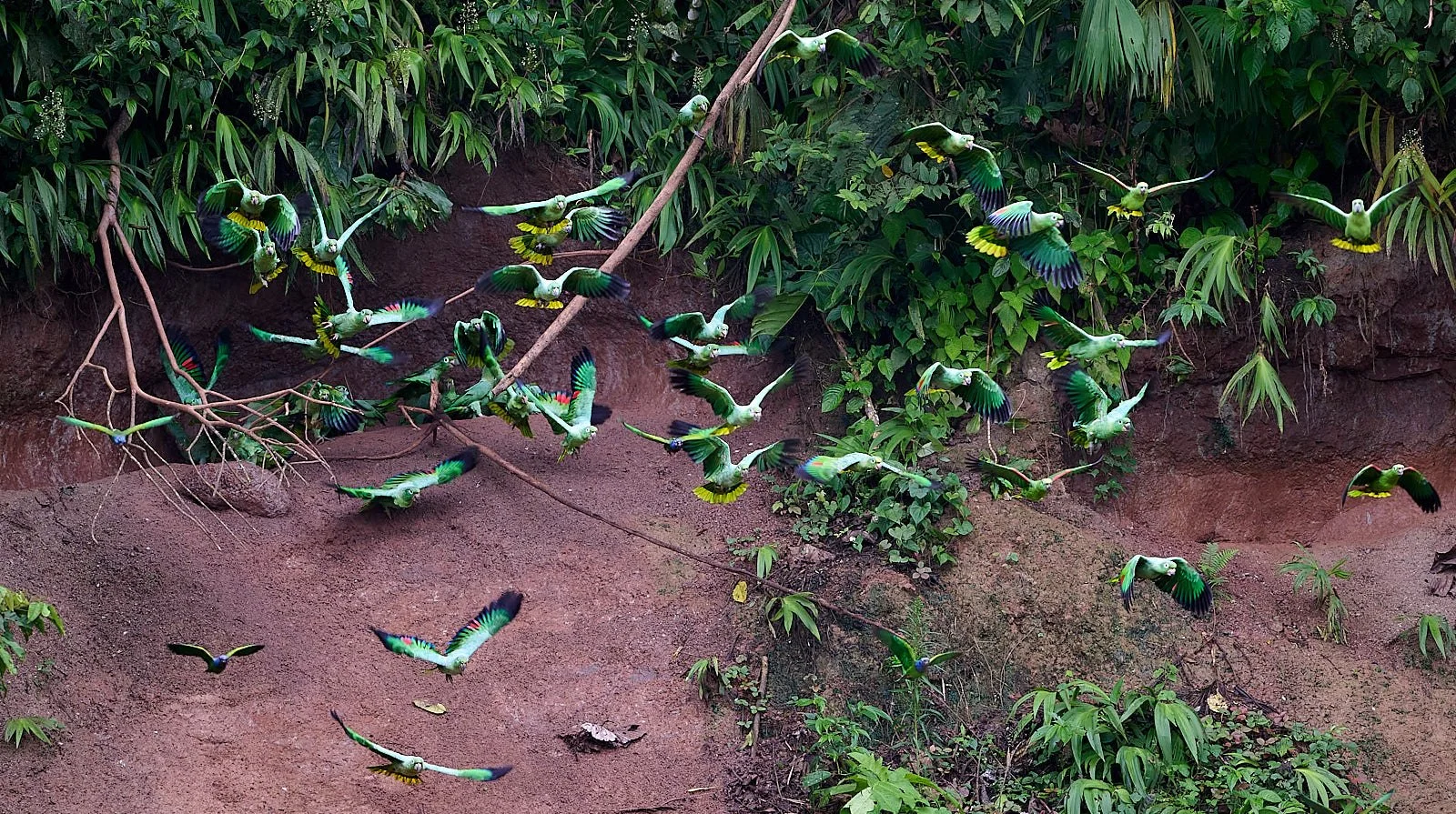
Mealy Parrots leaving the salt lick
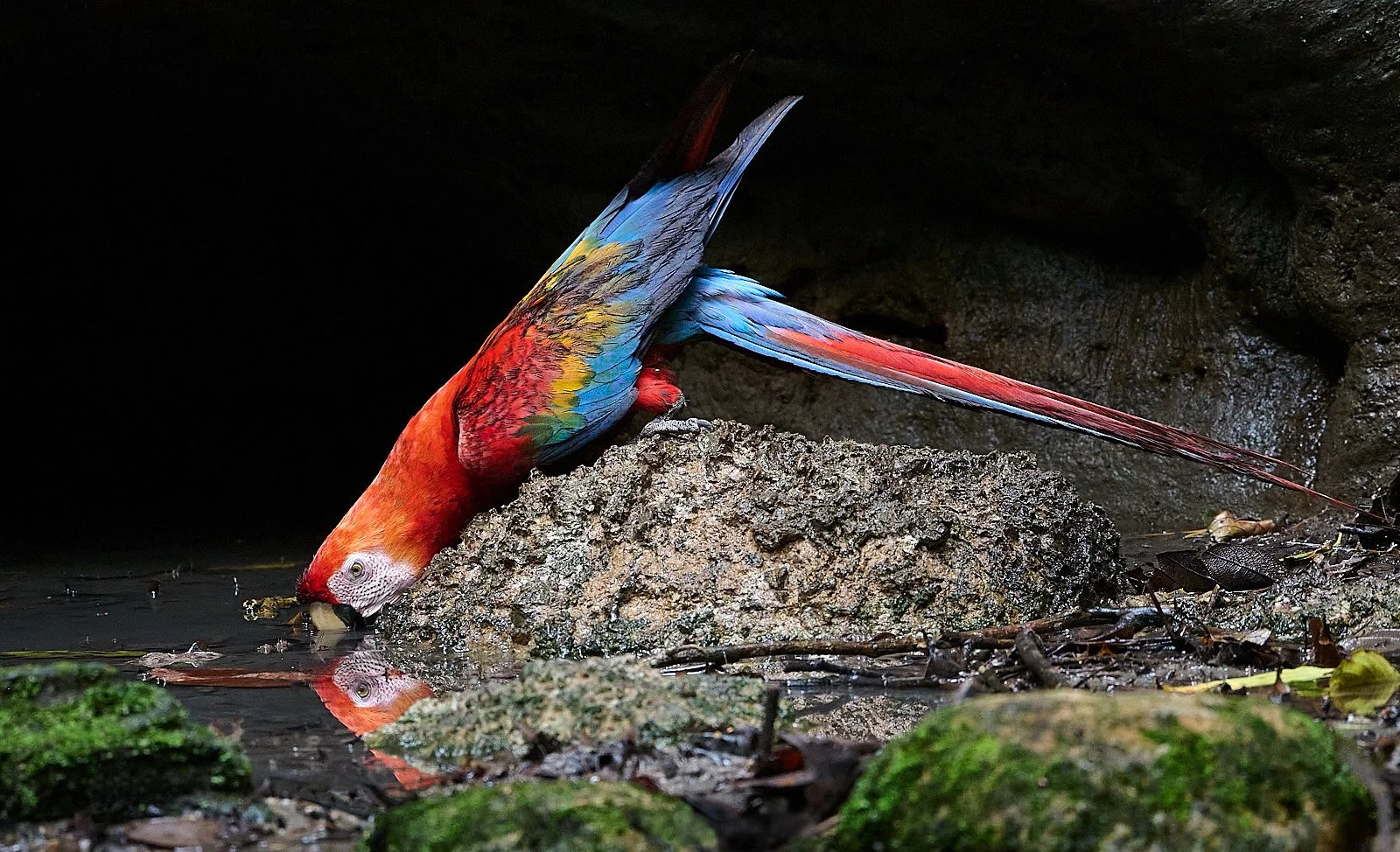
Scarlet Macaw
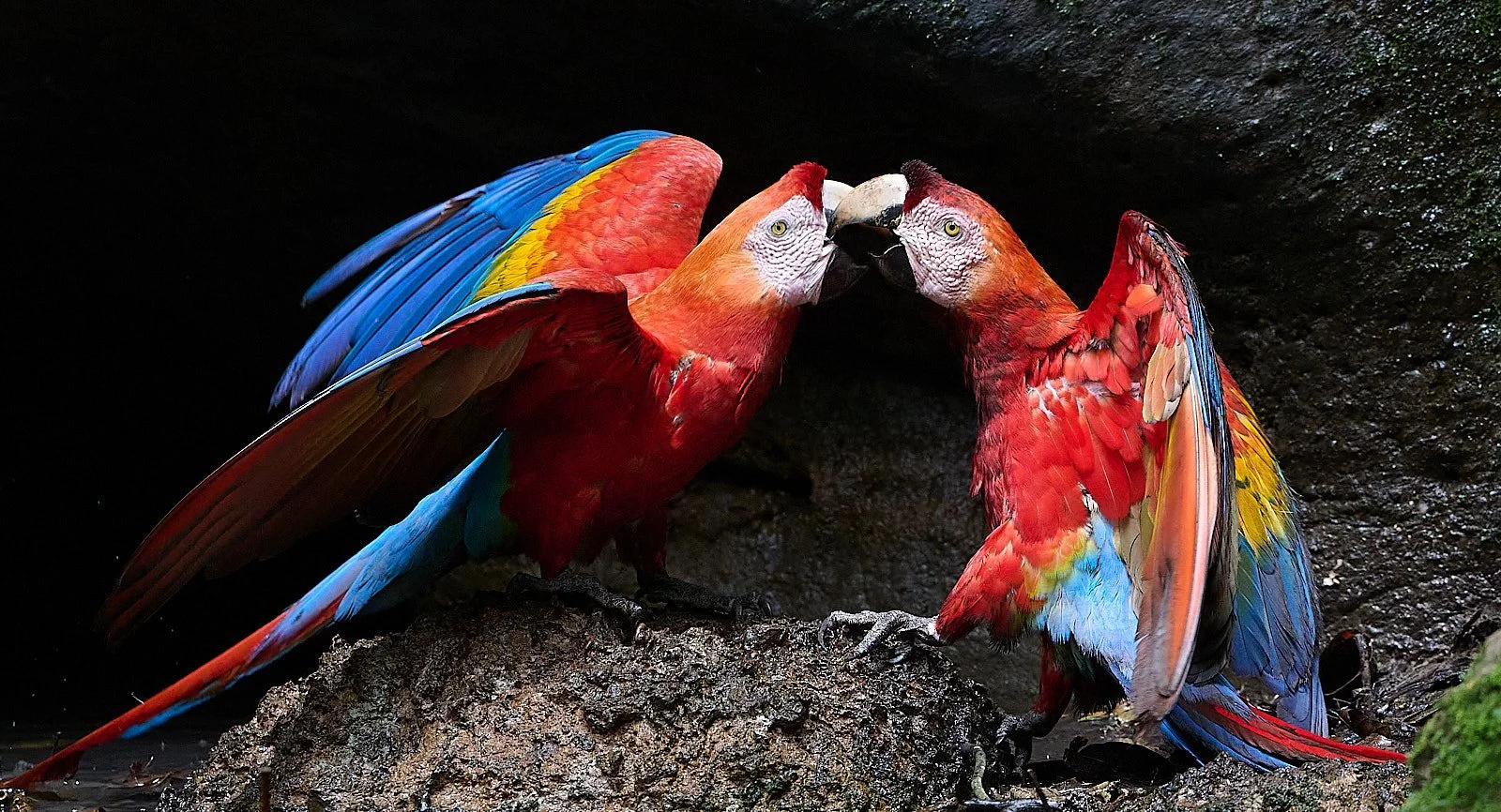
Occasionally, there is disagreement over who gets to drink
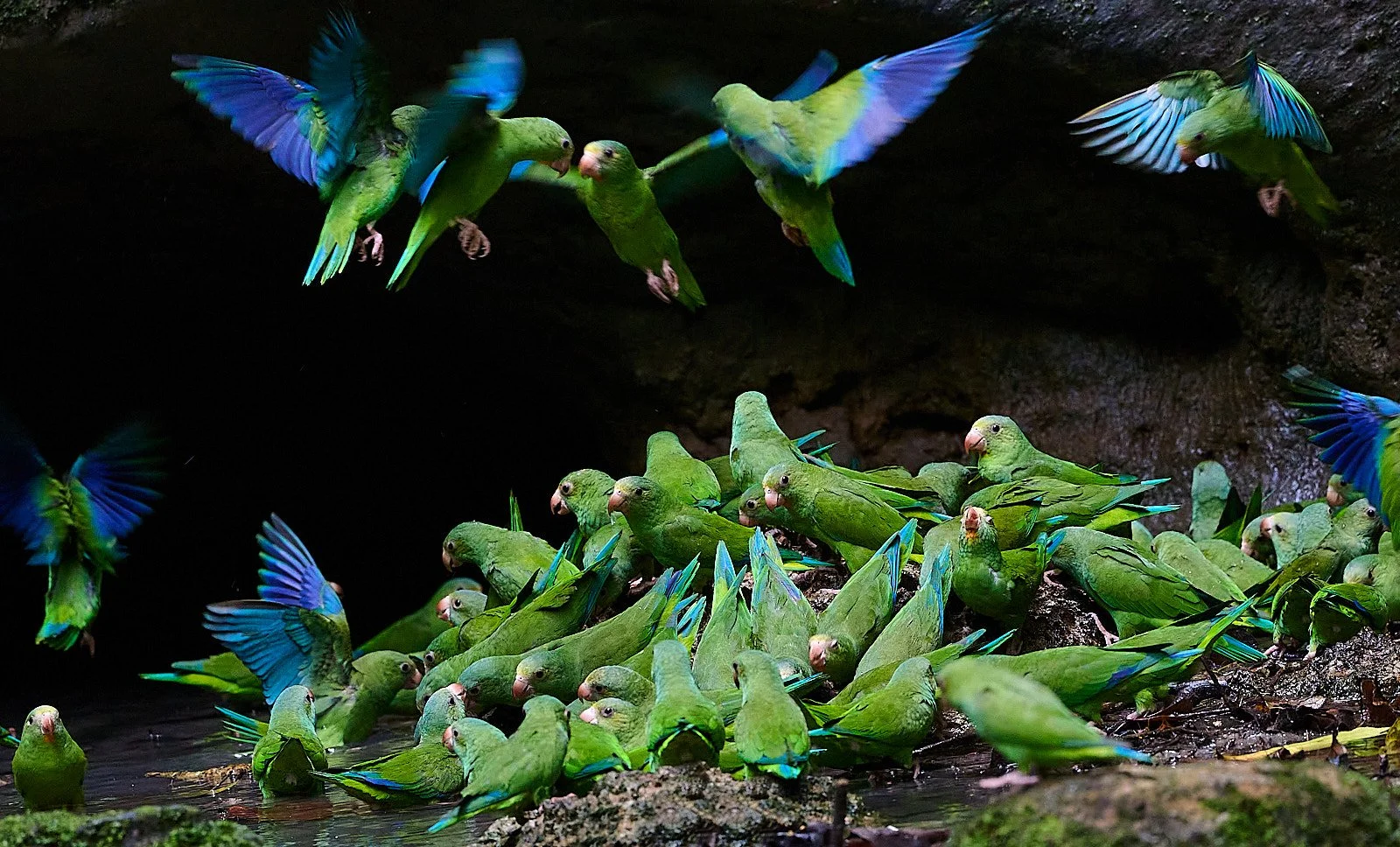
Cobalt-winged Parakeets
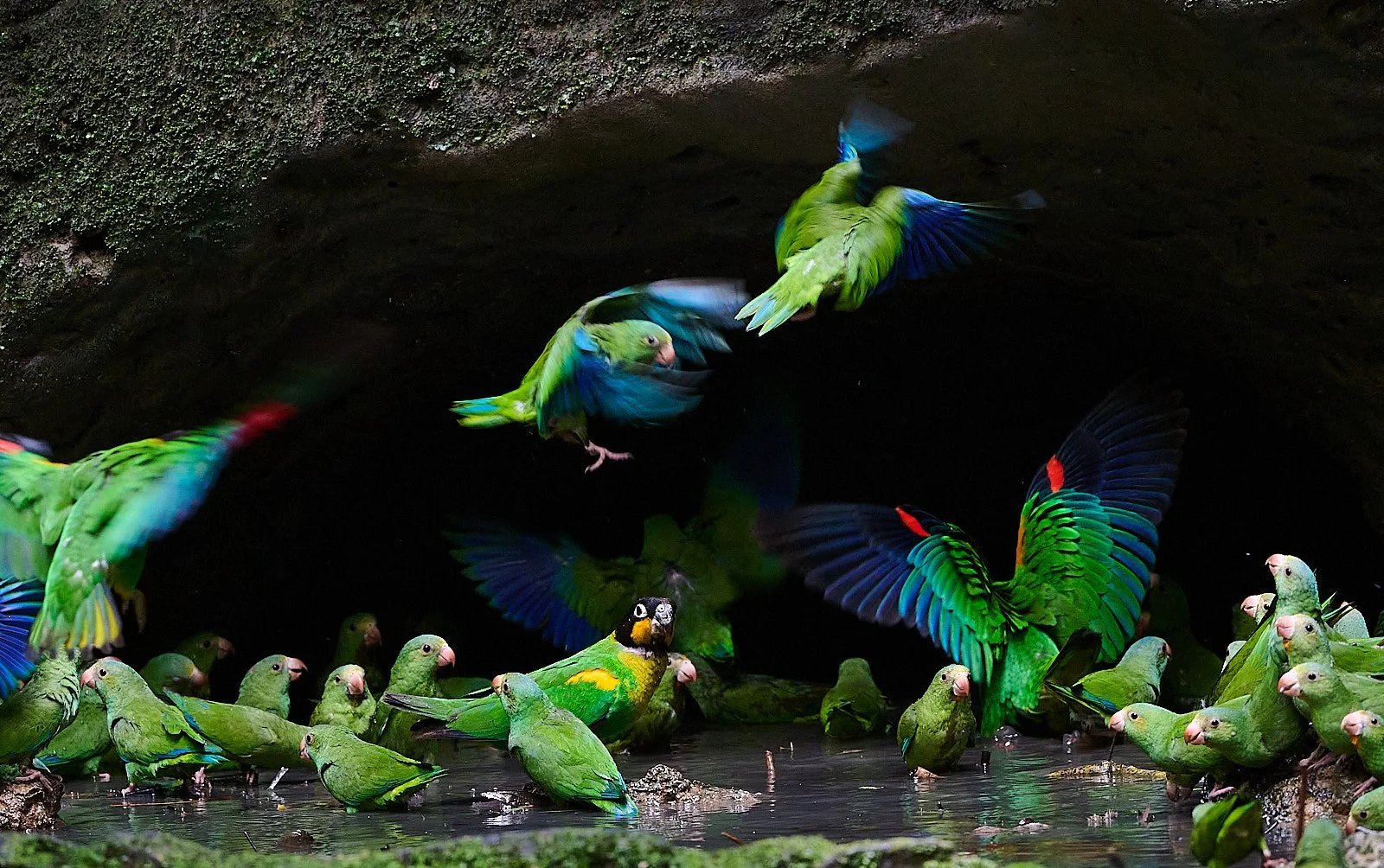
Orange-cheeked Parrots joining in.
Hoatzin (Opisthocomus hoazin)
These exotic-looking birds have the bill of a chicken, the proportions of a turaco, and a scruffy version of a hoopoe’s crest. Hoatzins nest in shrubs over still waters in northern South America. The young chicks are competent swimmers, and if they fall from the nest they are also quite capable of climbing back up, aided by two functional claws on the digits of each wing, which disappear as the wing develops.
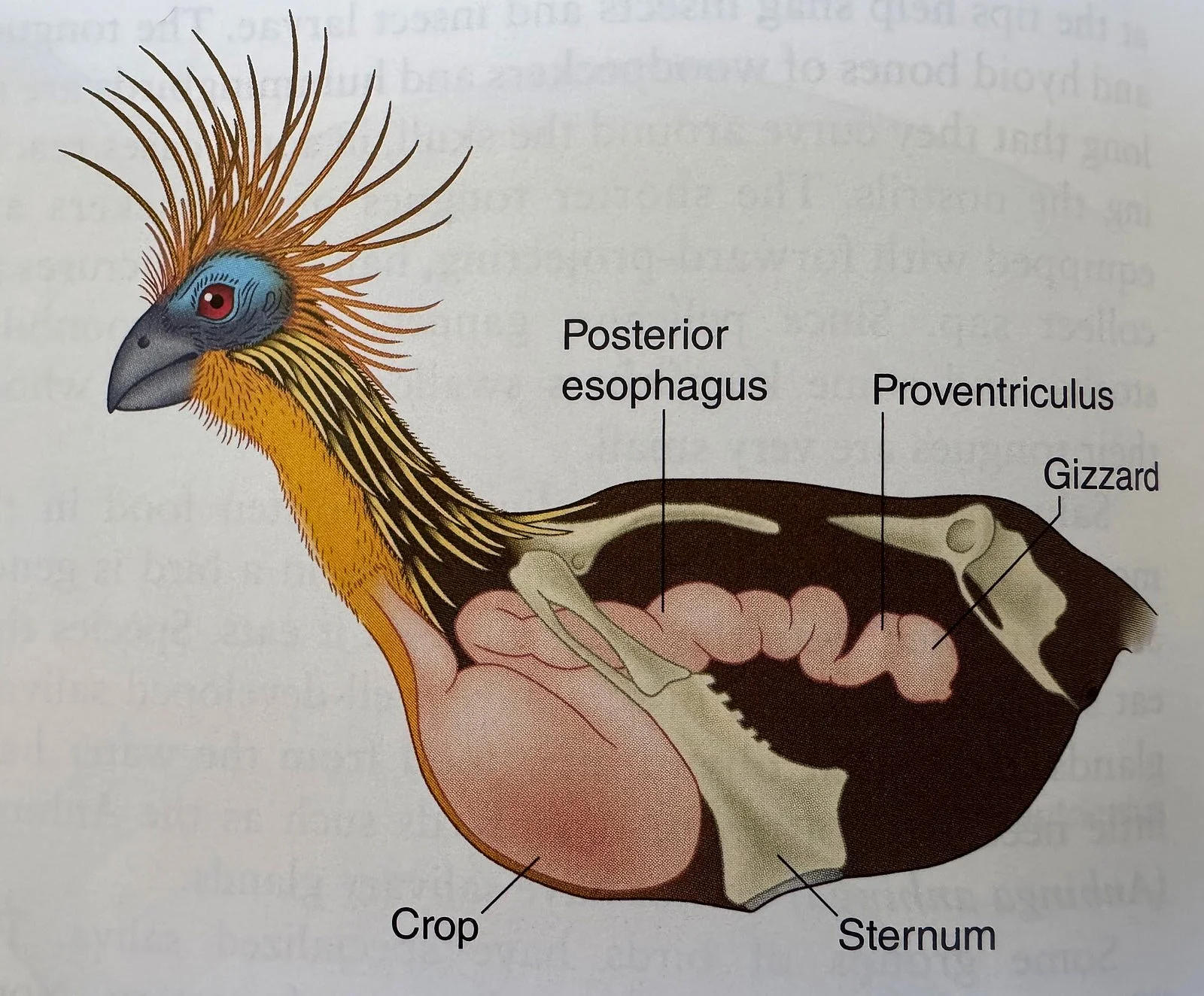
Hoatzin anatomy
The Hoatzin has an exceptionally large, thick-walled crop (a dilated portion of the lower esophagus). It is the only bird that digests food within its crop and lower esophagus instead of its stomach.
The hoatzin eats food that is uncharacteristically fibrous for a bird, as 85% of its diet is thick leaves. Like other cellulose fermenting herbivores (such as cows), the Hoatzin retains food in its foregut where it is digested by microbes. While most birds only require 1-2 hours for digestion in the stomach, microbial digestion in the crop requires about 20 hours. Since this process takes time, these birds spend much of the day almost motionless, leaning on branches and emitting manure-like smells that have led to their local name, “stink-birds.”
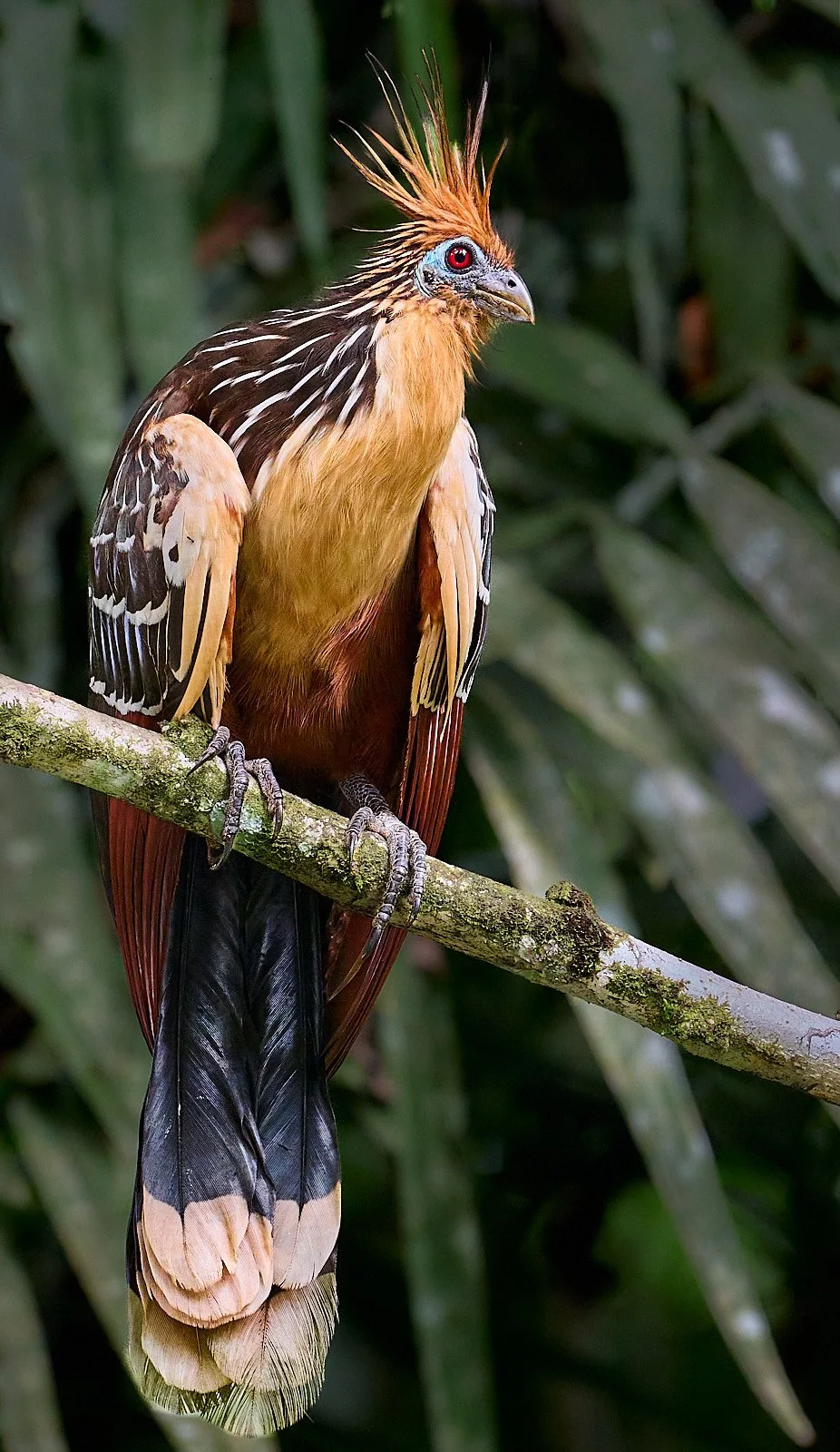
Settling in for the afternoon
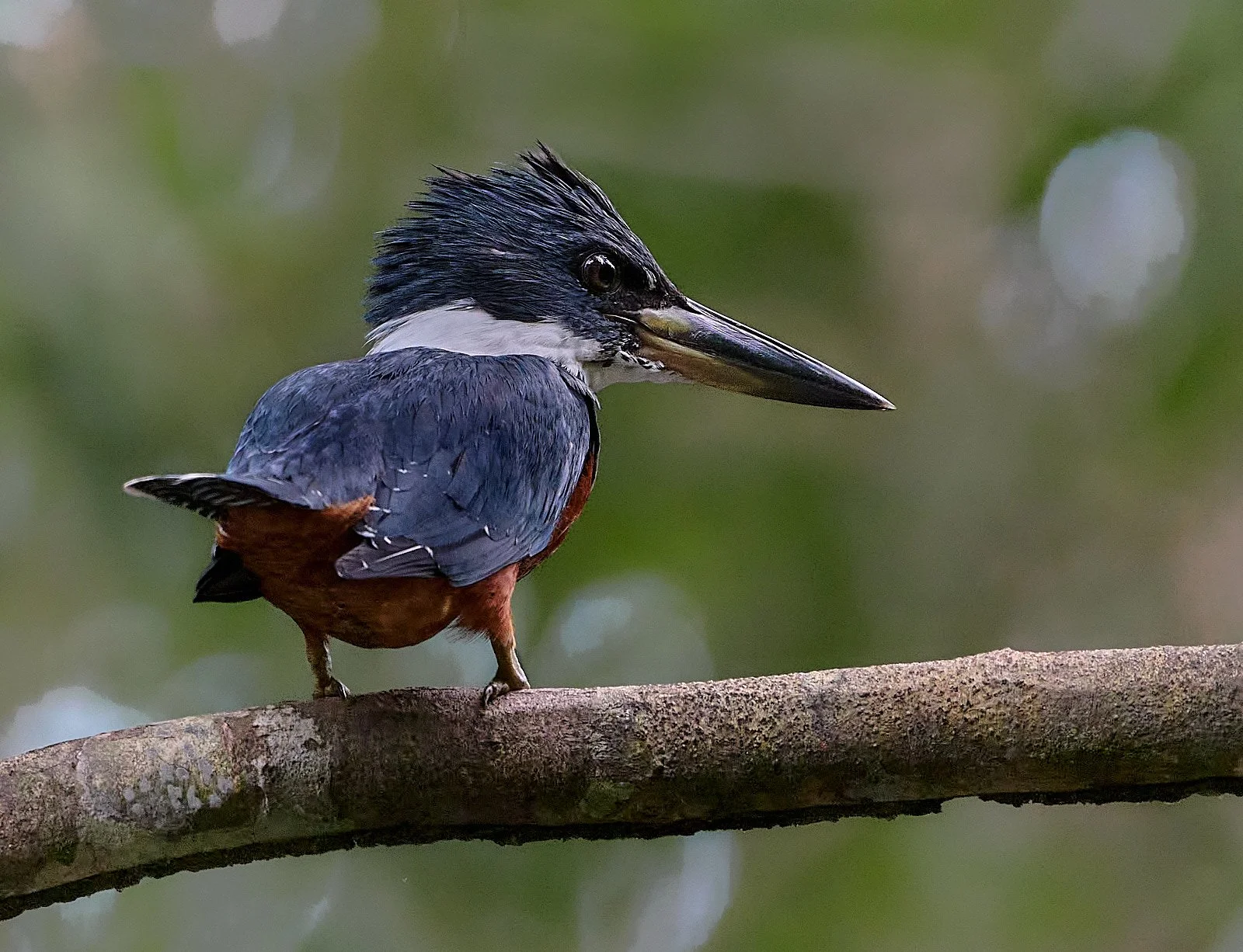
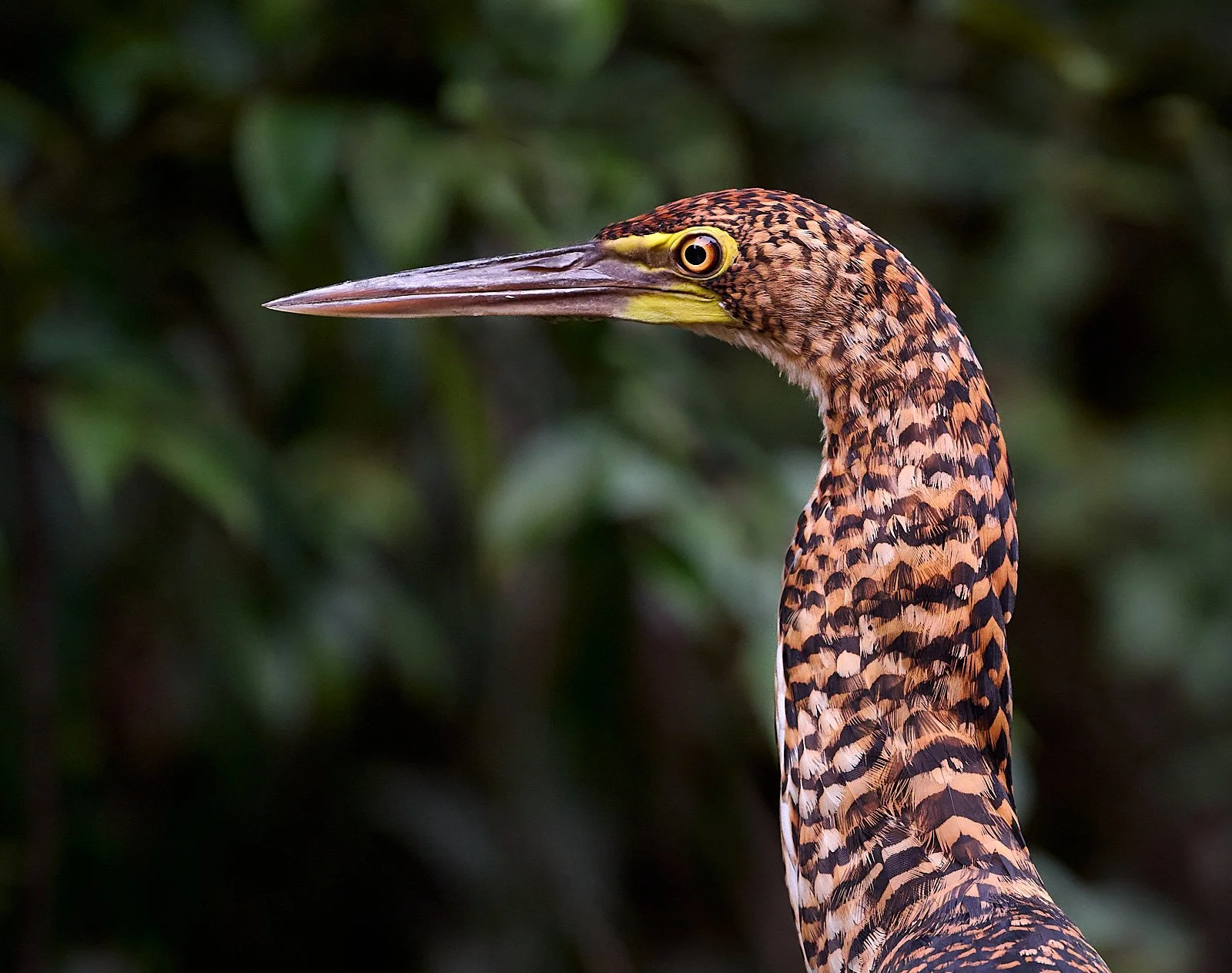
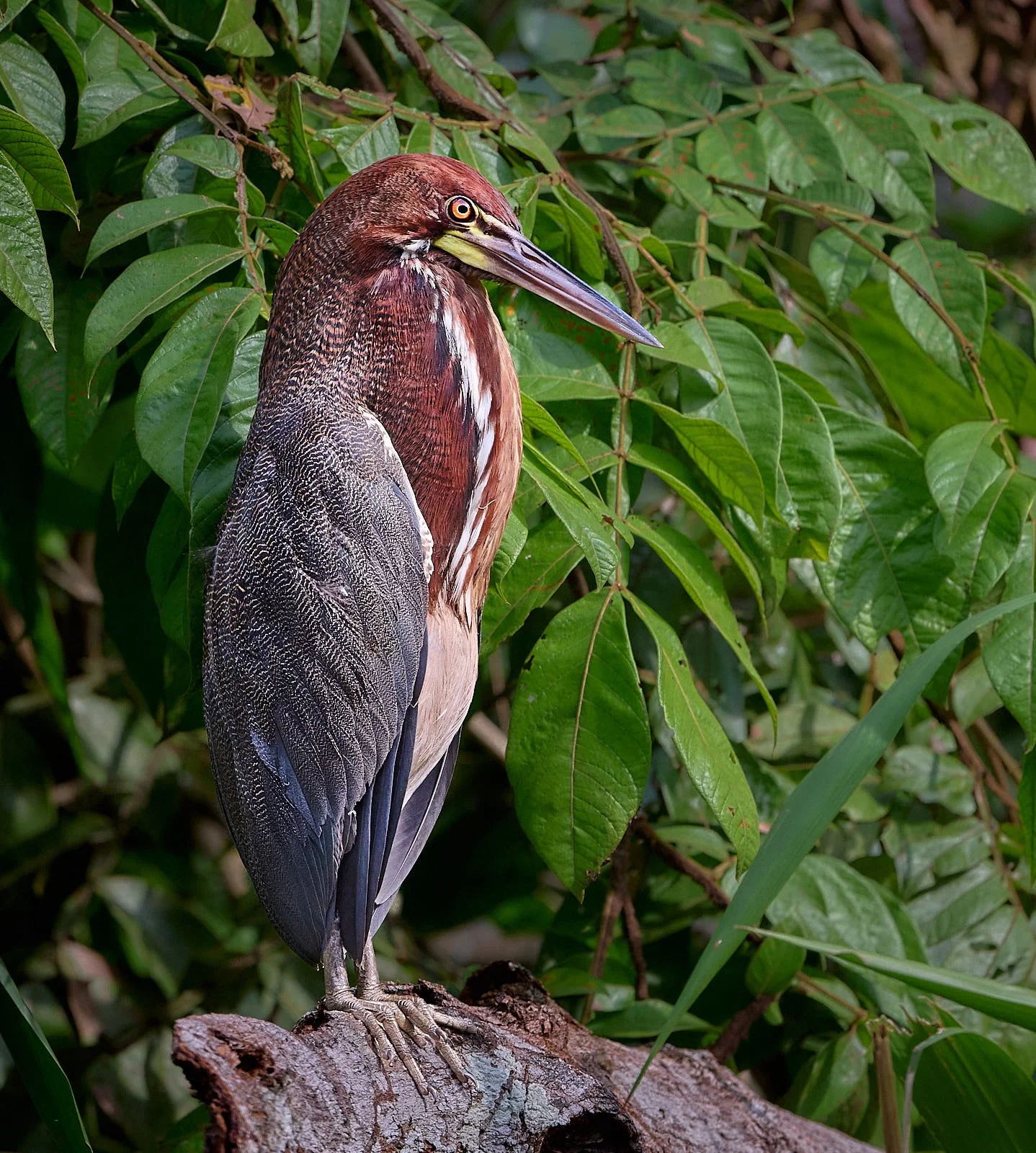
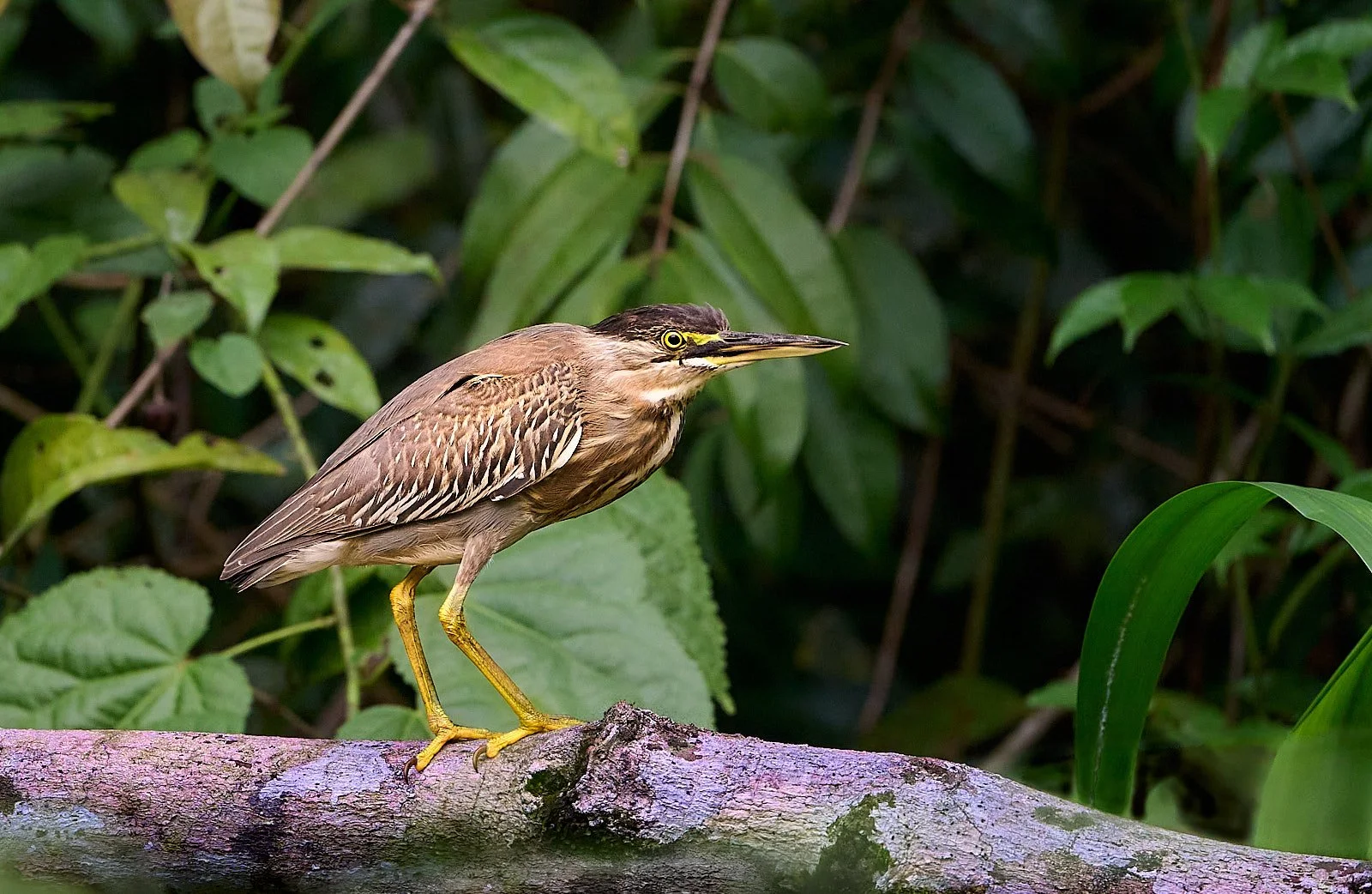
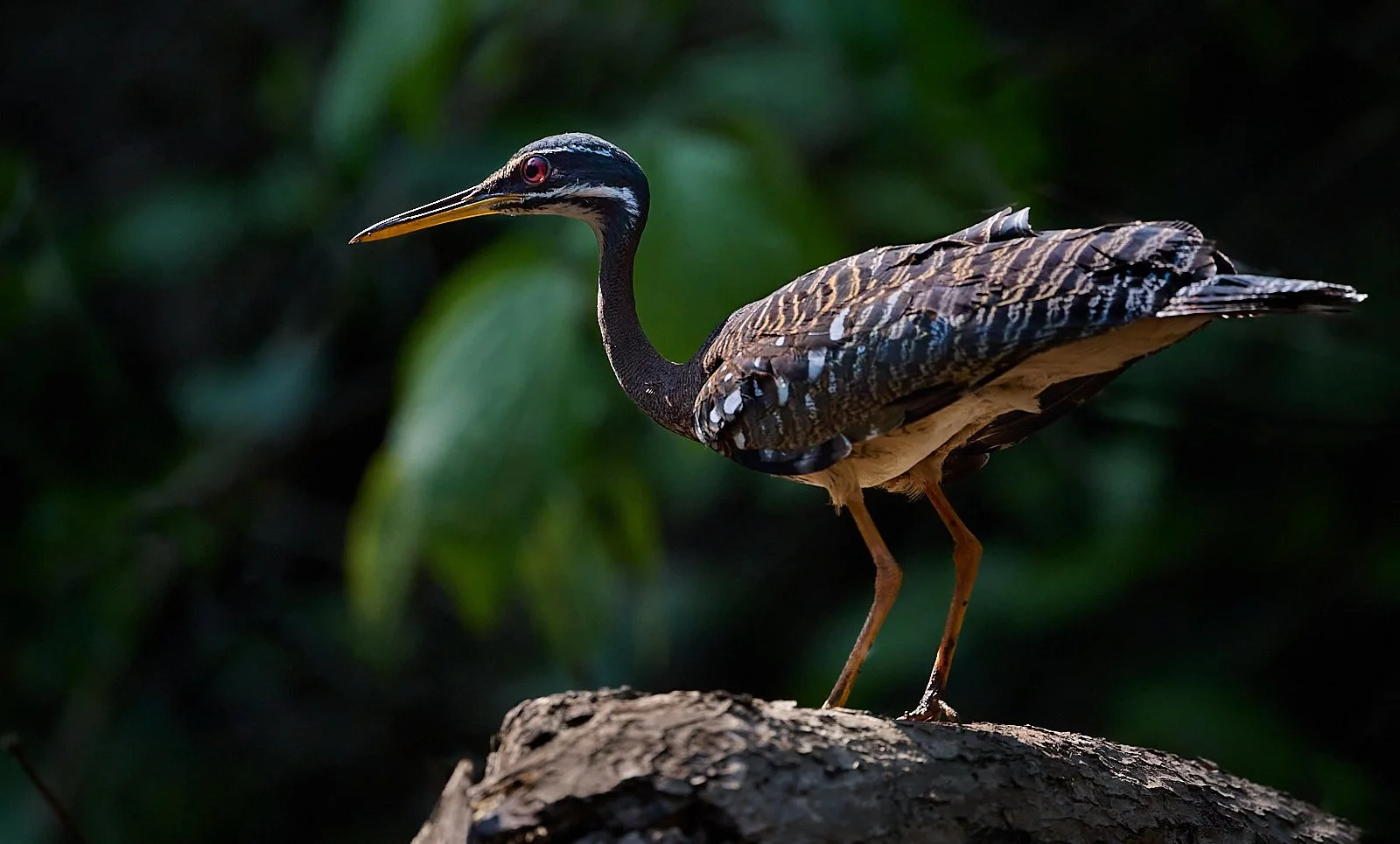
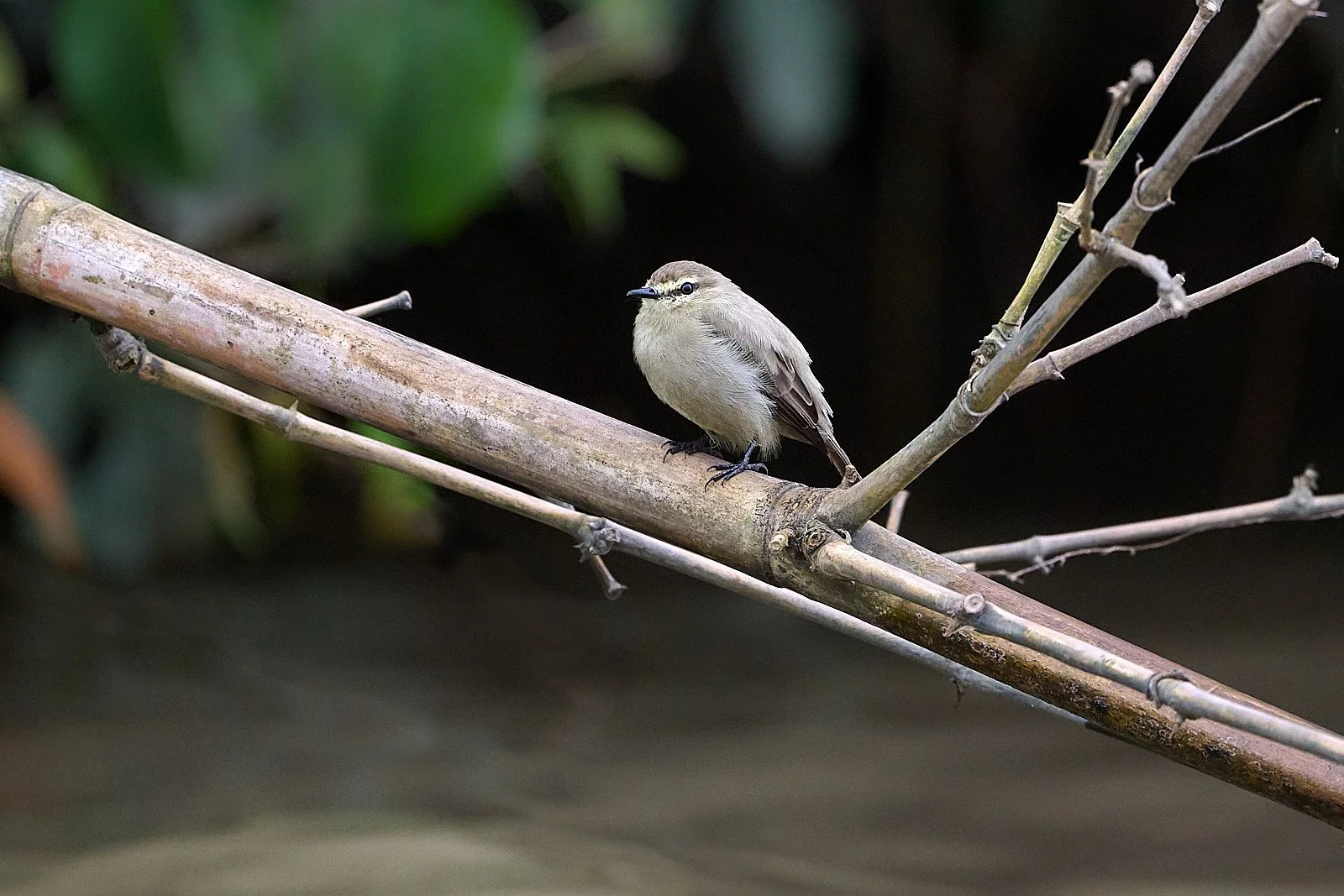
Birds seen from a canoe
Canoes glide silently and slowly. The only sound is the dip of a paddle and body-maintenance noises from the crew. It is a great way to observe animals without disturbing them.
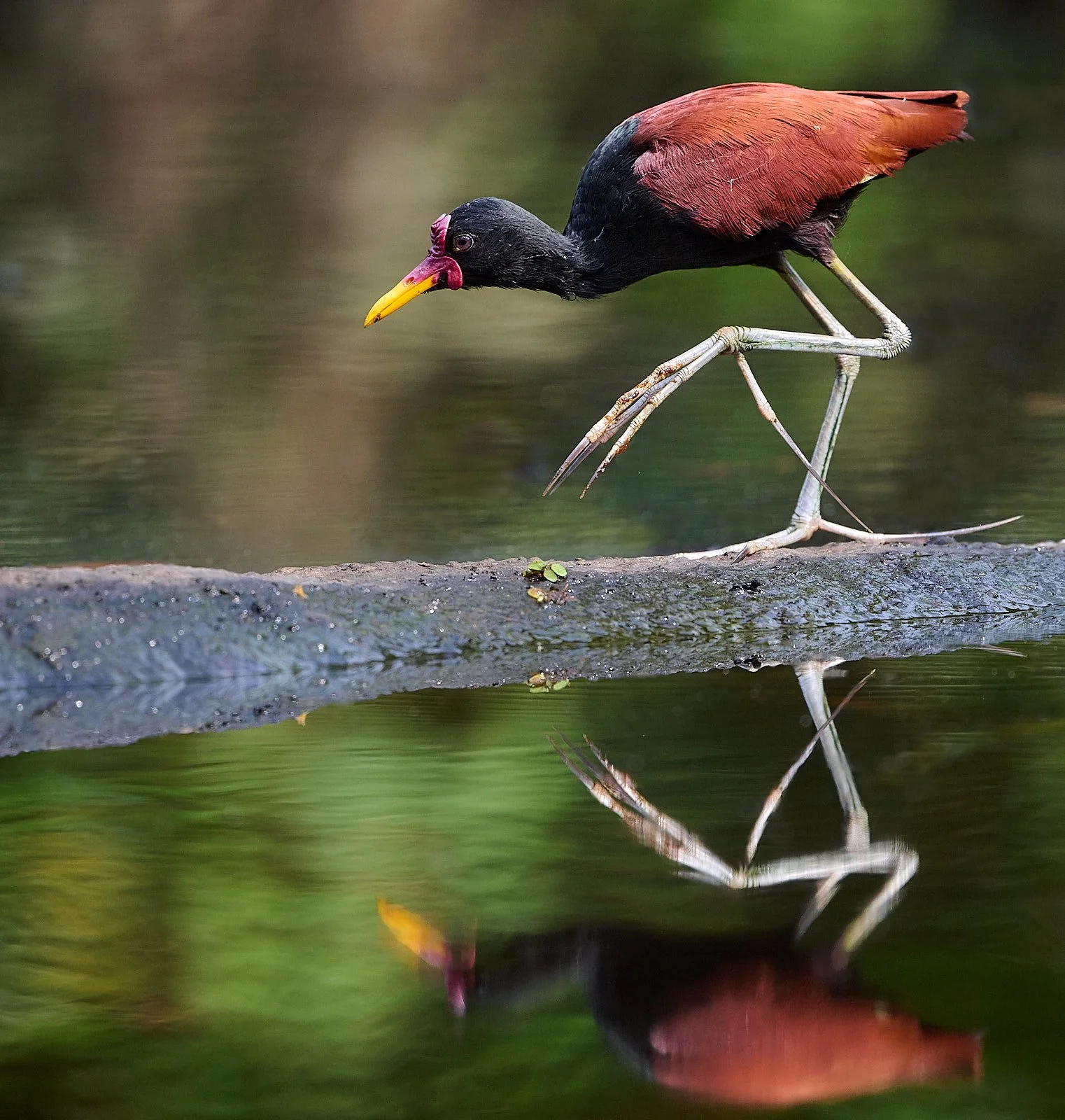
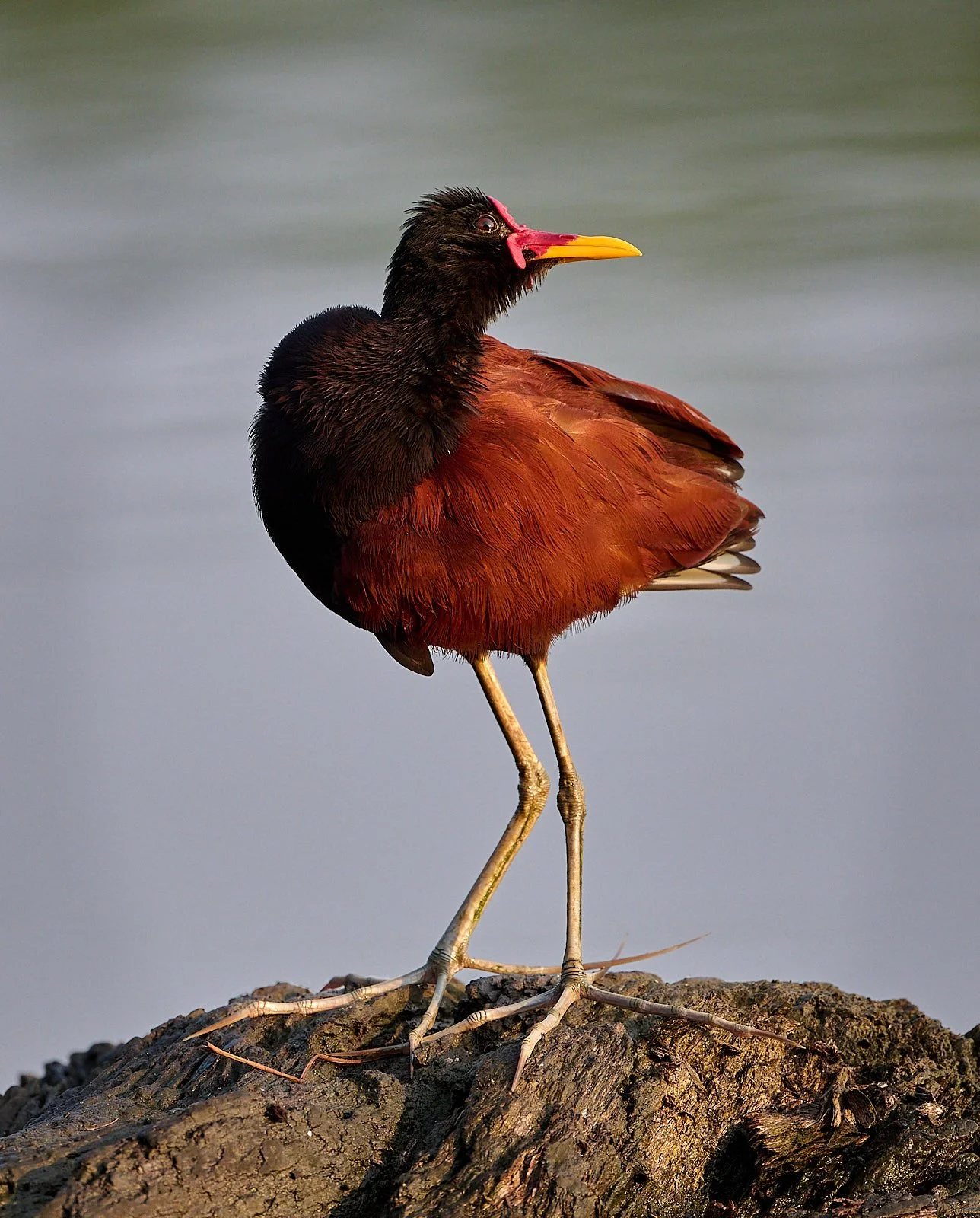
Wattled Jacana
Dancing Manakins
Manakins are small forest-dwelling birds that exhibit lek behavior. Males gather in a small area and dance to attract and mate with females. As with the Andean Cock-of-the-rock, the male does not participate in nesting activities.
Wire-tailed Manakins have long, stiff tail feathers. Males dance in teams of two. When the dominant male approaches a female, he performs a twisting display in which he rotates his posterior side to side, gently touching the female on her chin with his tail filaments. This is the only known example of tactile stimulation among manakins, and the unique tail is a product of sexual selection.
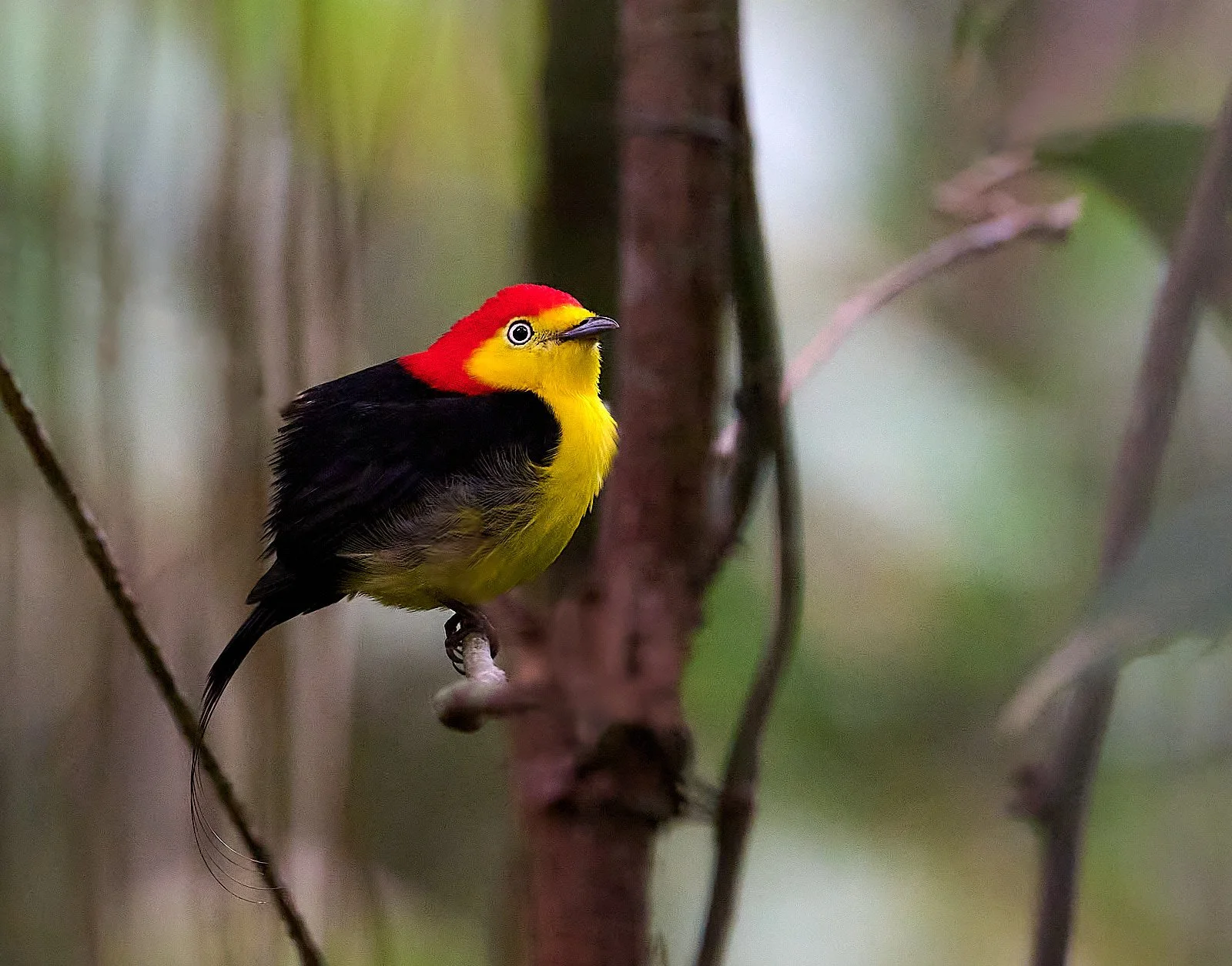
Wire-tailed Manakin male. We had to bushwack through the forest to find this fellow.
Birds seen in the Forest
Many bird species utilize the mid and upper forest canopy and are hidden from view. Several lodges that we visited had constructed towers that reach up to the canopy, providing an entirely different perspective of the rainforest and its inhabitants.
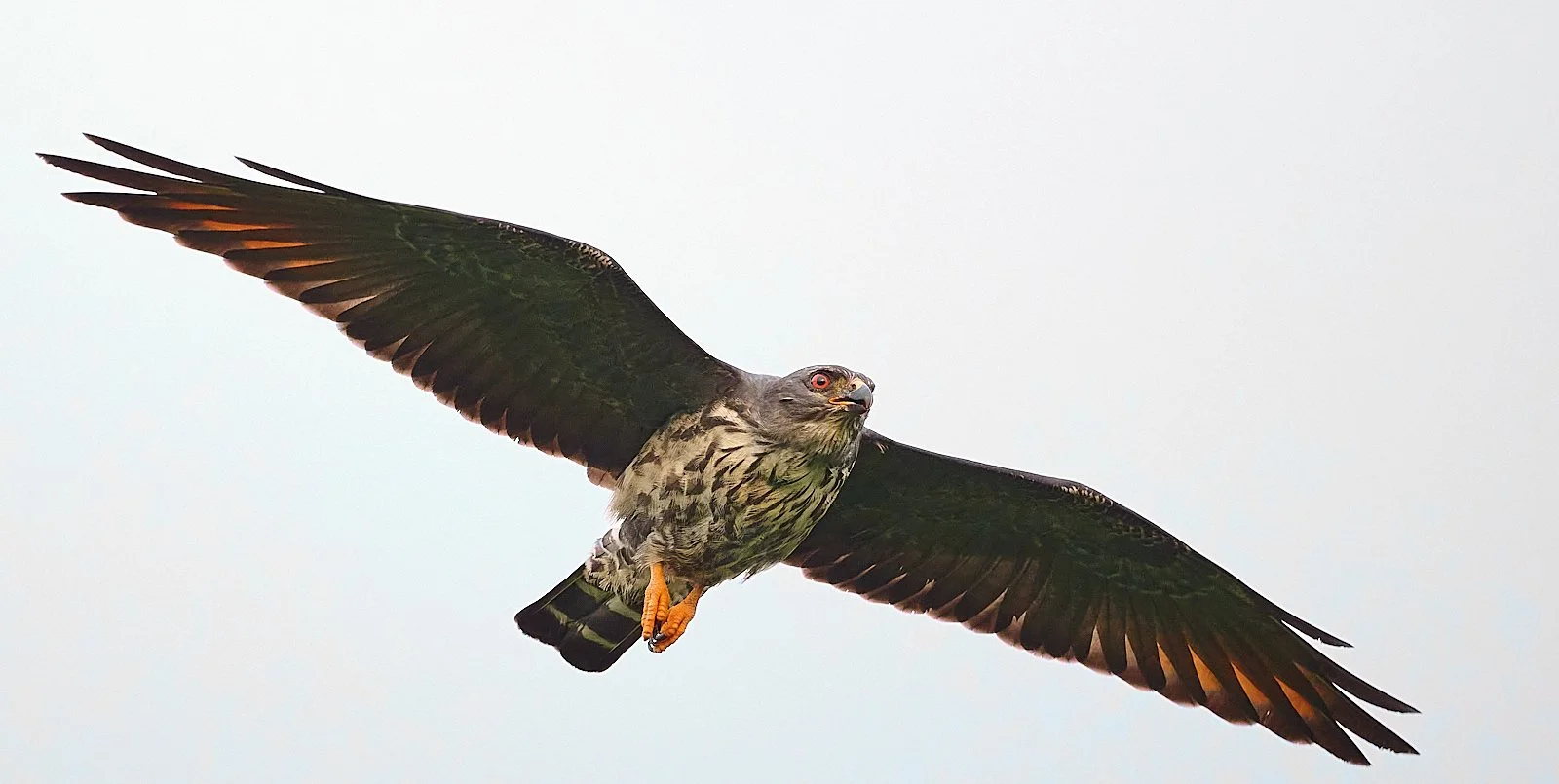
Plumbeous Kite, immature