Ecuador #3: Andes to the Amazon. February 2026.
High Andes
“The páramo zone is the most interesting of the life zones of the Andes, since it shows to the highest degree, the struggle of plant and animal life against conditions of extreme cold temperature”. Chardón, 1933
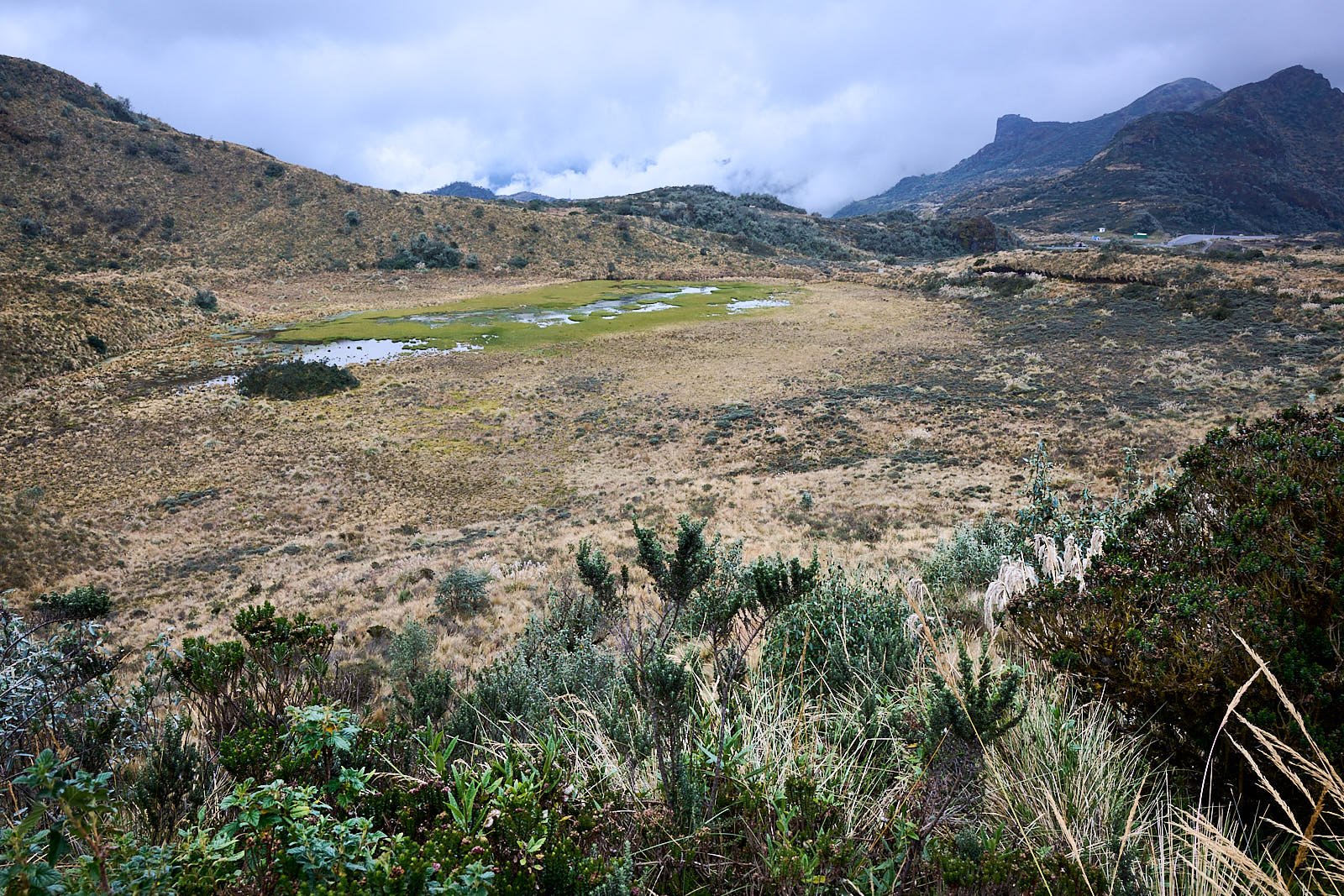
South-westward view from mountain crest showing typical páramo wetlands
Up to the Páramo
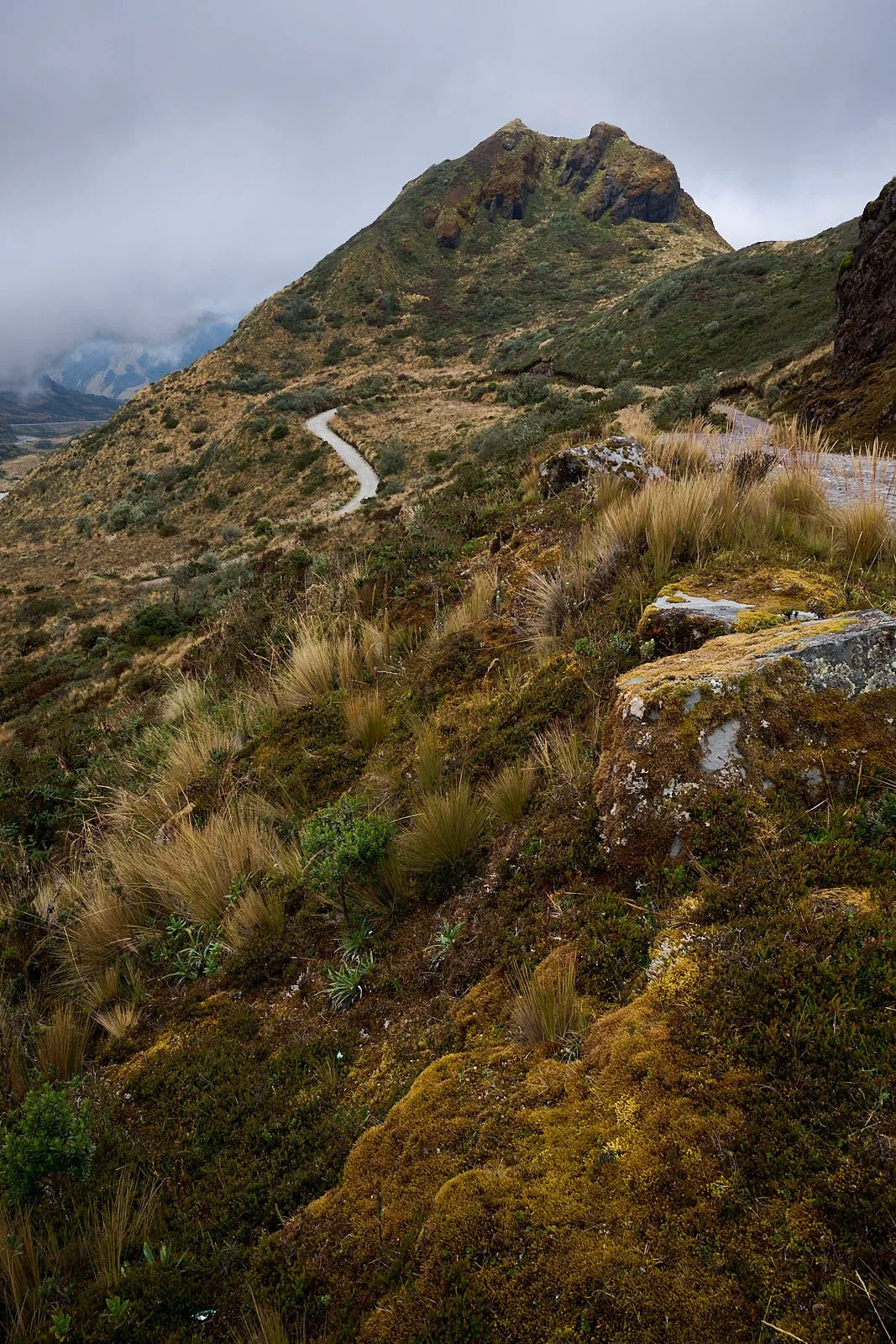
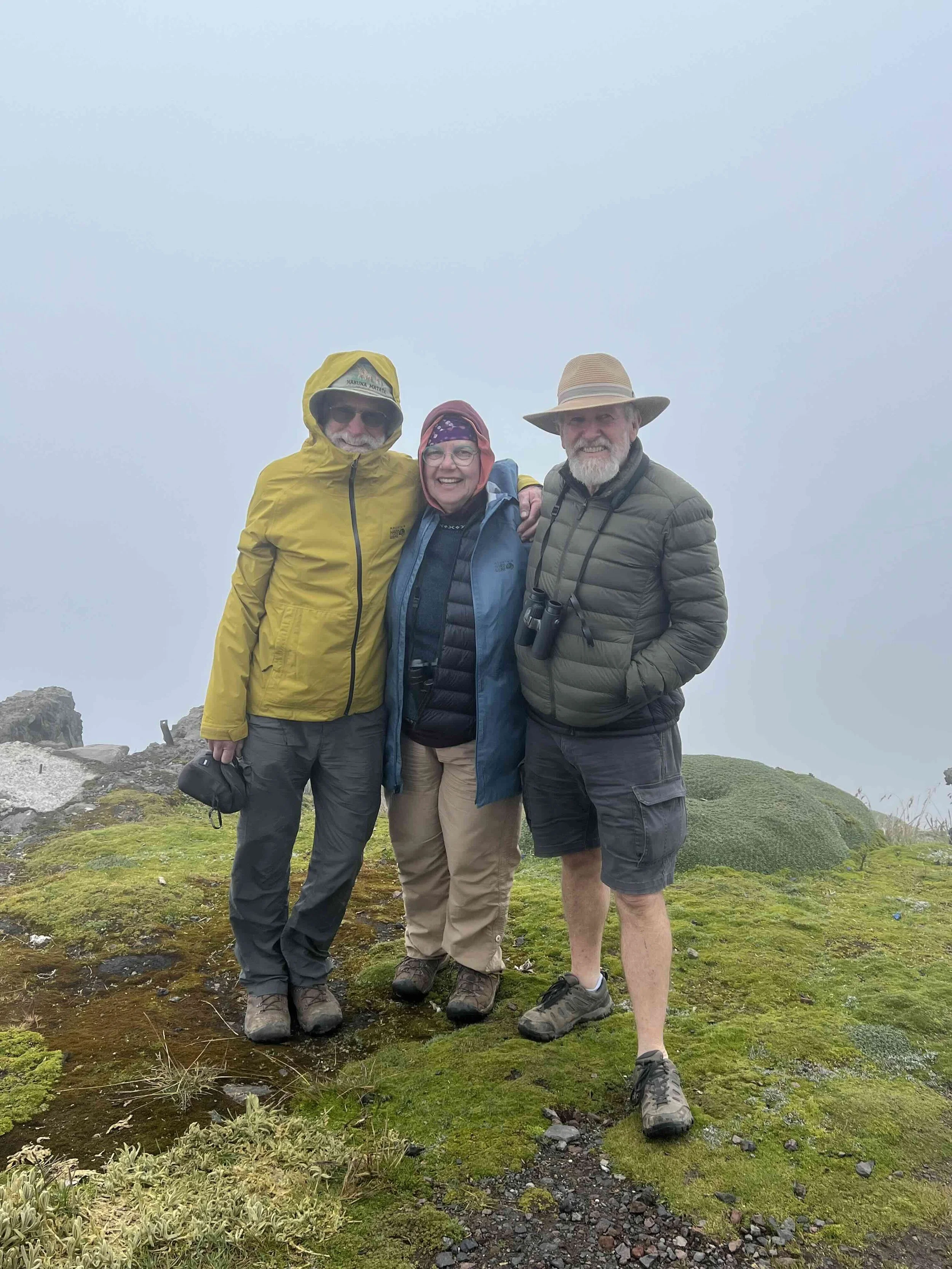
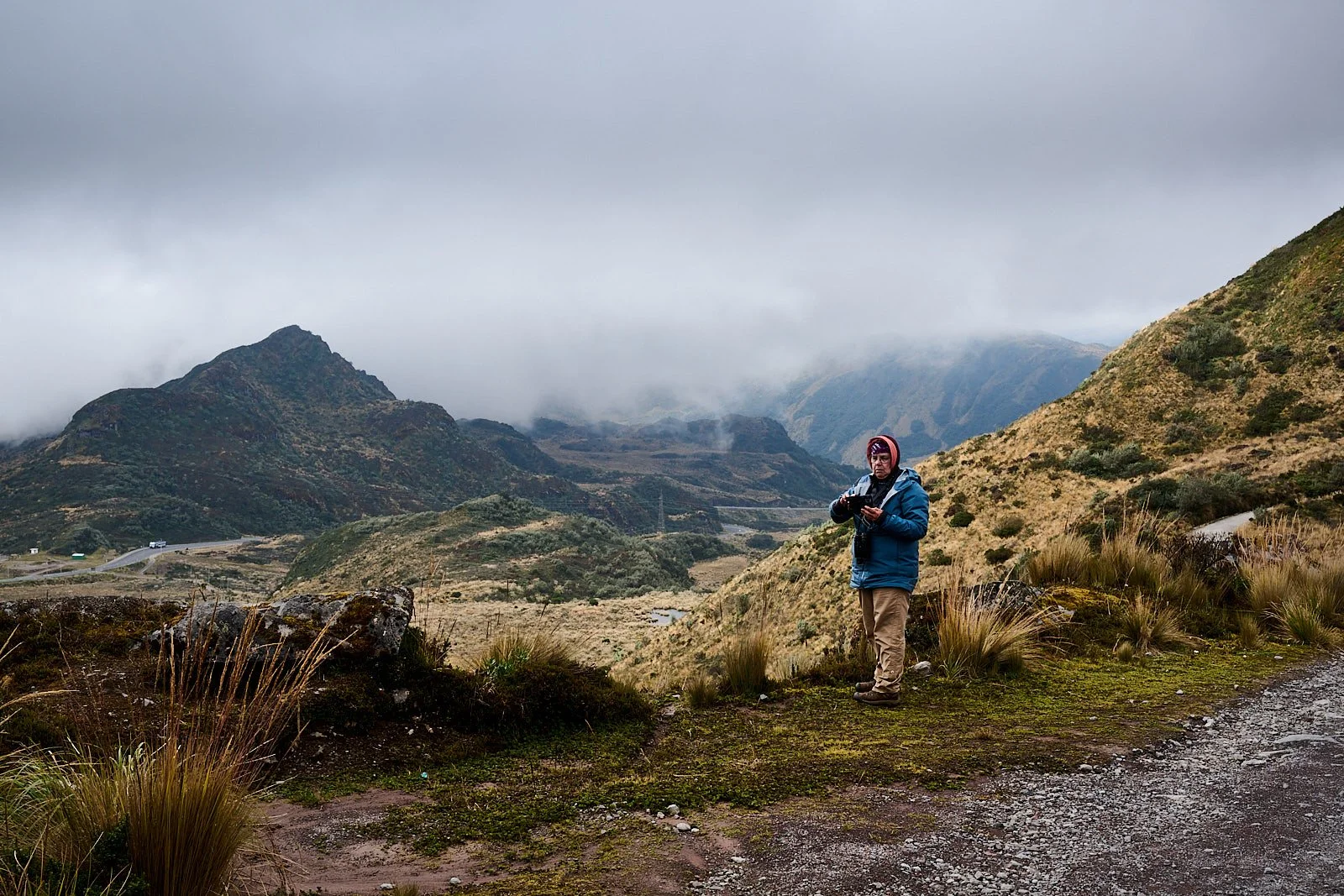
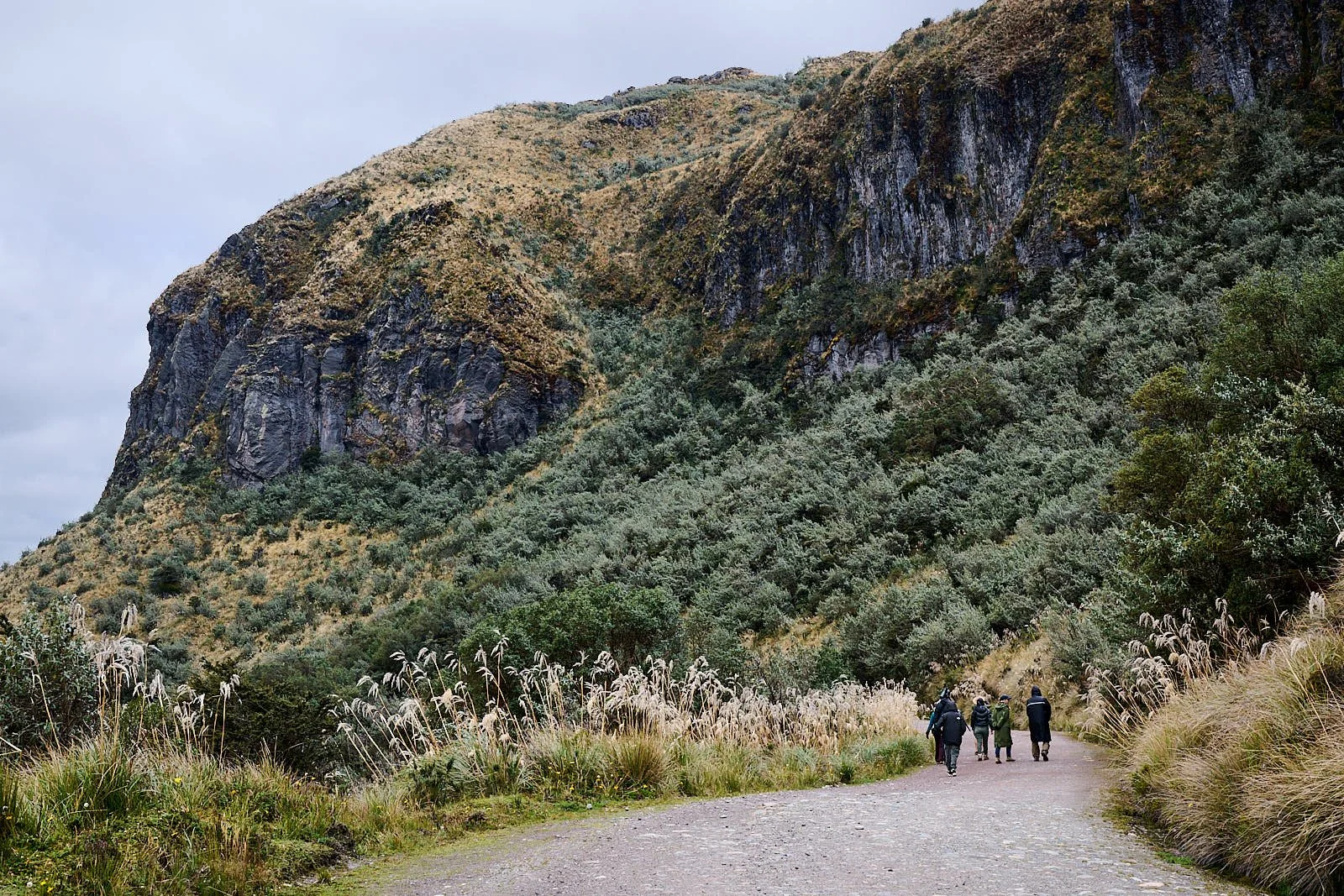
We drove east from Quito on highway E20 which ascends the Eastern Cordillera. Before Papallacta, at the crest of the range, we entered an ecological reserve and continued up to a highpoint at >14,200 elevation. Although the snow line at the equator is above 15,000 feet, it felt rather inhospitable because of a blasting cold wind.
Eastern Cordillera highlands
Those knee caps must be ice caps.
It was chilly!
Páramo
Páramo is a shrub and grass ecosystem found above 12,000 feet elevation and is characterized by peat bogs and wet grasslands. Approximately 5,000 plant species, including numerous endemics, are present.
The climate is generally humid with continuous moisture in the form of rain (about 80 inches), clouds, and fog, mostly due to orographic uplift caused by the Andes. It is cold, with a diurnal fluctuation in temperature from below freezing to as much as 30°C – "summer every day and winter every night".
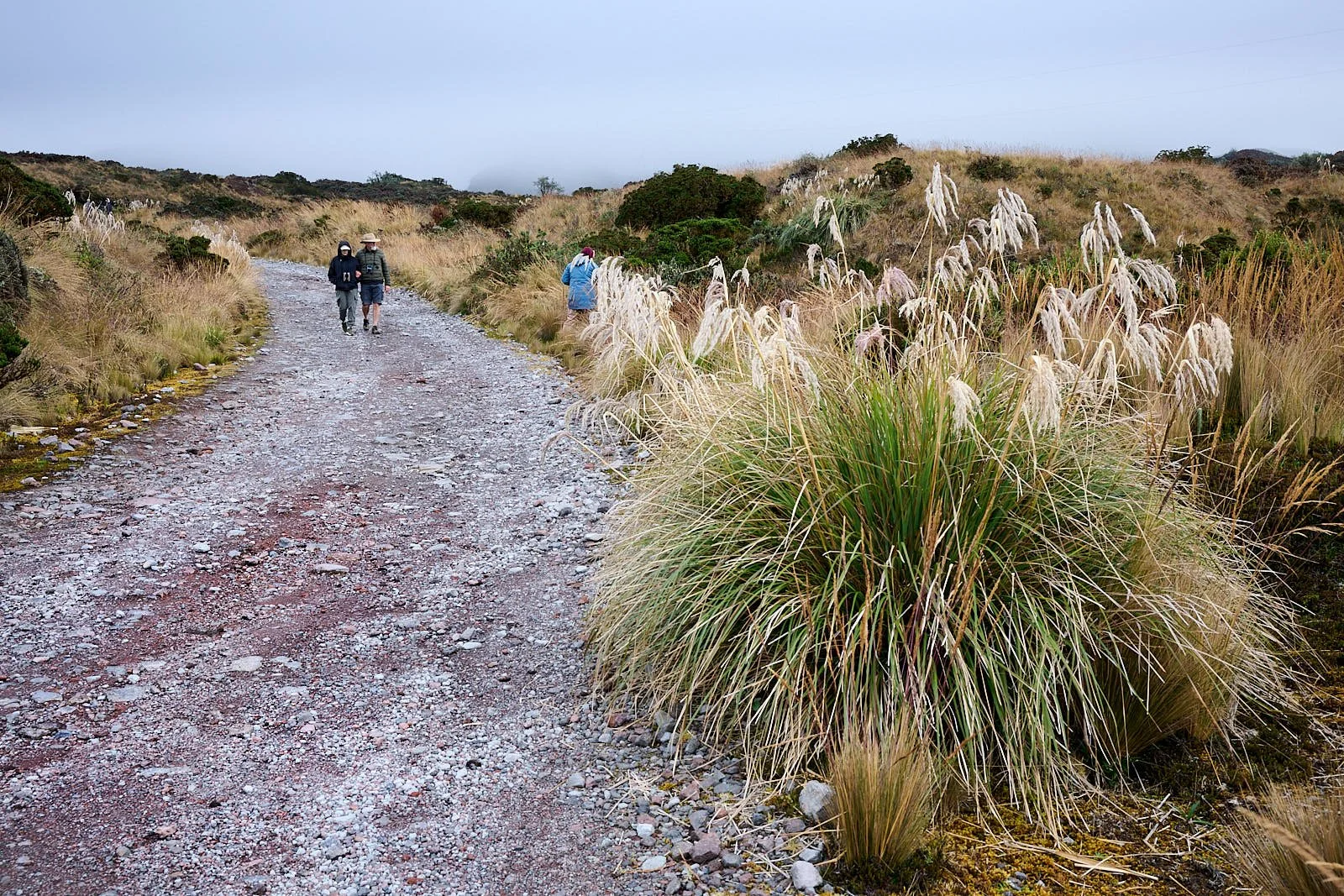
Strolling in the grasslands
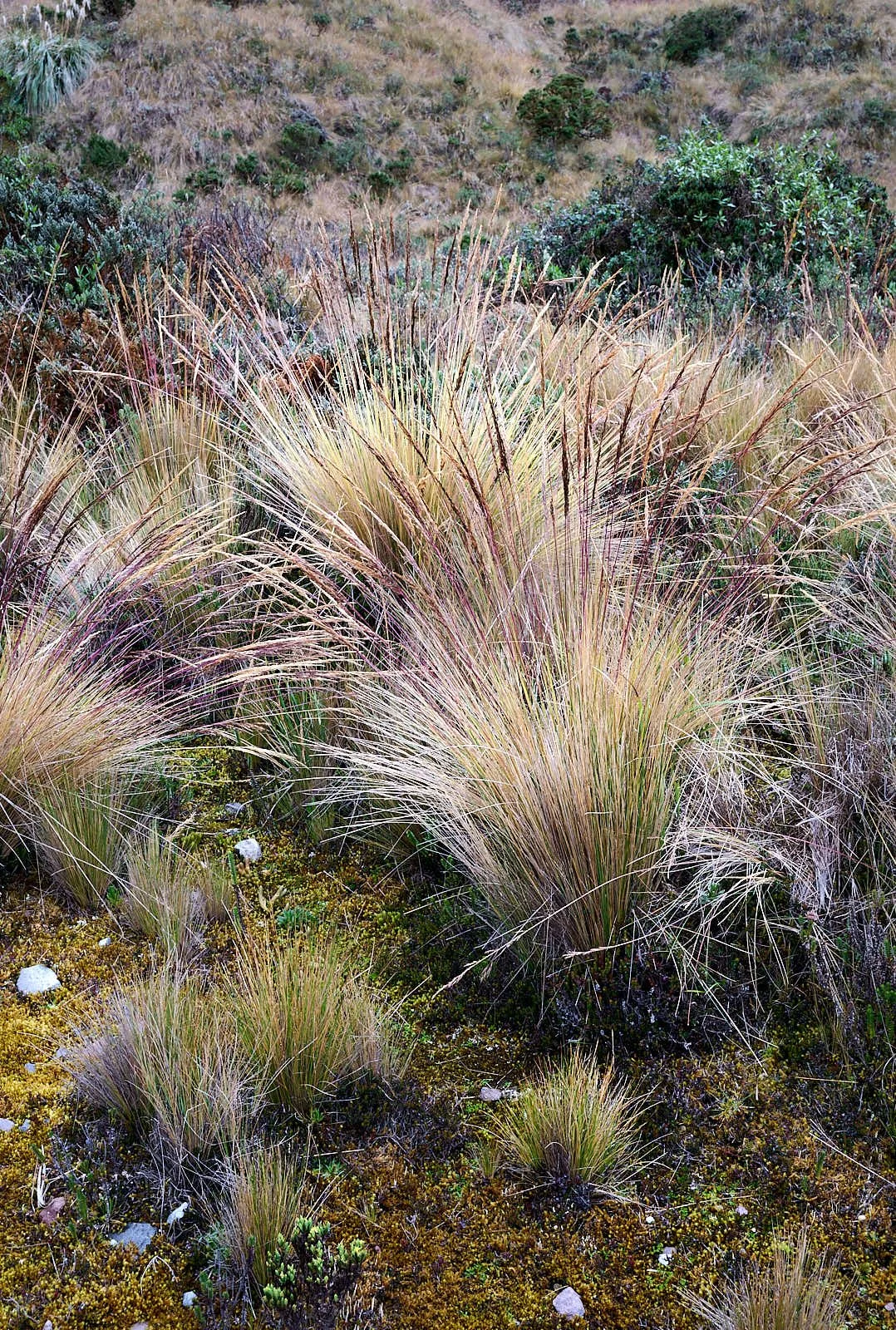
Tussock grass
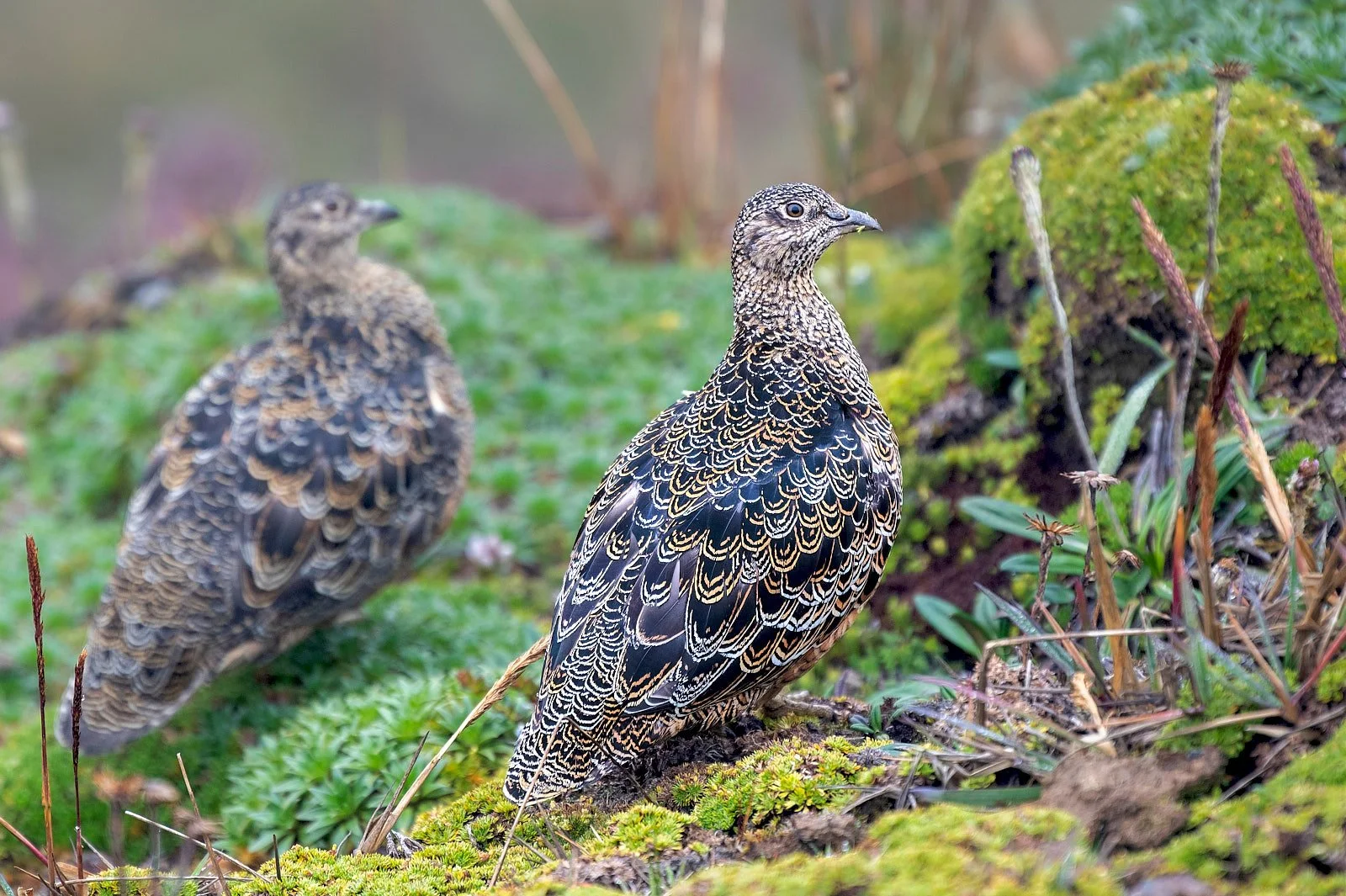
Rufous-bellied Seedsnipe (Image courtesy of BJ, who retains the copyright)
This Andean species ranges from southern Columbia to Patagonia. It walks crouched, behavior that gives it the name of “Agachona” in Spanish. Rufous-bellied Seedsnipe forages on shoots and small leaves in areas of low vegetation near high-altitude wetlands, and is usually seen in pairs or small groups.
Life at the Top
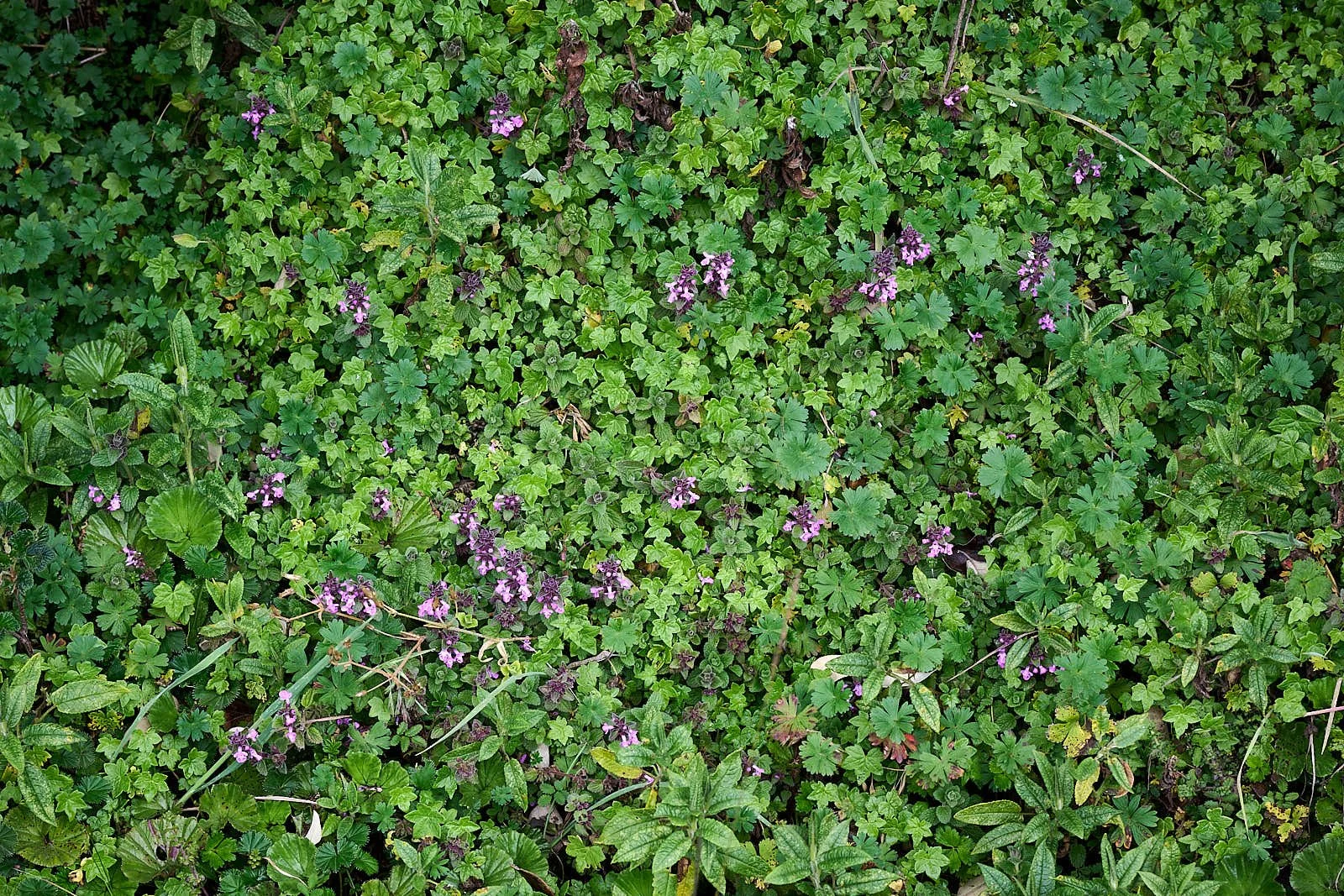
Plants have evolved to tolerate freezing, intense ultra-violet radiation, and dessication. Growth and decomposition are slow, primary productivity is low, and natural succession of the vegetation takes a long time, especially when woody species are involved. Dominant vegetation consists of large, clumped tussock grasses with a scattering of terrestrial bromeliads and ferns.
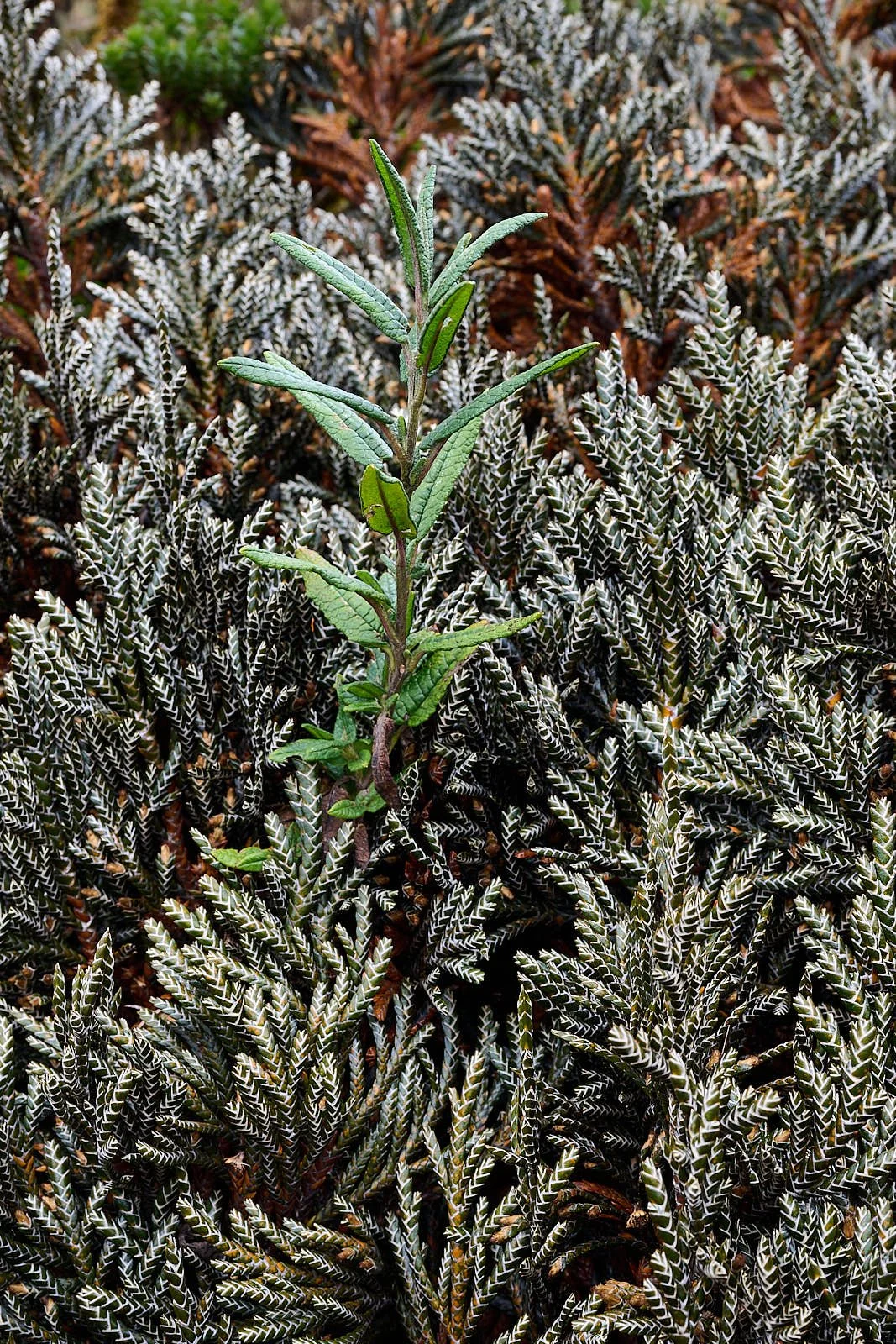
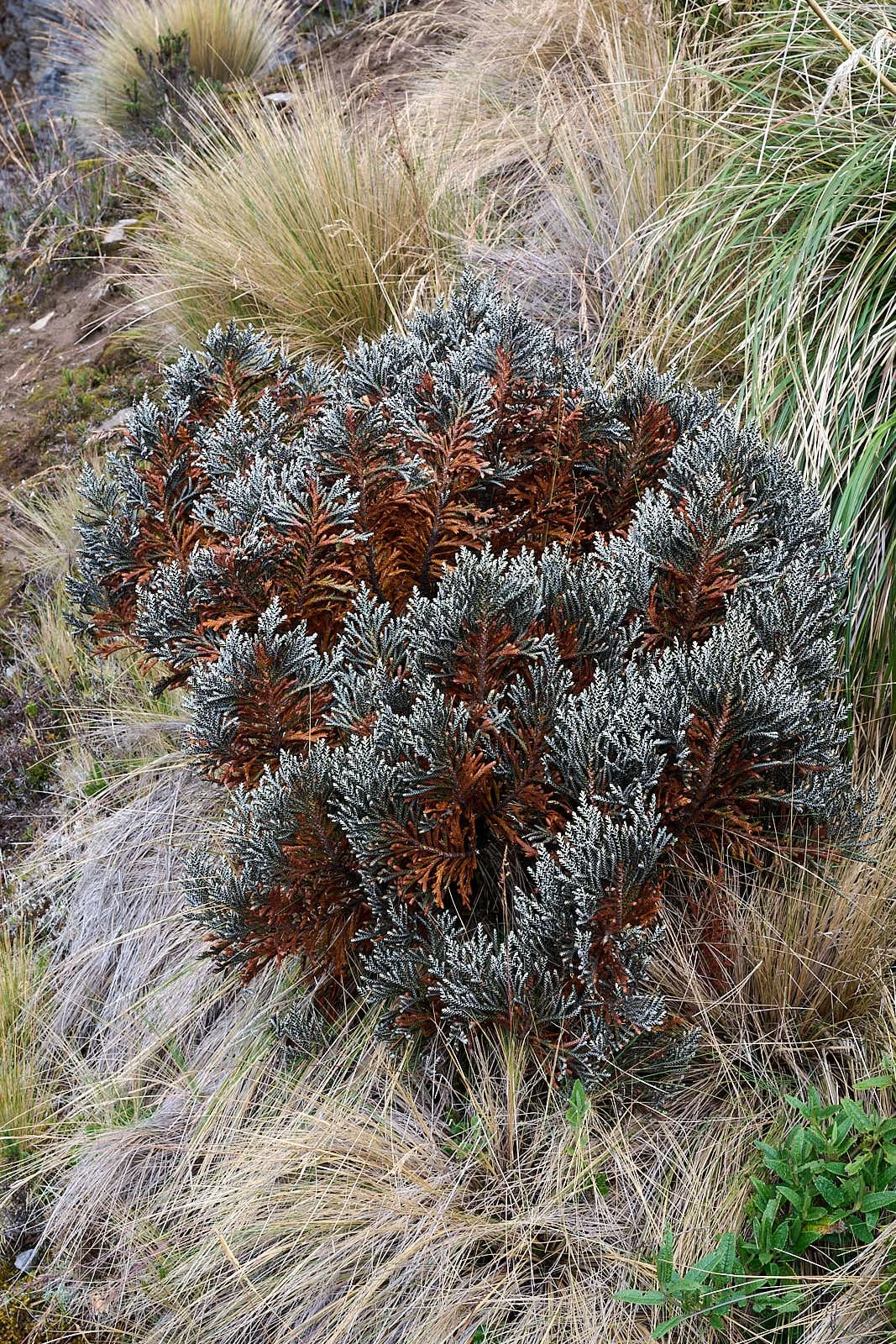
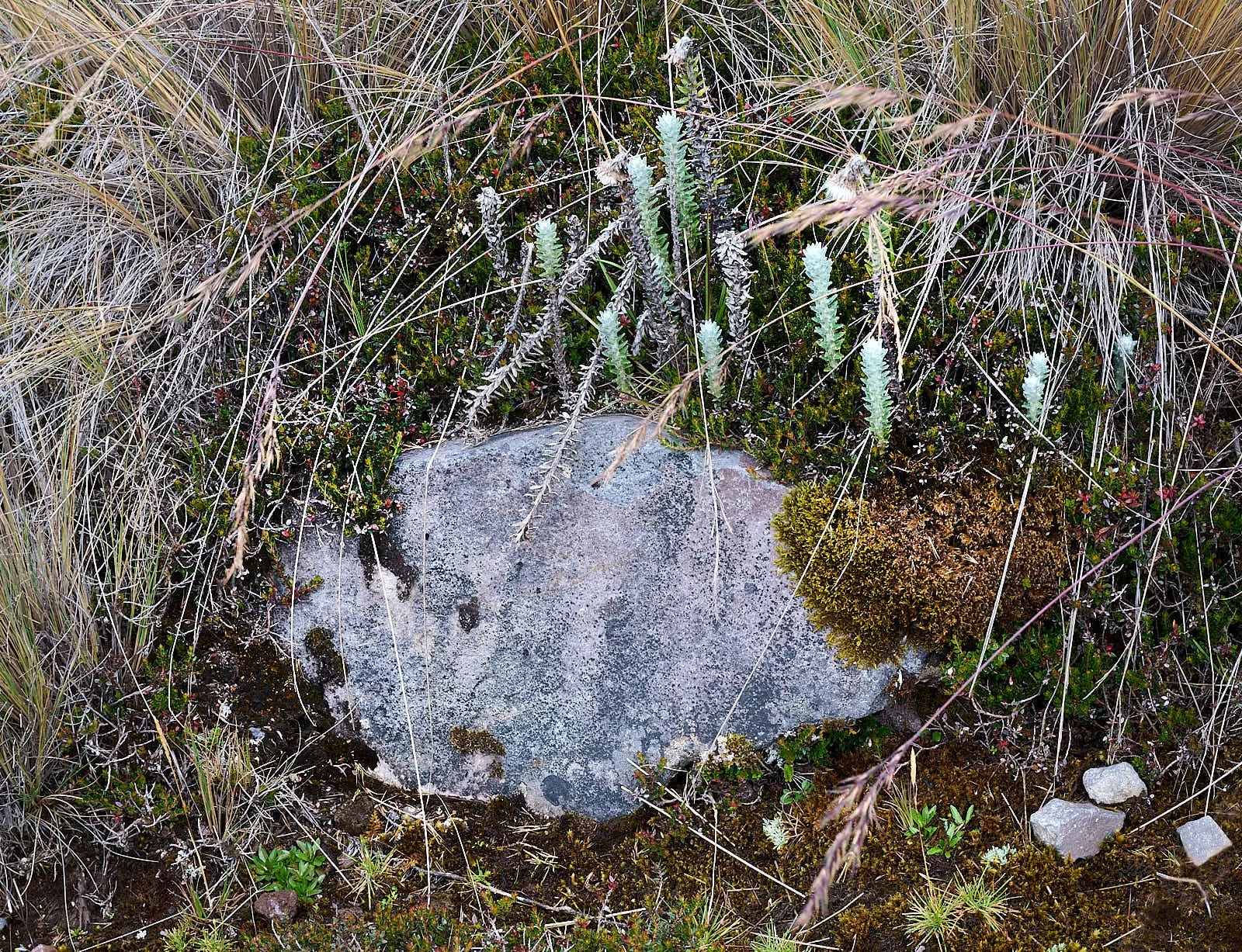
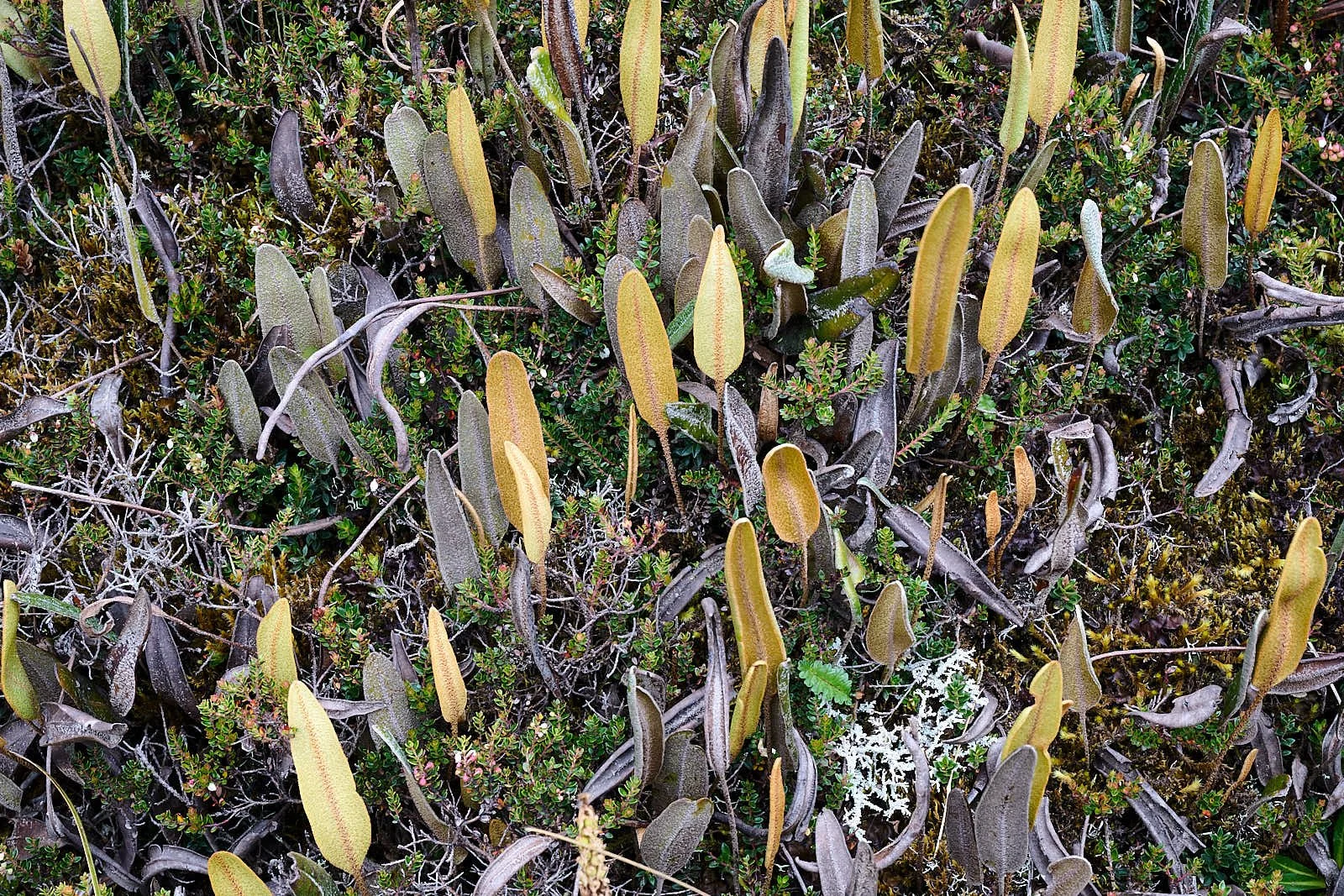

Frailejones' ("big monks")
Espeletia shrubs grow among the tussock grasses and are an indicator species of South American páramo. They have short, thickly woolly trunks densely surrounded by withered leaves and topped by a rosette of thick, elongate hairy green leaves. The flowers are yellow and attract high-elevation hummingbirds species.
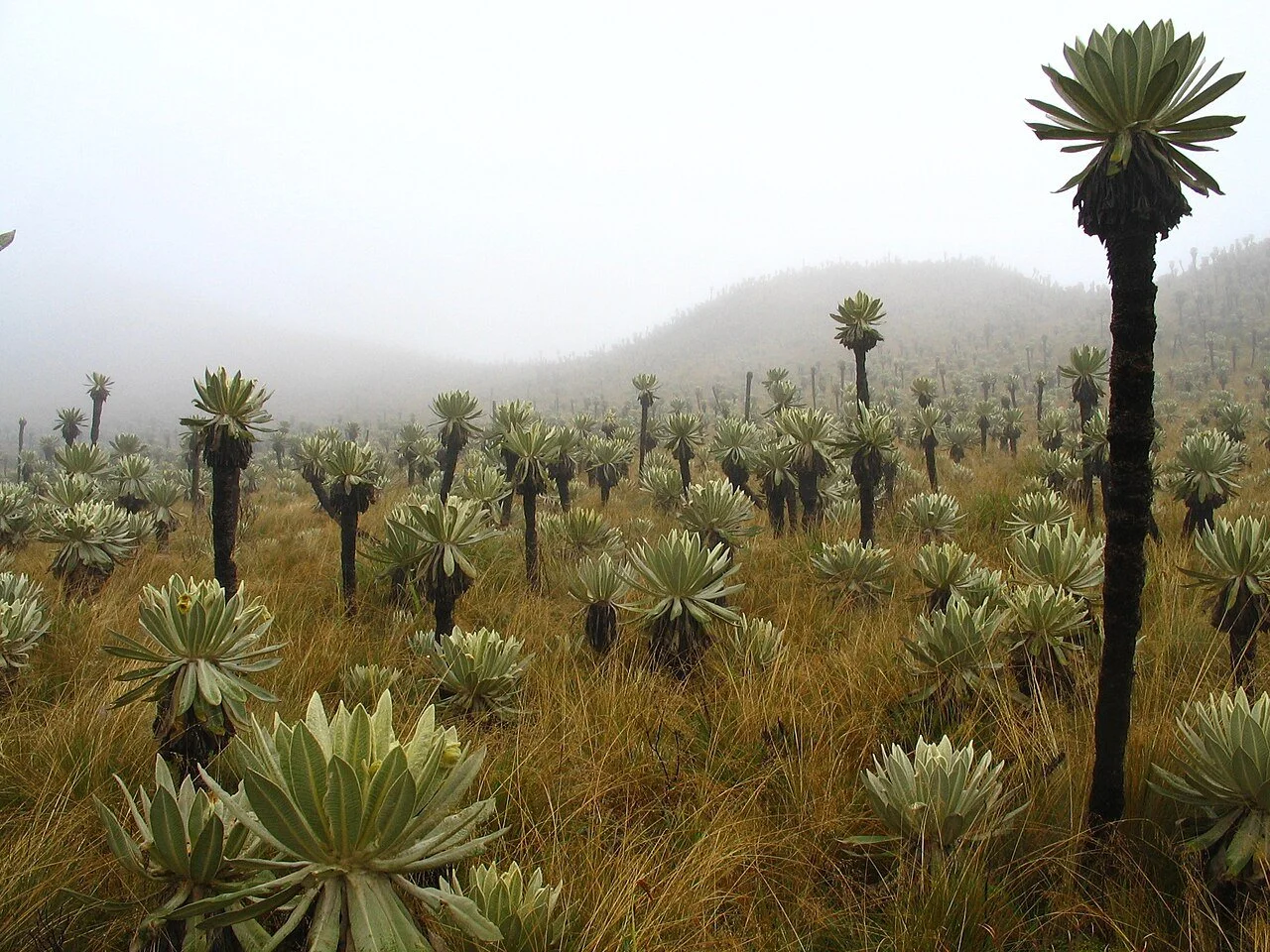
From: Wikipedia (Netherlands)
Polylepis woods
Above the timberline, at Andean elevations between 11,500-14,700 feet, there are islands of gnarled Polylepis trees within the páramo. These evergreen trees are quite small and populate wind-protected rocky slopes. Seedlings survive best deep within the Polylepis stand where winds are reduced but expansion also occurs via vegetative propagation at the boundary of the woodland. The groves offer refuge for many high-dwelling species. Giant Conebill, a tanager, is unique to Polylepis woods.
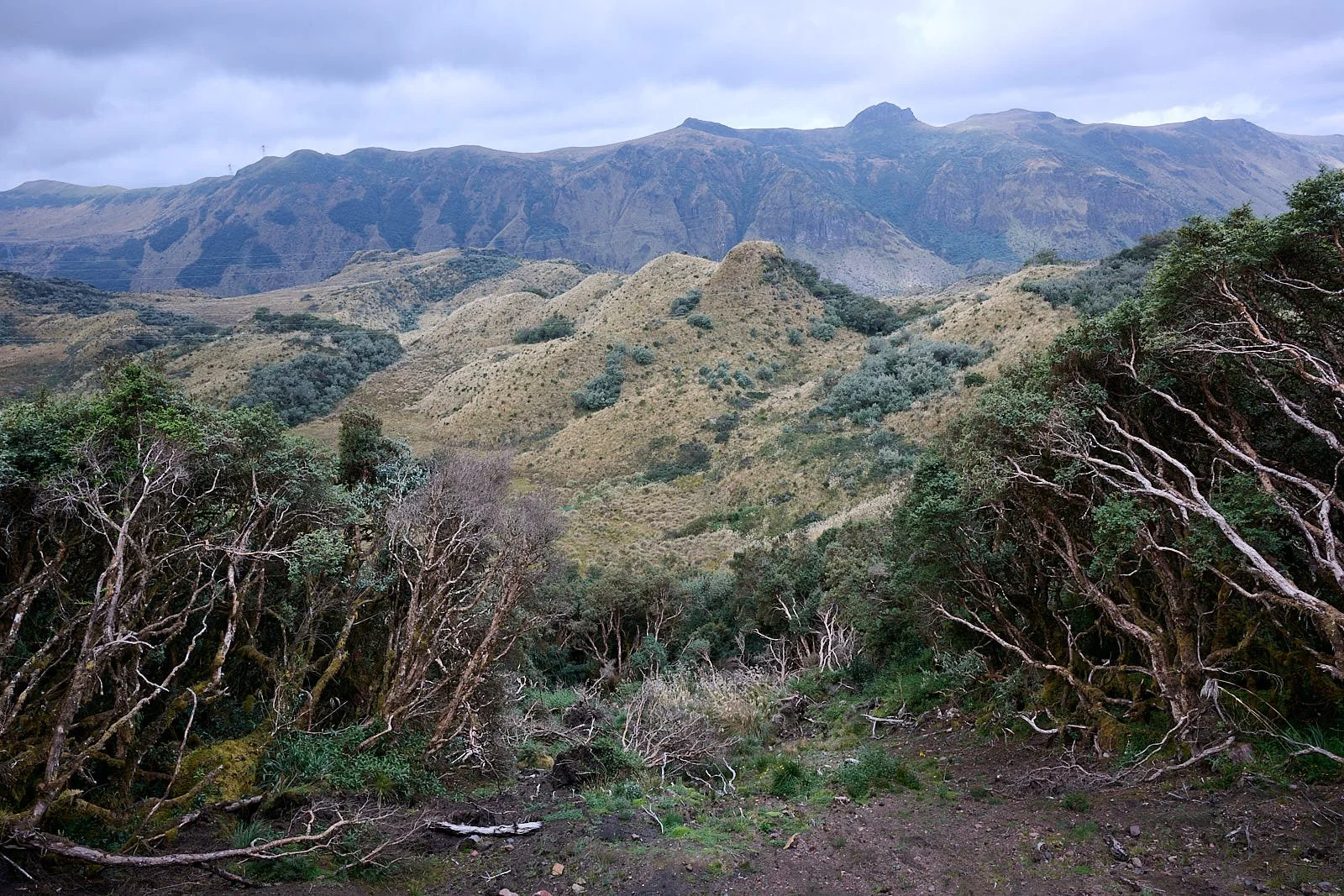
A gap through a Polylepis stand
Páramo conservation
Páramo is called a “water factory,” because the plants collect droplets on their leaves and direct the water down into the spongy soil. The cool mountain temperatures prevent the water from evaporating, allowing it to remain in the soil before filtering into rivers. The ecosystem is a high-altitude wetland that act like sponges, soaking up water during the rainy season and slowly releasing it to local grasslands, forests, rivers and communities during the dry season.
Years ago, ranches were established on the mountainsides and converted native habitat into grazing lands for cattle, sheep and other livestock. The livestock ate the native plants needed by local wildlife and disrupted the fragile páramo ecosystems.
The Nature Conservancy and the government of Quito spent years working to create a long-term protection strategy for a stretch of páramos that served as a wildlife corridor connecting several national parks. The goals included restoration of the paramo ecosystem, enhancing Quito’s water supply, improving ranching practices, and augmenting climate change resilience. The project began in 2000 and is widely regarded to be progressing successfully towards its goals.