Raising the Family: May, 2025
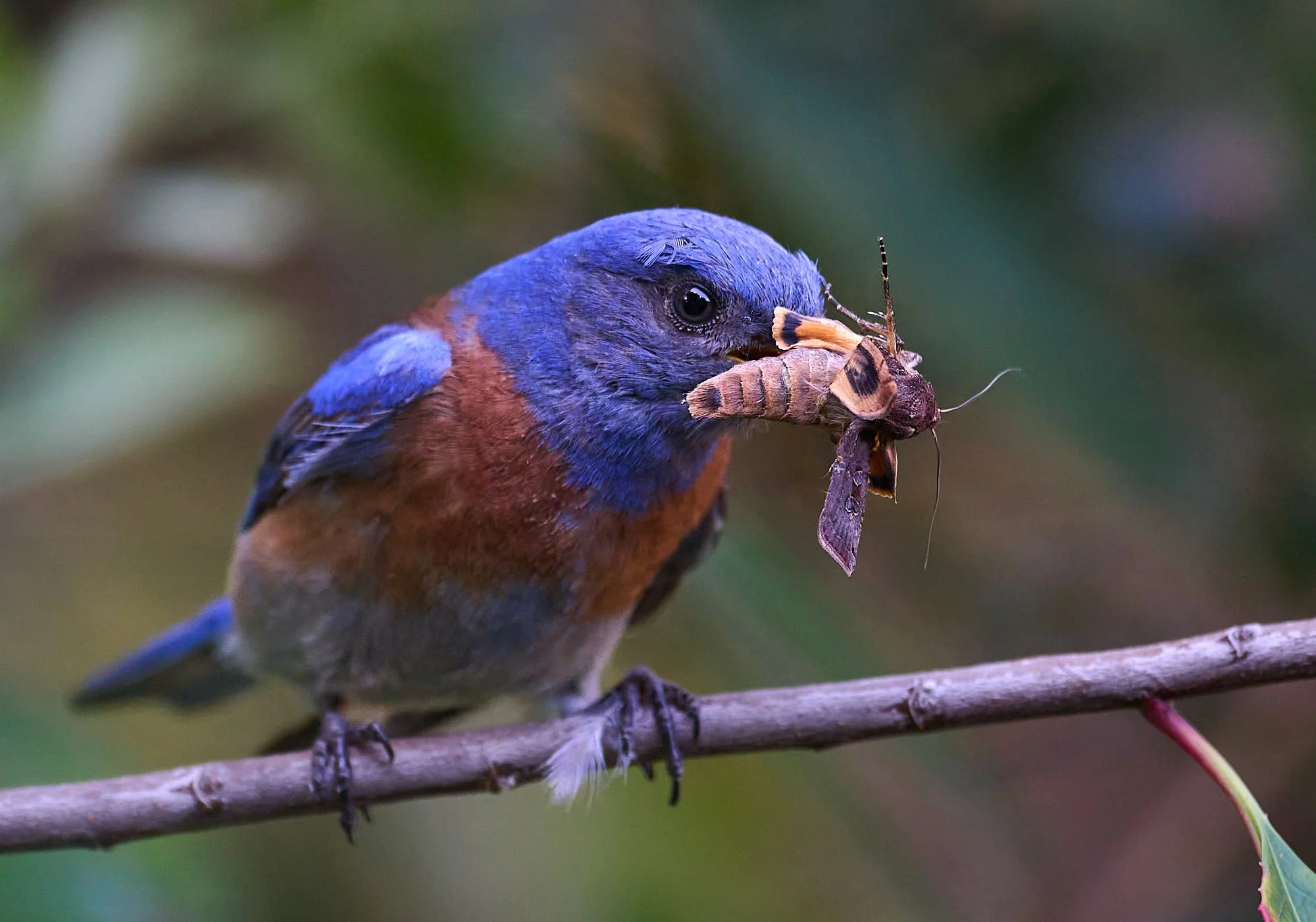
Western Bluebird with moth
Spring in our Backyard
Returning home from the Southwest in April, we settled in to enjoy the fresh flush of Spring. For a few months, the garden glows with a fluorescent emerald hue, pleasantly interspersed by flowery bursts of vibrant red, yellow and blue. Bird song mixes with the dawn, wisps of spiderwebs shimmer in the breeze, late afternoon backlights the courtship flights of insects, and giddy young squirrels madly chase each other around the trees. It is a time of new growth and new life.
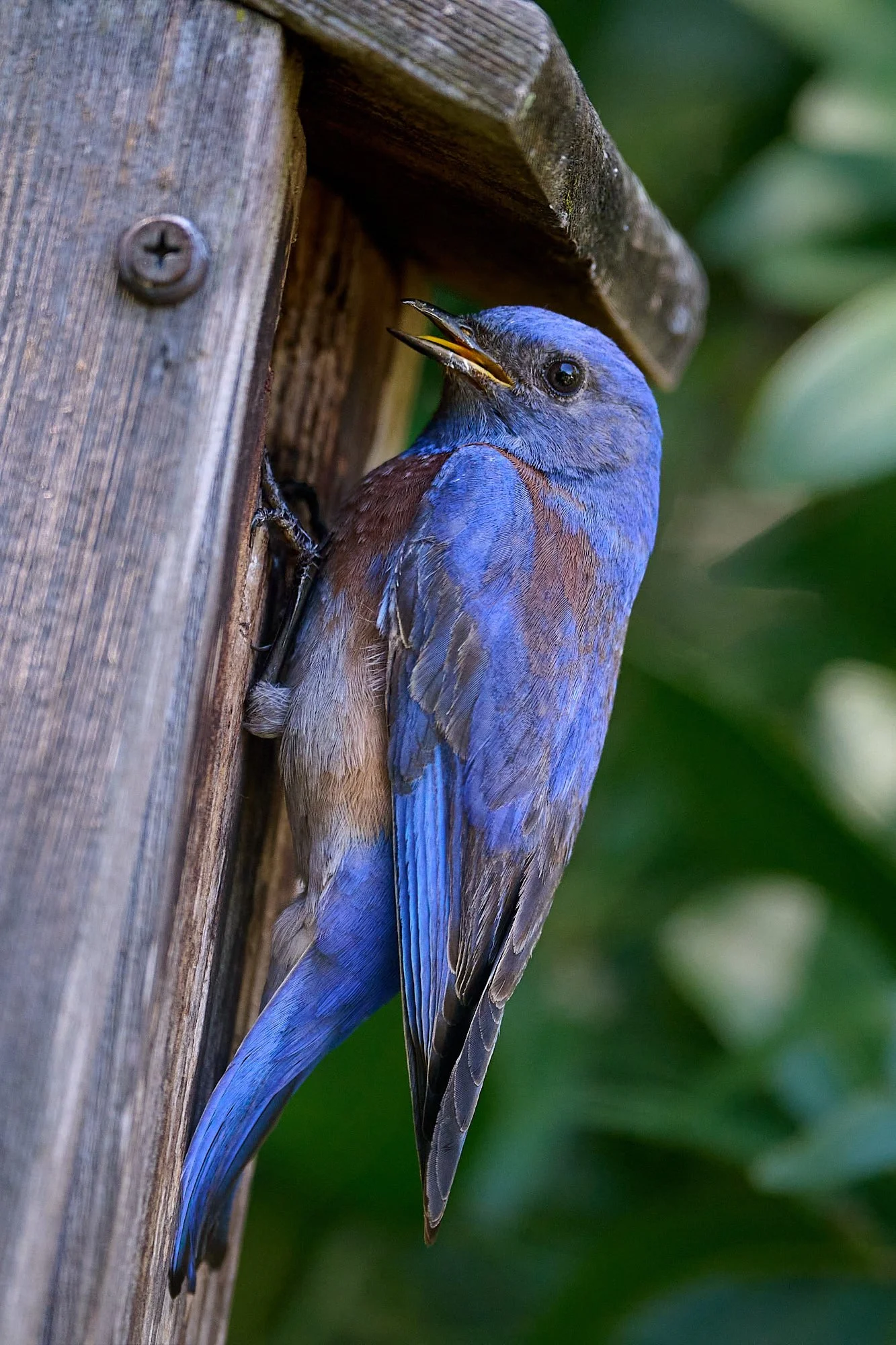
Western Bluebird male at a nest box
Proud Hosts
This year, we had two nest boxes occupied - Chestnut-backed Chickadees took residence in the box outside our kitchen, and Western Bluebirds claimed the bird house by our back fence. An Oak Titmouse pair enlarged a vent hole under the eaves of our roof and nested there. Then, very recently, a young mule deer doe appeared with two very wobbly fawns. They looked so tiny that we wondered if she delivered the twins in our garden.
We try to minimize disturbance of the wildlife families, but did manage a few pictures of parent birds with food for their young.
(All scientific information from Birds of the World, Cornell Laboratory of Ornithology.)
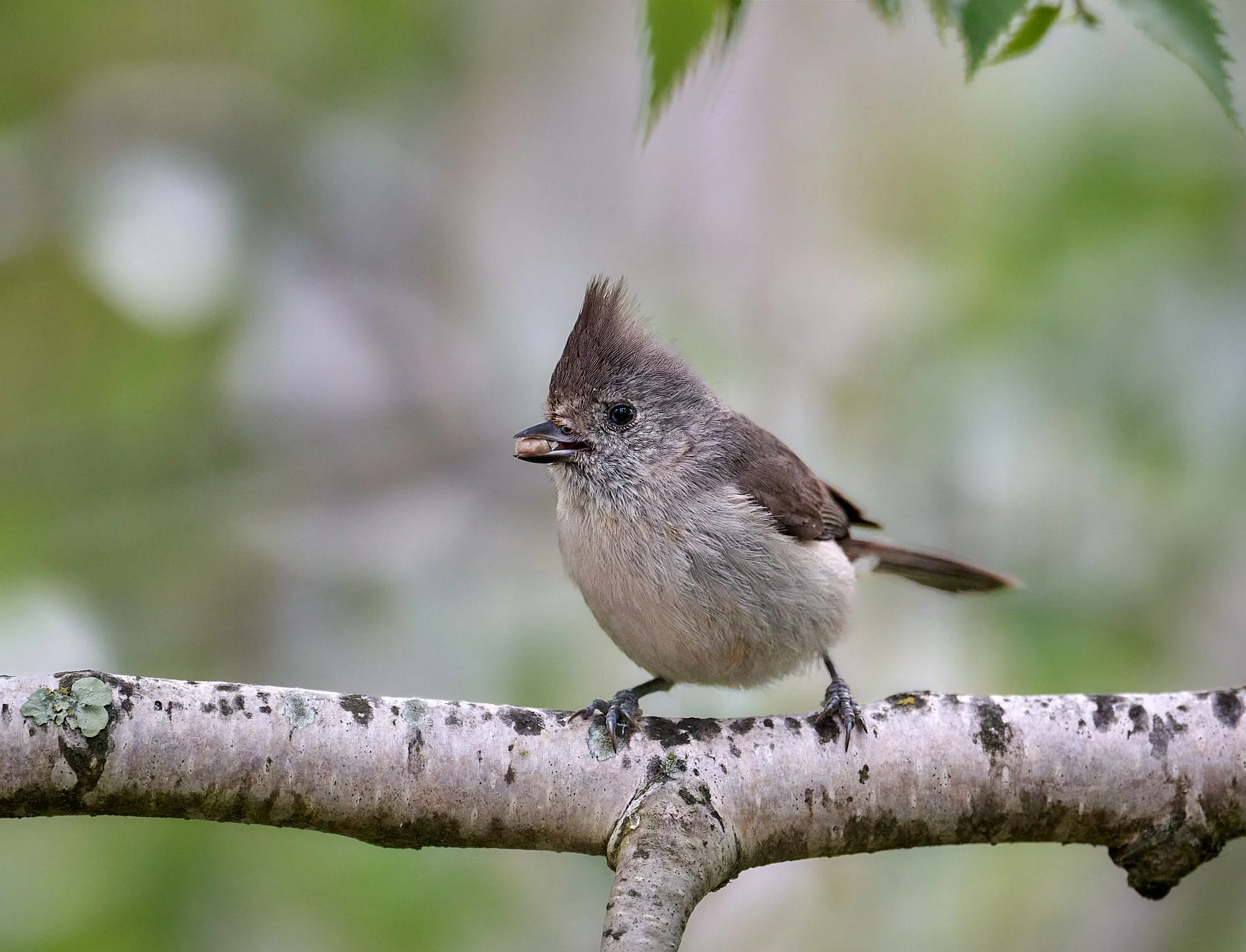
Oak Titmouse
Oak Titmouse
The nests are usually built of grass, moss, hair, and/or feathers. On average, 6 eggs are laid, one egg every 1-2 days. Incubation lasts 14-16 days, during which time the female is fed by the male. The young are altricial, with a nestling period of 16-21 days. Both parents feed the young. Nestlings are predominantly provided with invertebrates, especially grasshoppers and caterpillars. The vegetarian diet includes seeds, berries, leaf buds, galls, and catkins.
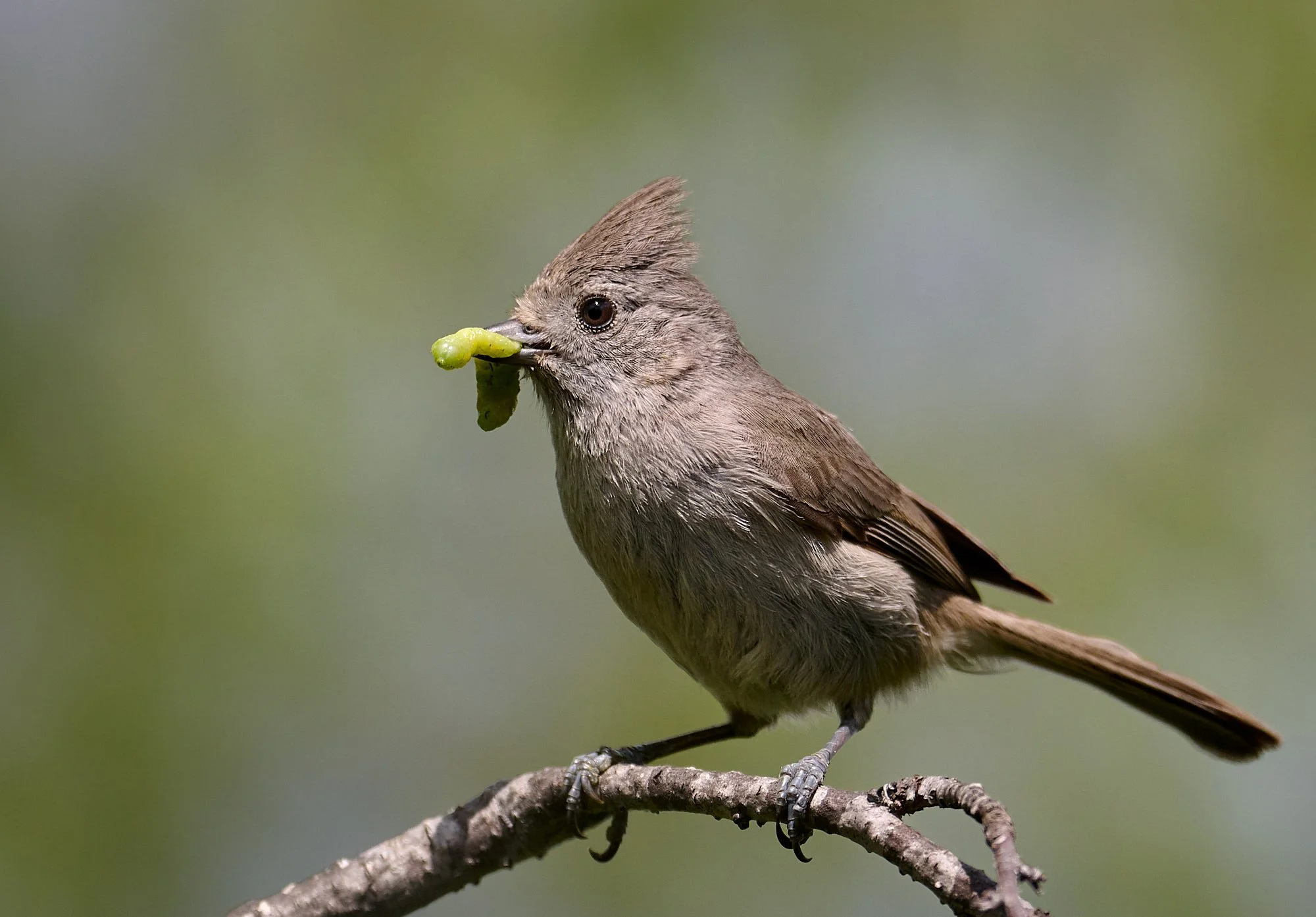
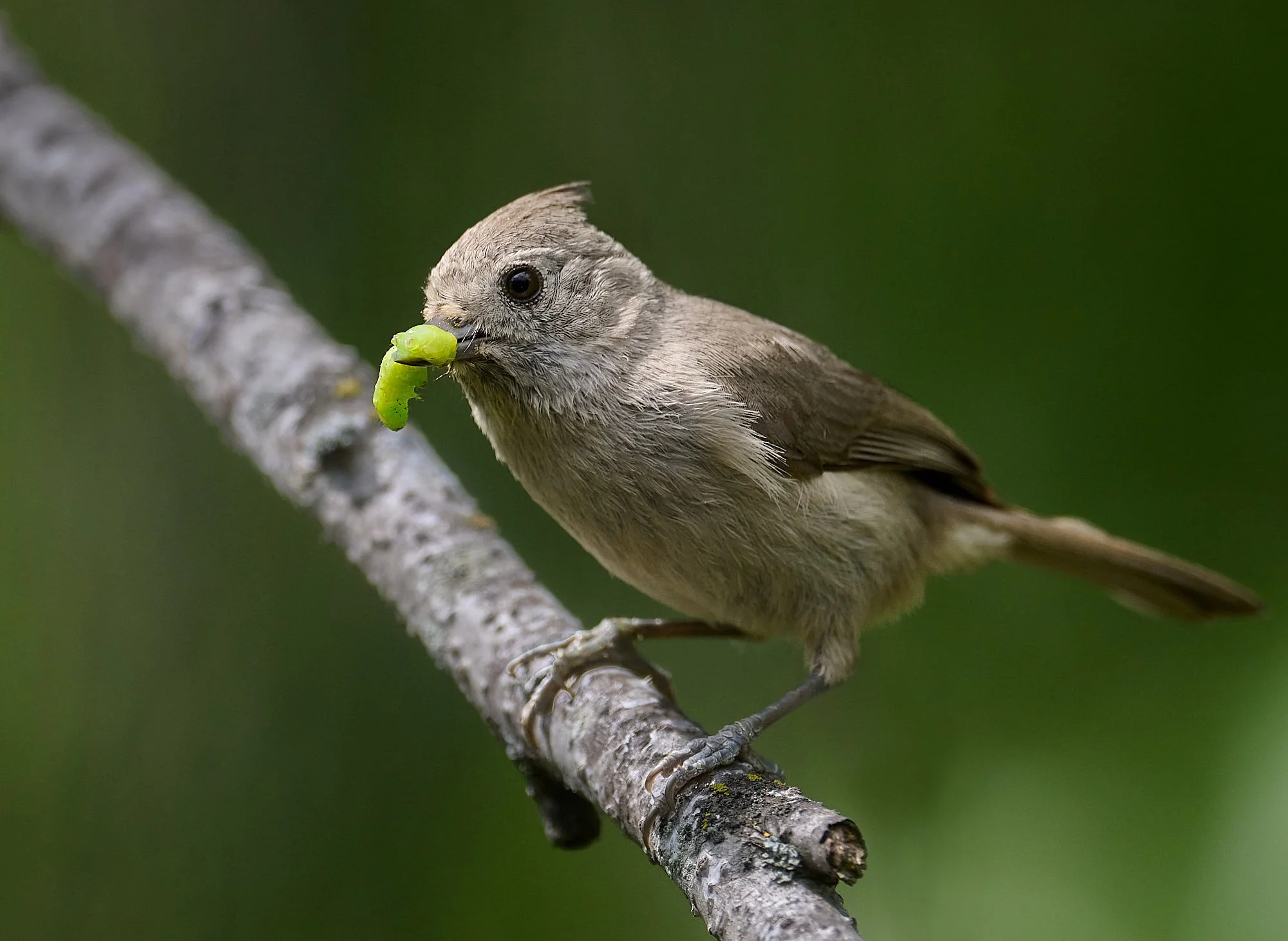
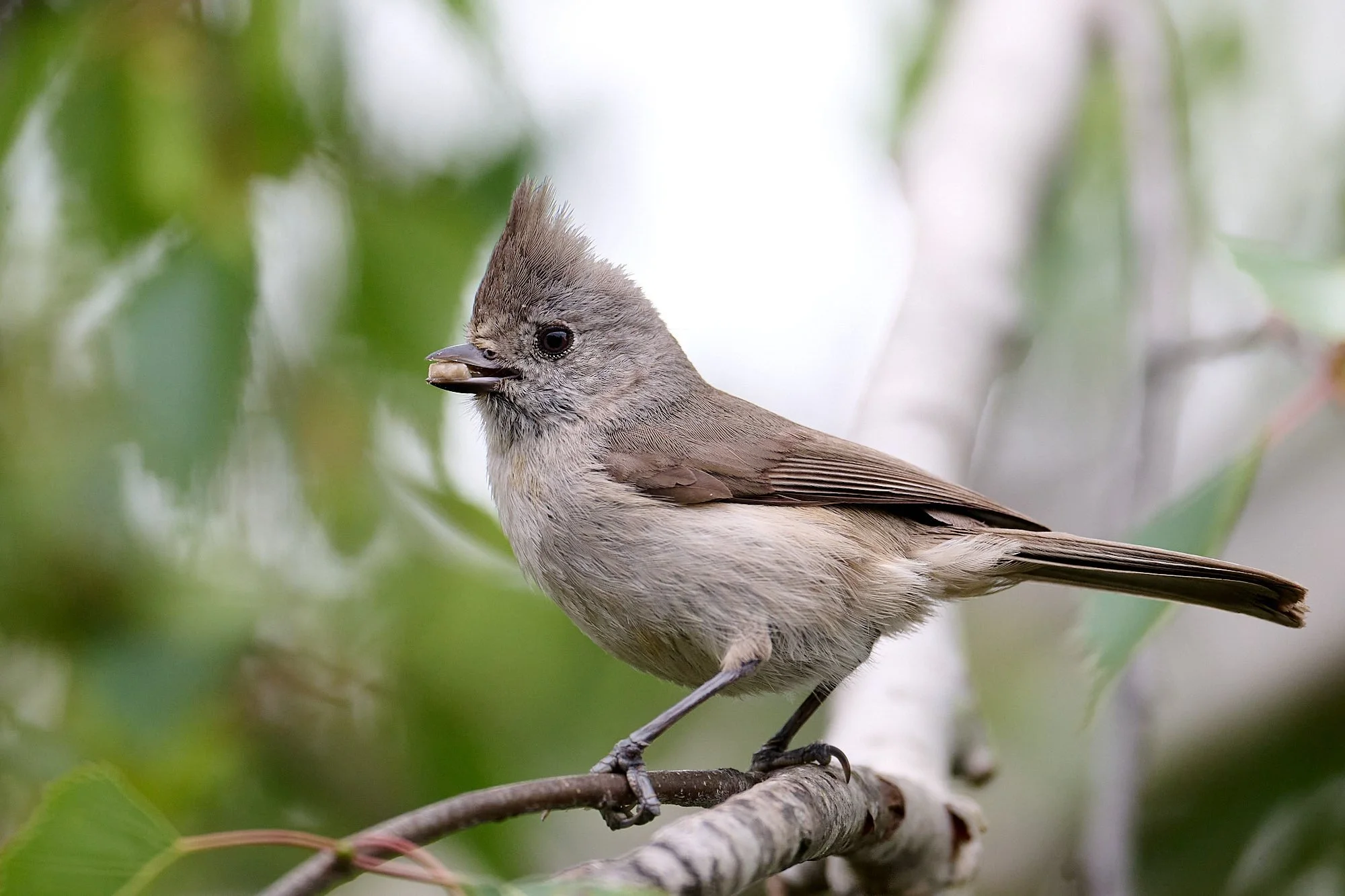
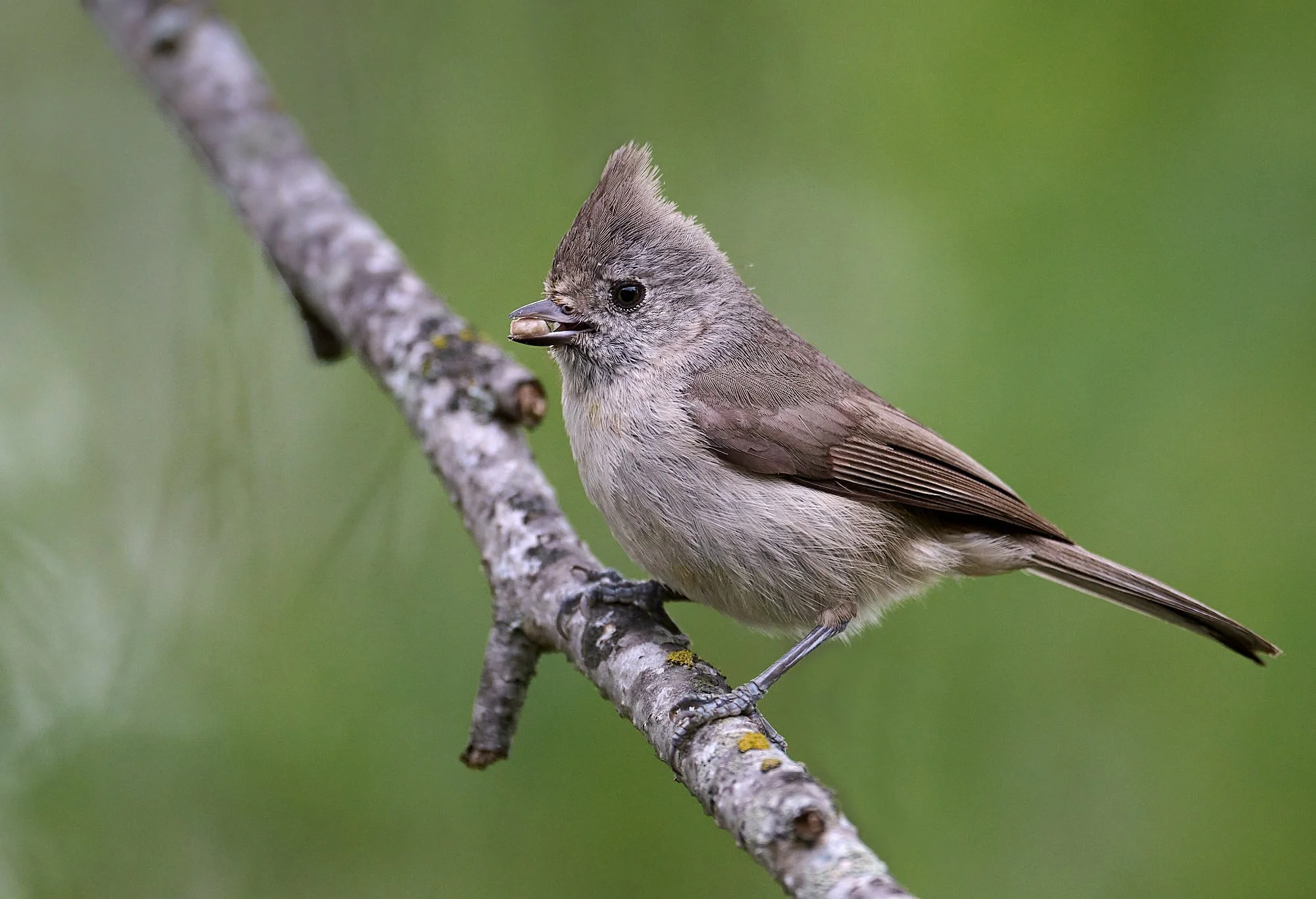
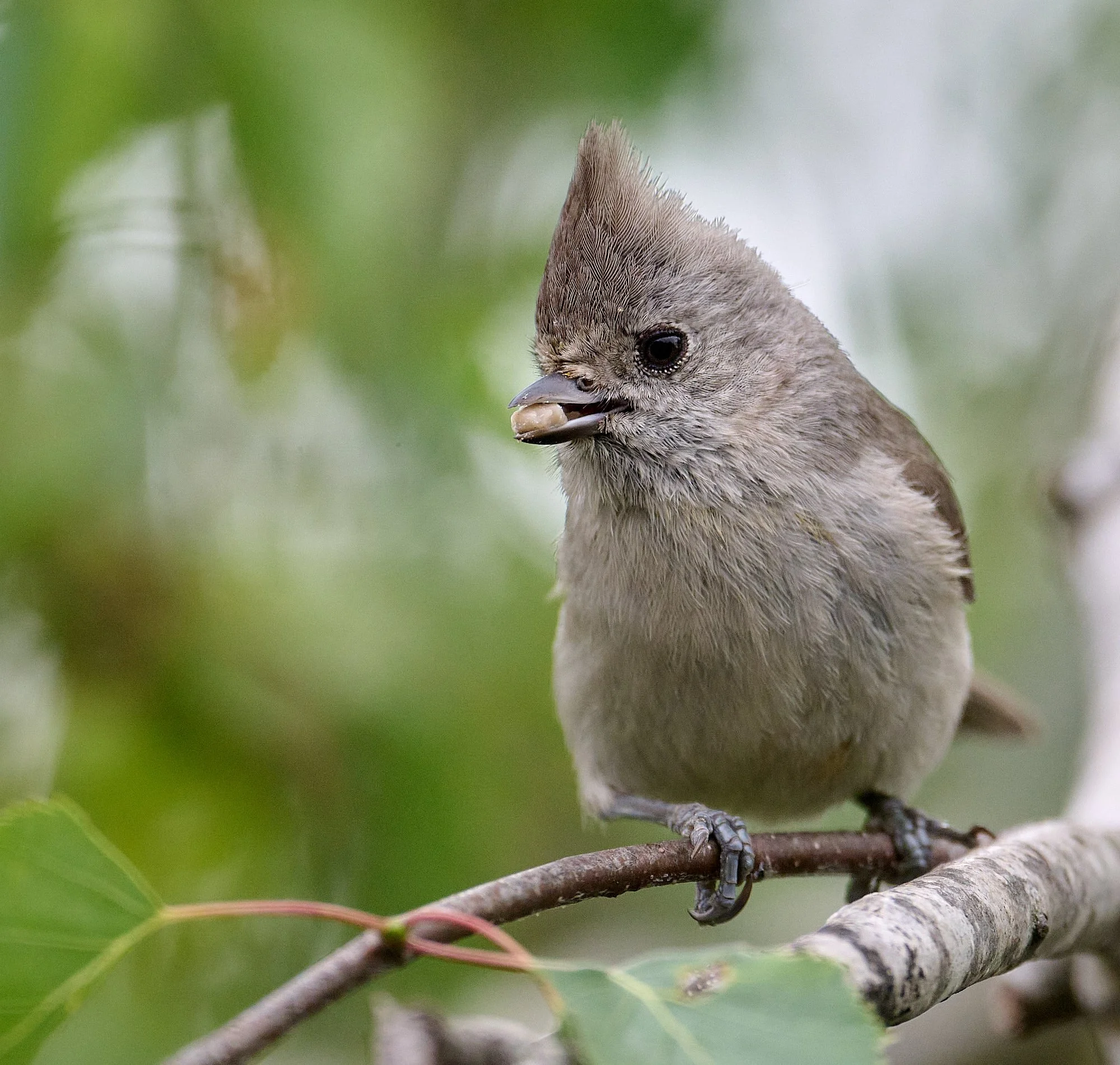
Food is probably sunflower seed from our backyard feeder.
Western Bluebirds
Western Bluebirds are small thrushes that breed throughout much of the western United States, Mexico, and southwestern Canada. Apparent declines in numbers of this species in the Pacific Northwest and British Columbia, especially in regions west of the Cascade Range, have generated concern. In response, bluebird enthusiasts in Washington, Oregon, California, and British Columbia have established trails of nest boxes in an effort to reestablish local breeding populations.

Male Western Bluebird
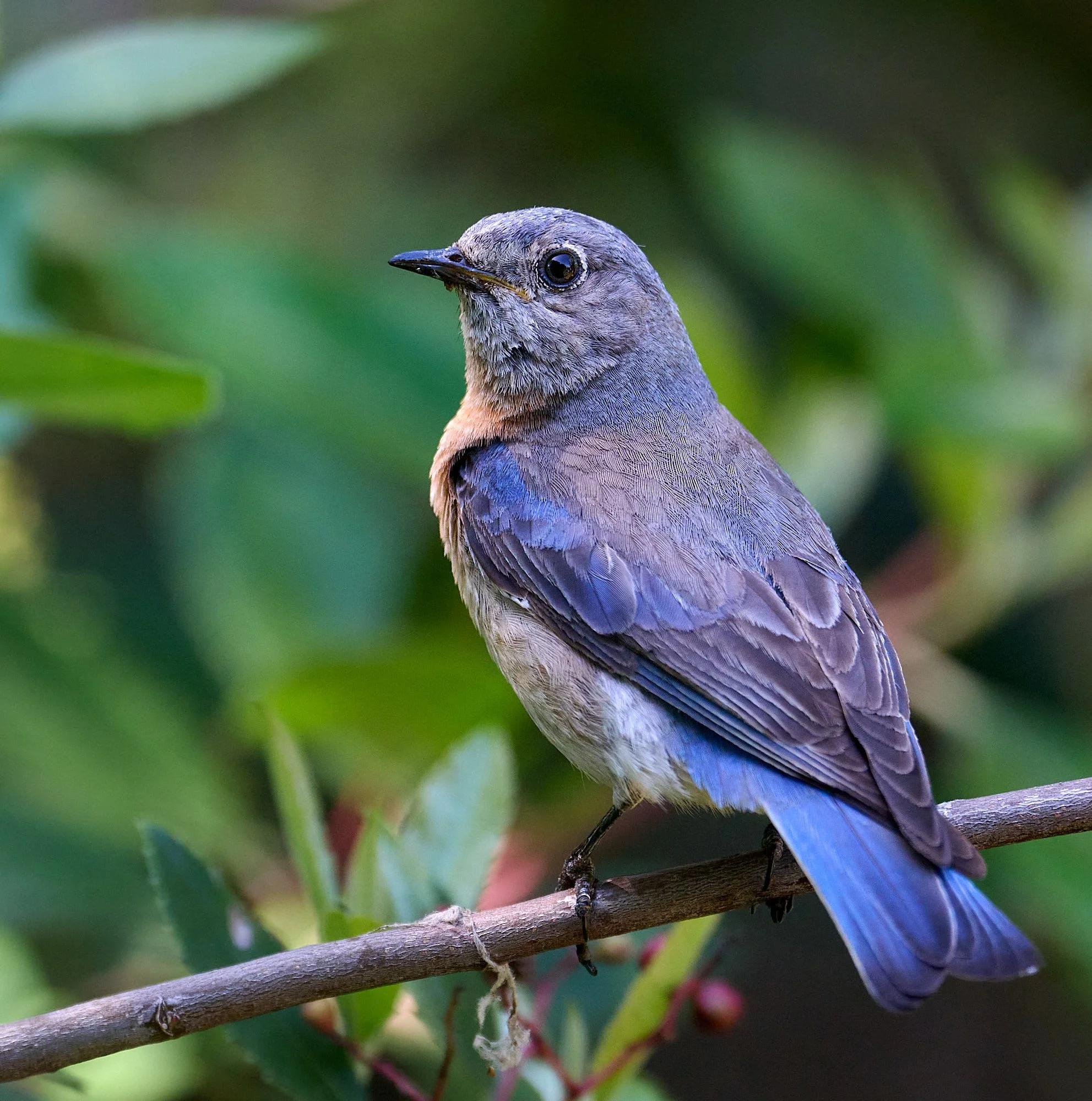
Female Western Bluebird
Breeding
Typically, a clutch consists of 5 eggs. The female starts incubating once the last egg is laid. The incubation period averages 13 days, with the male feeding the female. The altricial young leave the nest at about 21 days of age. Both parents feed the nestlings. As you can see from the images below, the hatchlings are given a wide range of invertebrates, but also receive plant material such as berries.
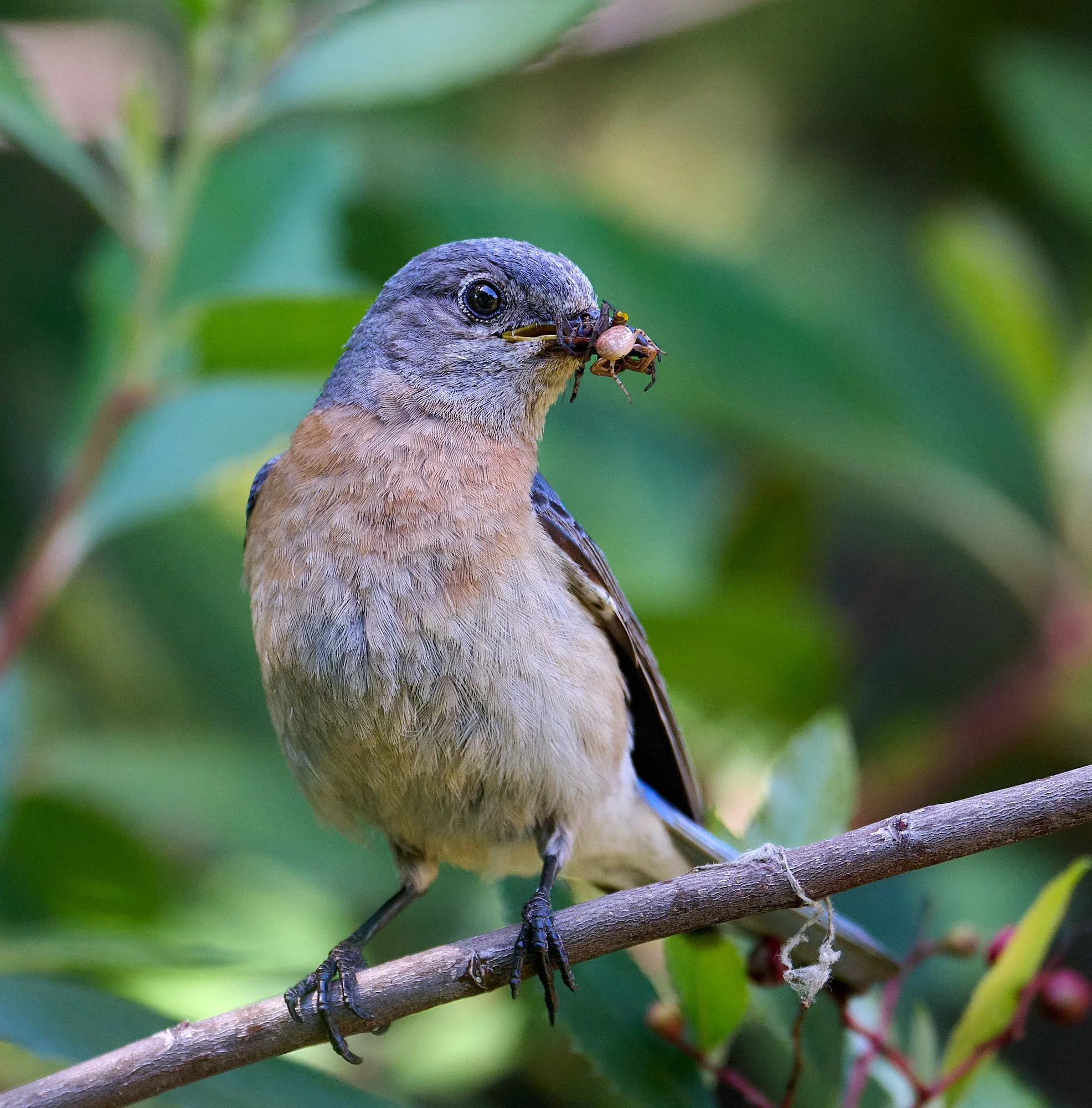
Two spiders
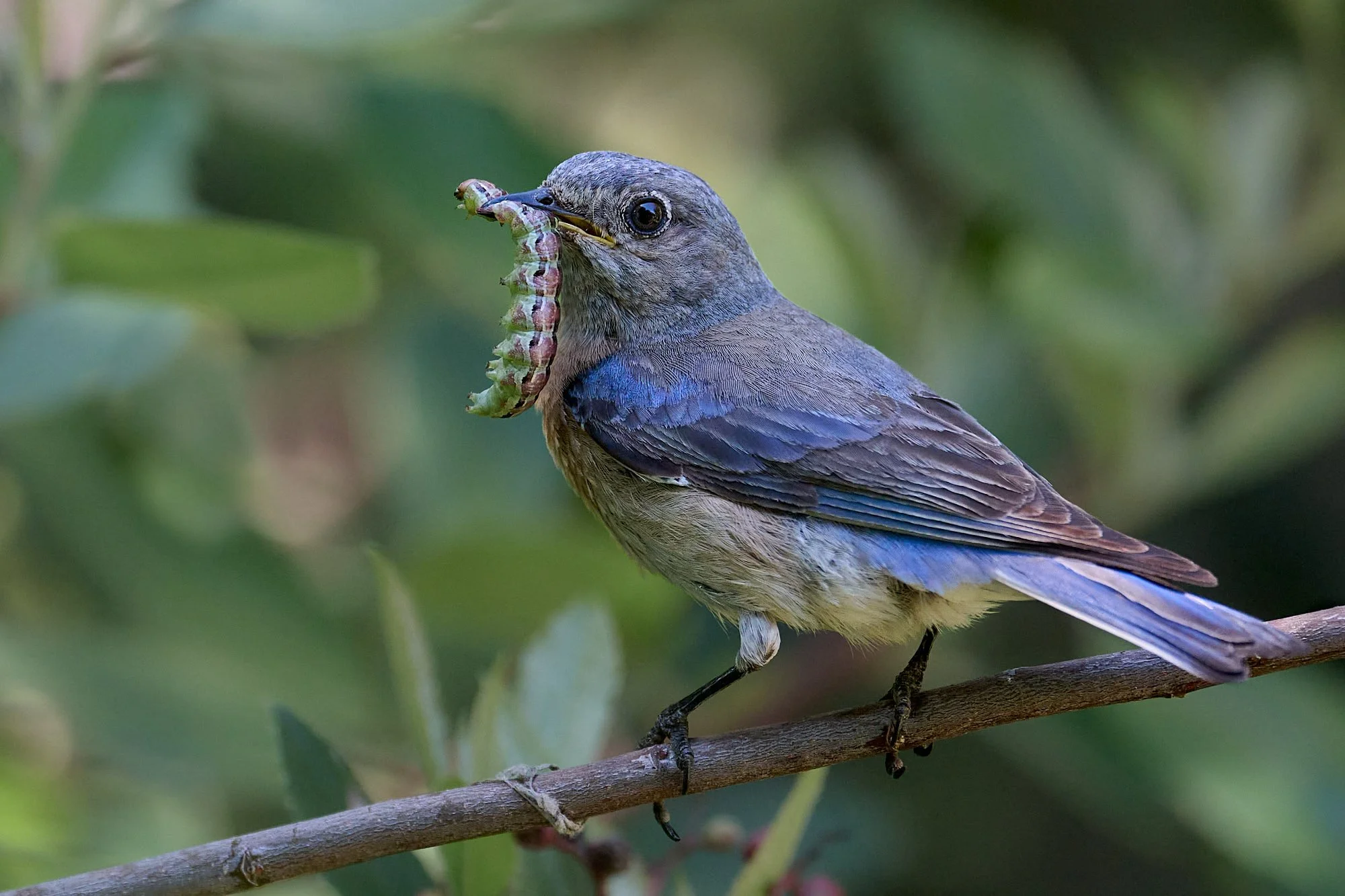
Caterpillar
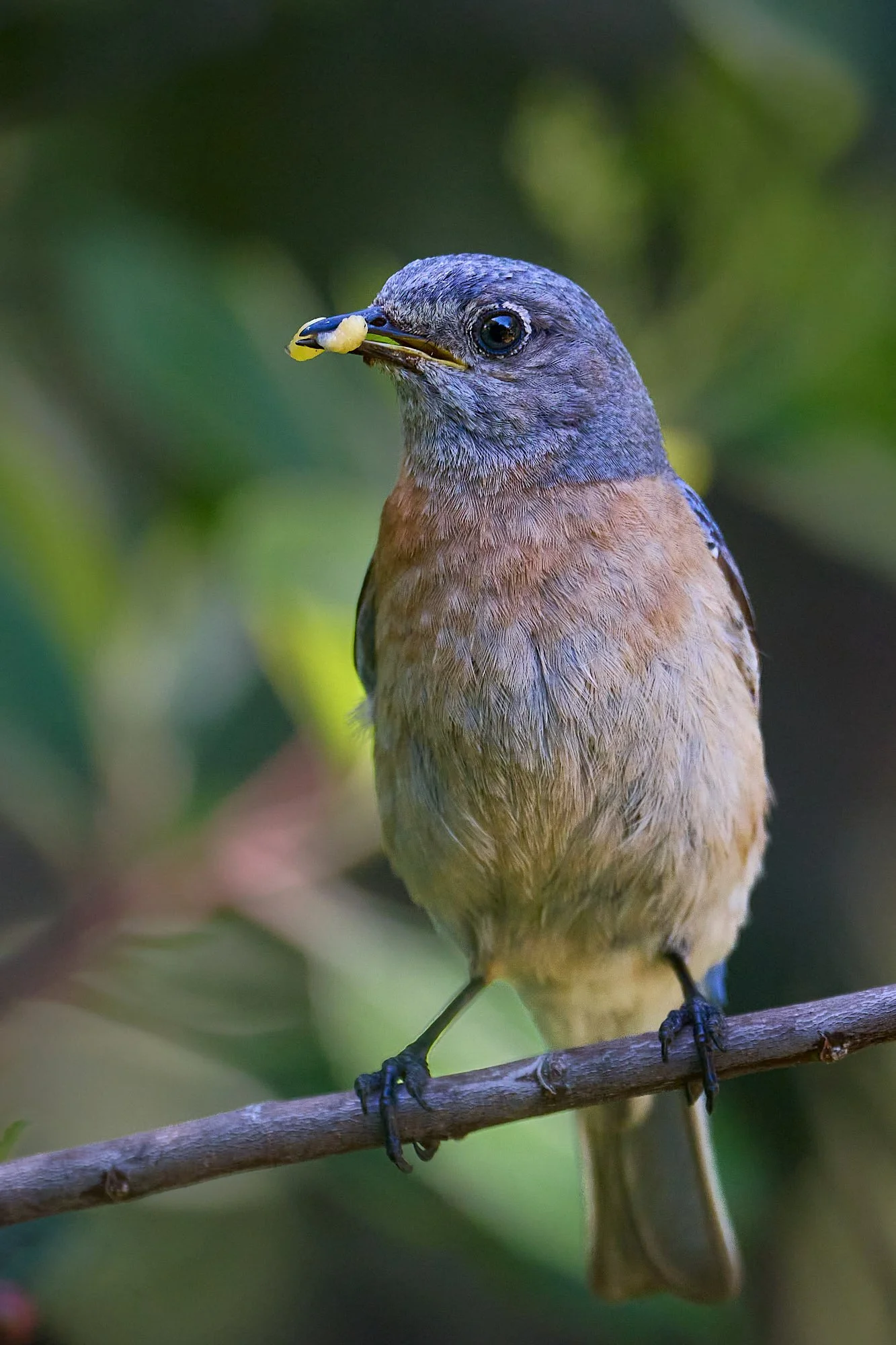
Grub (insect larvae)
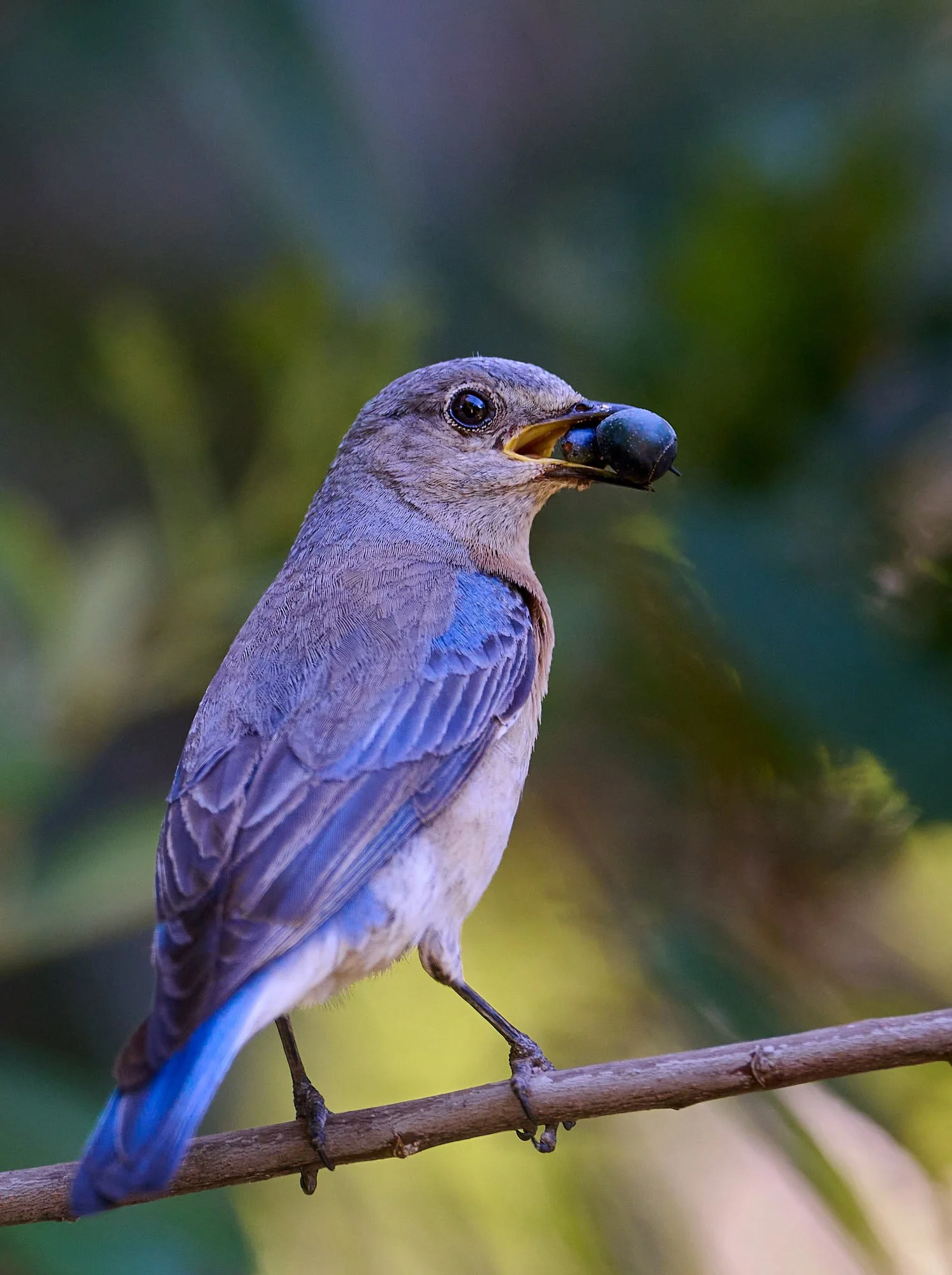
Berries
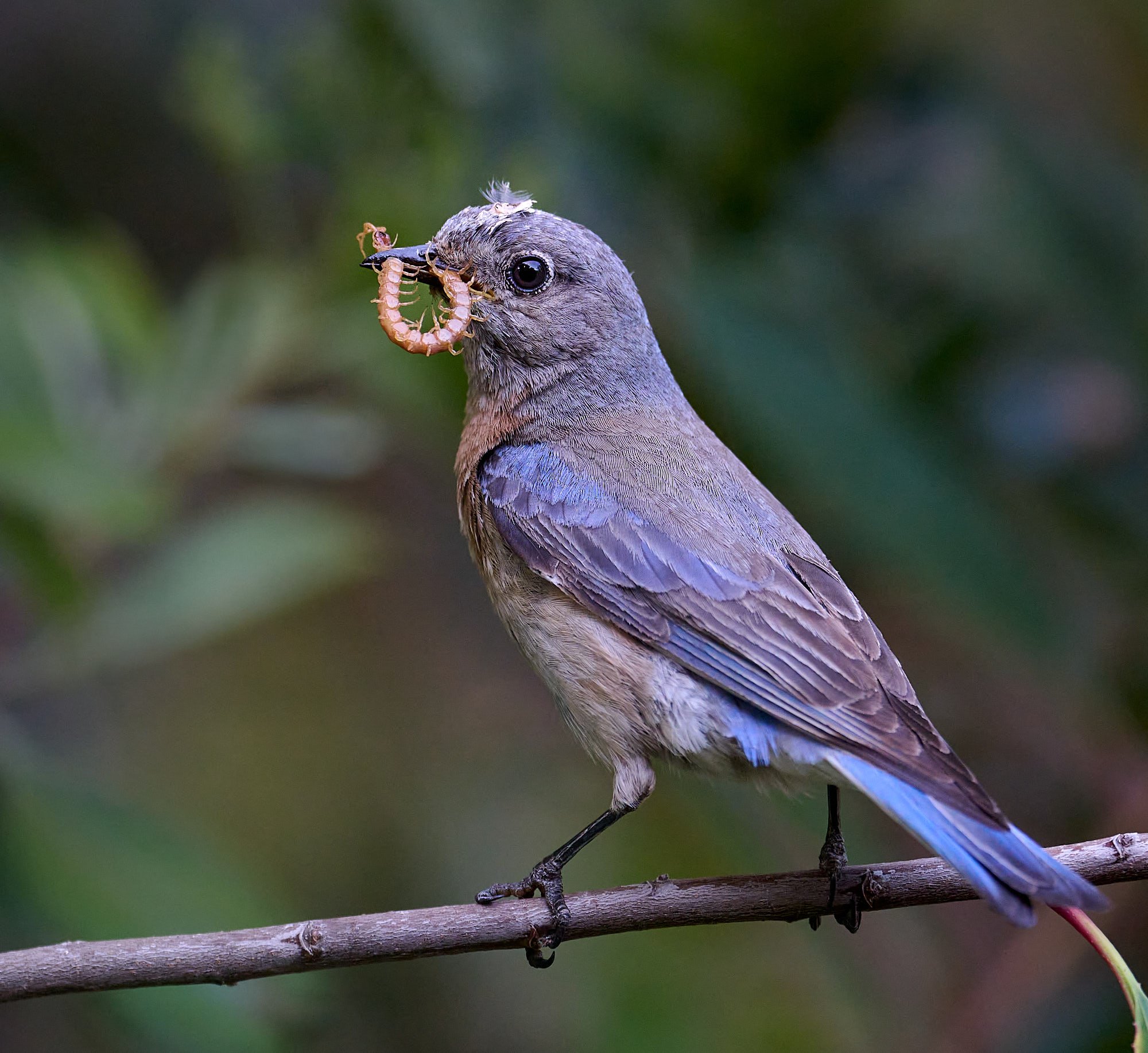
Centipede
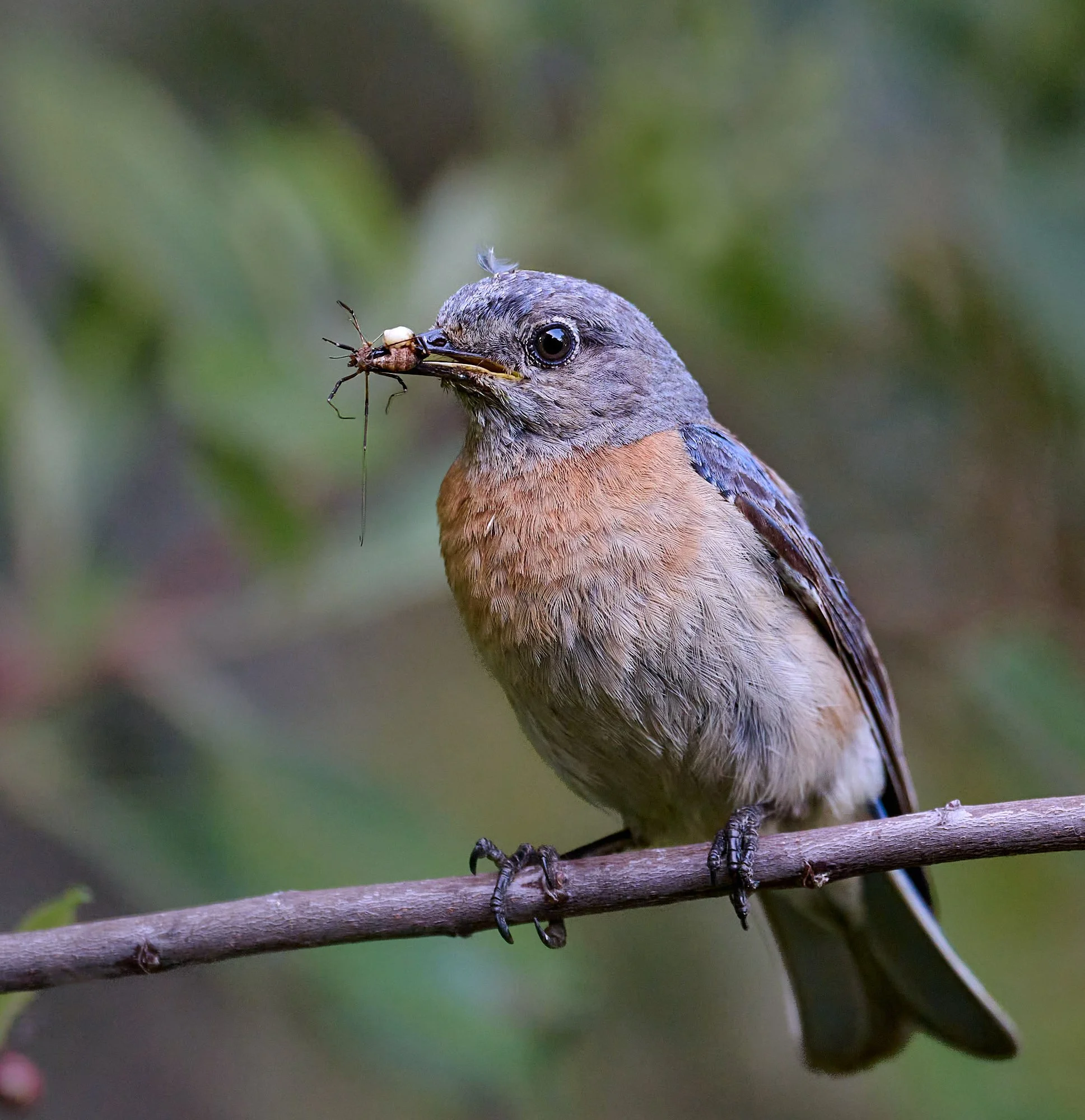
Don’t know what this is
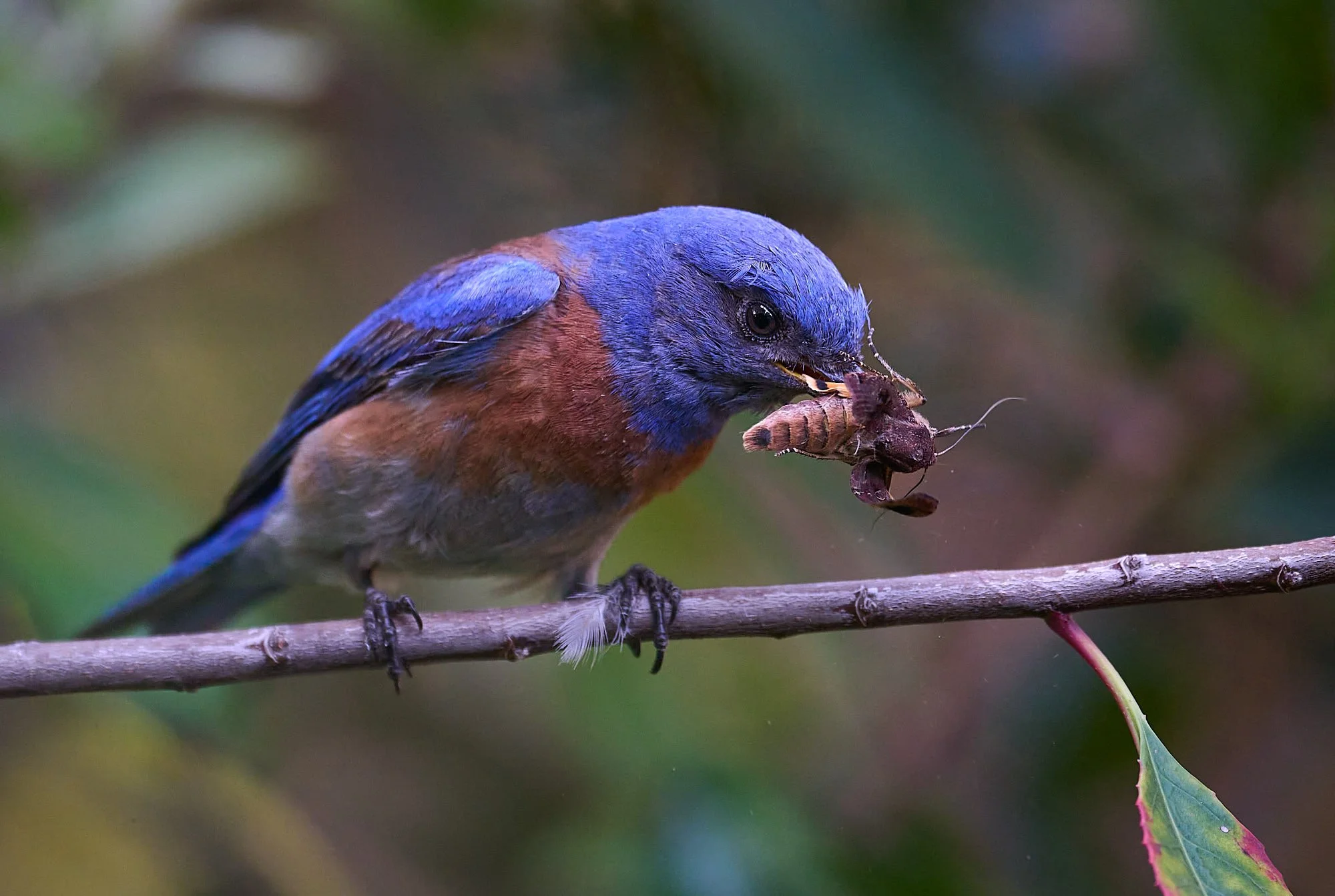
Possibly a Sphinx Moth
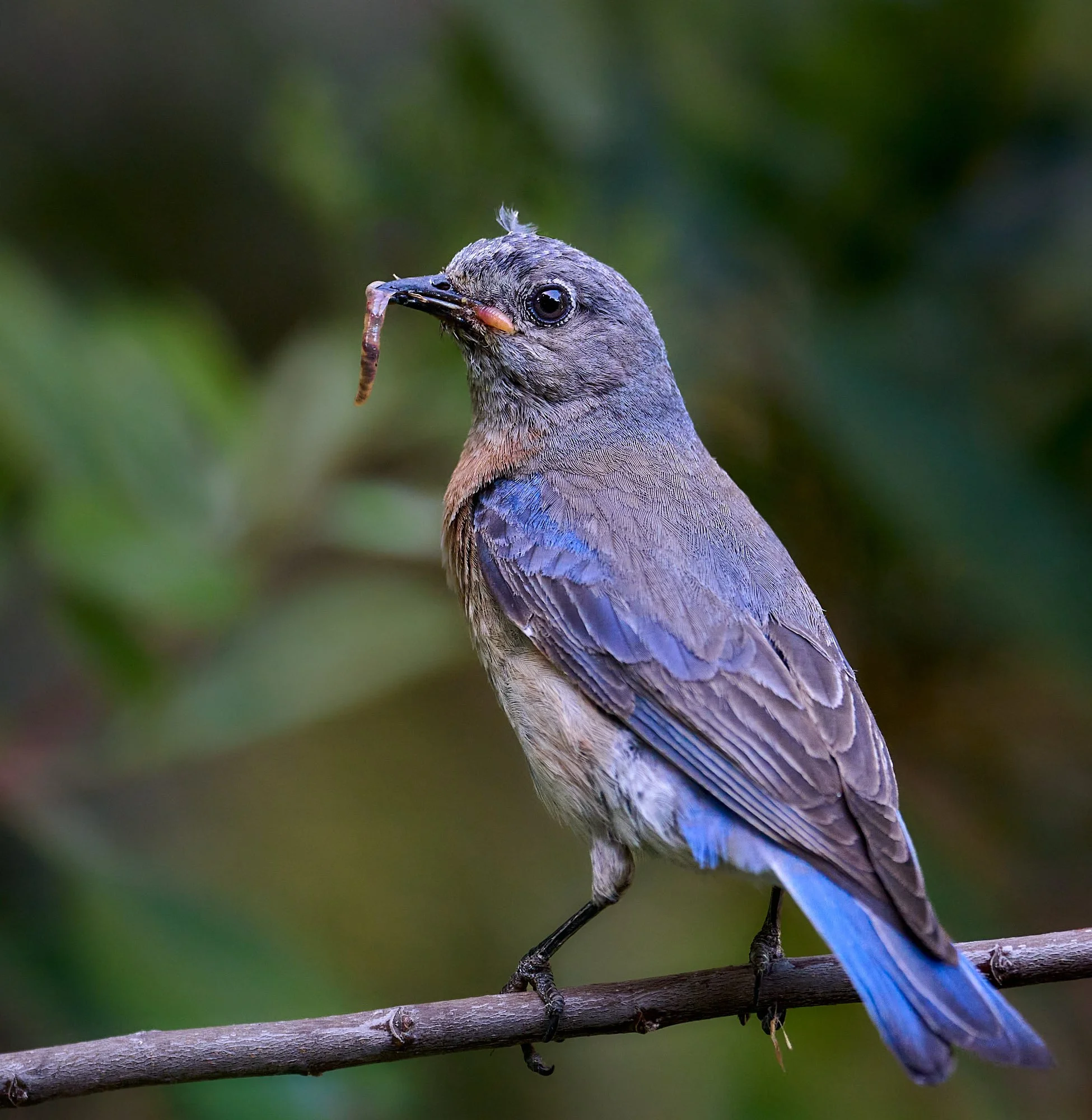
Earthworm
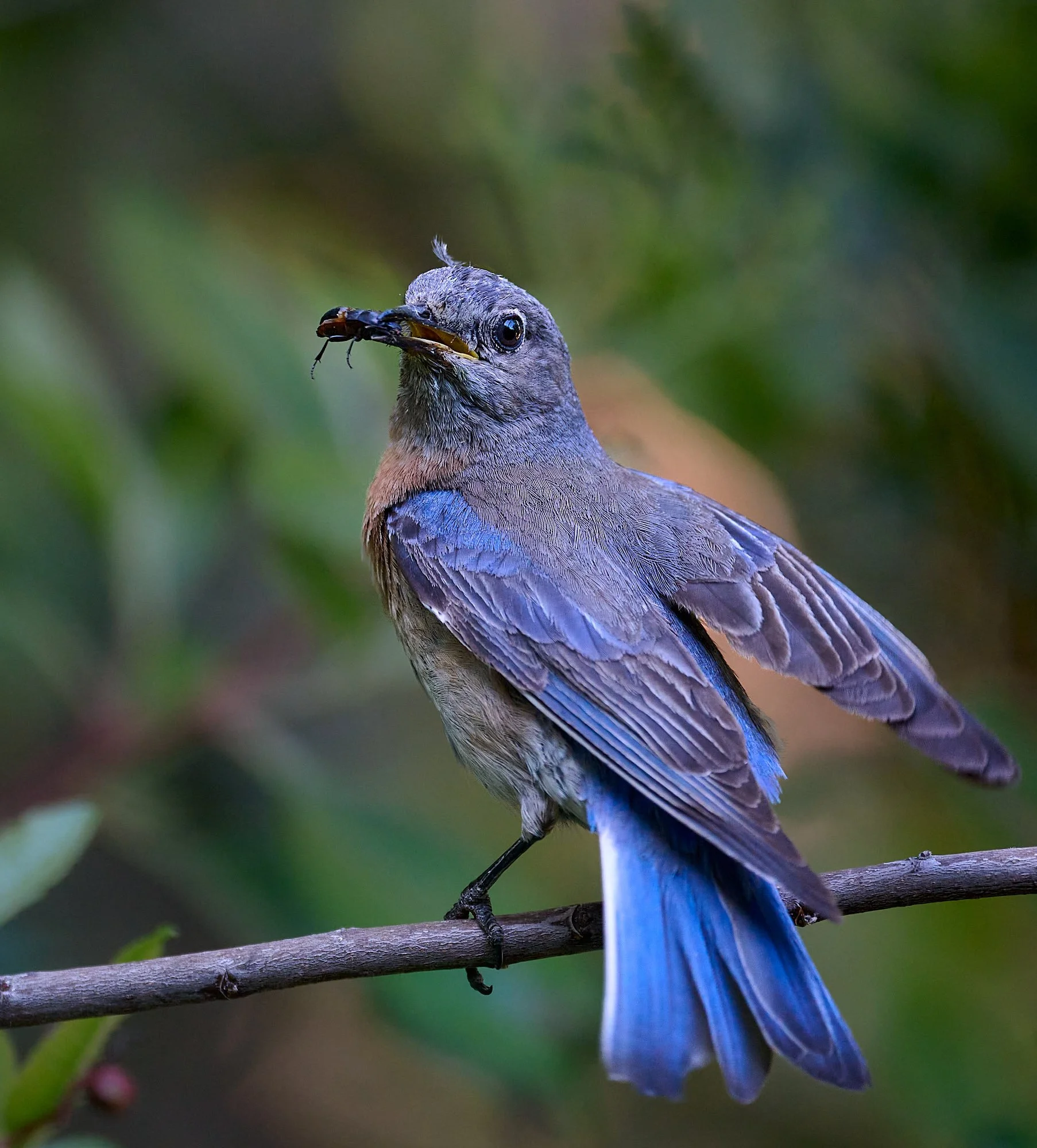
Beetle
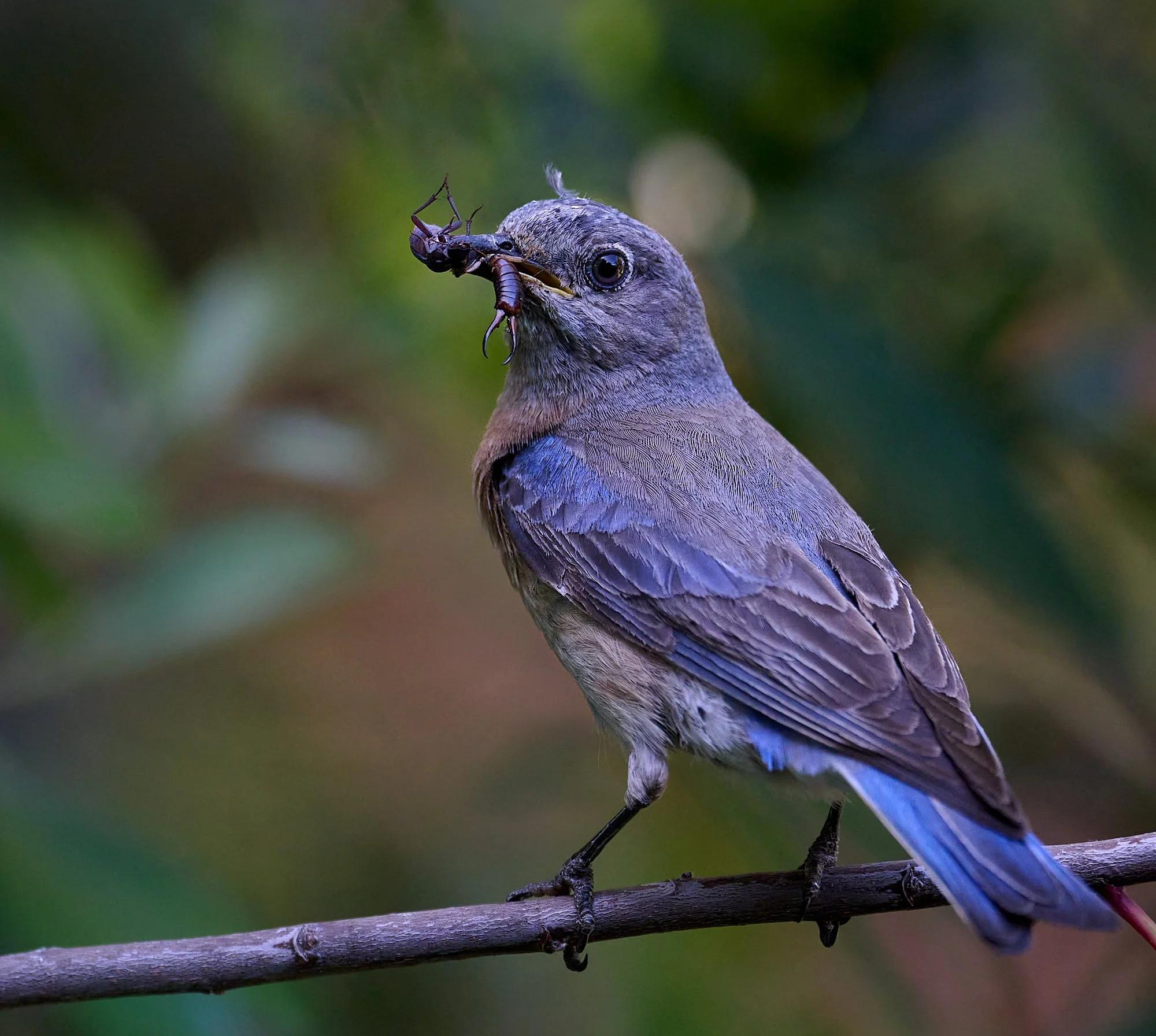
Earwig and beetle
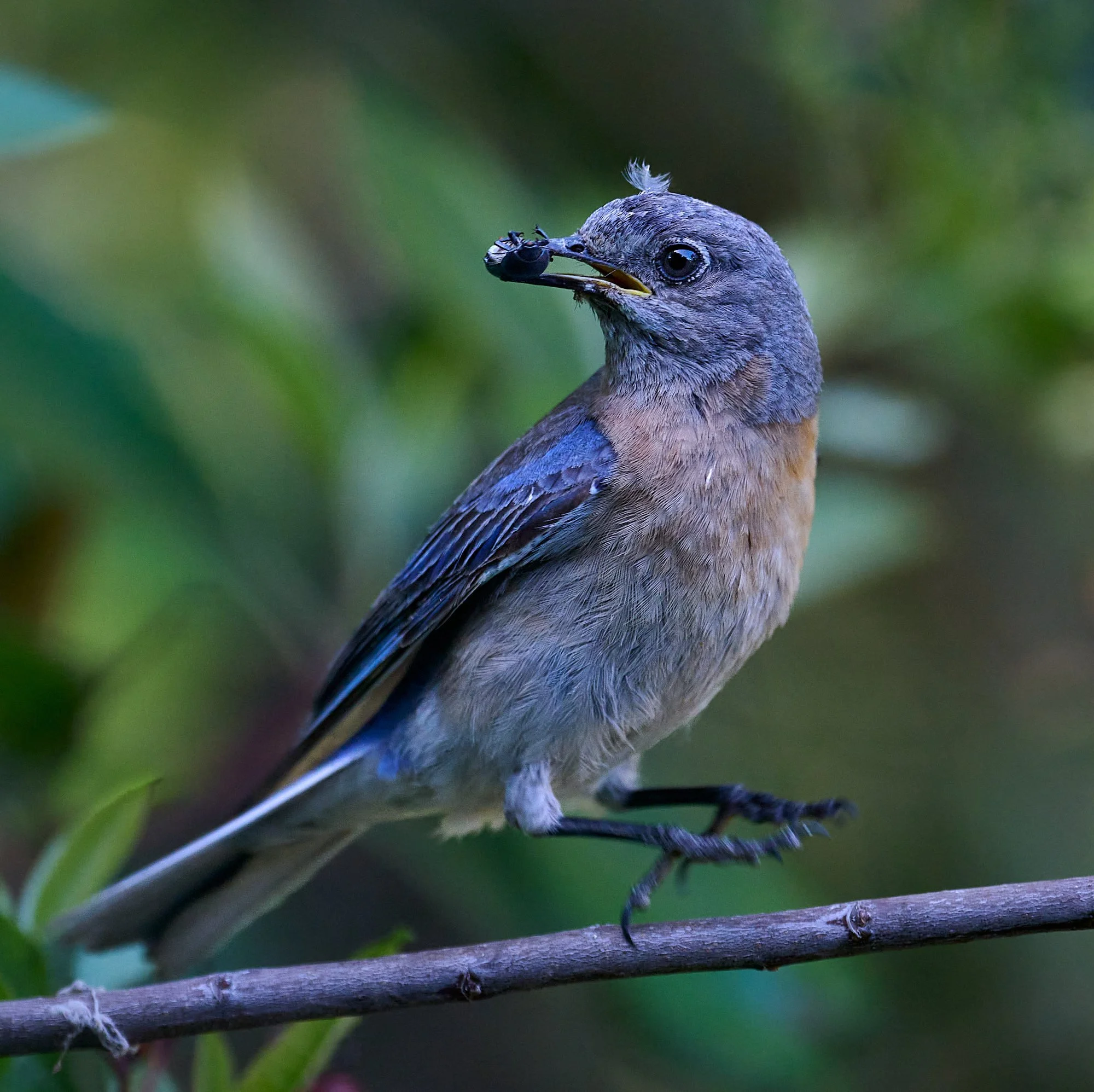
Oops, is that you yelling for dinner?